


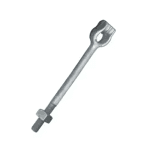
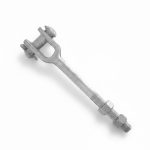
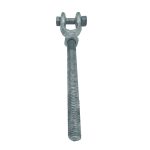
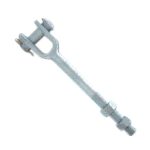
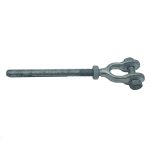
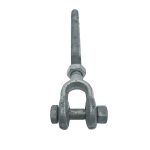
Description
First, Which “Clevis” Do You Need?
The word “clevis” covers two different things in line hardware, and it’s worth thirty seconds to land on the right one:
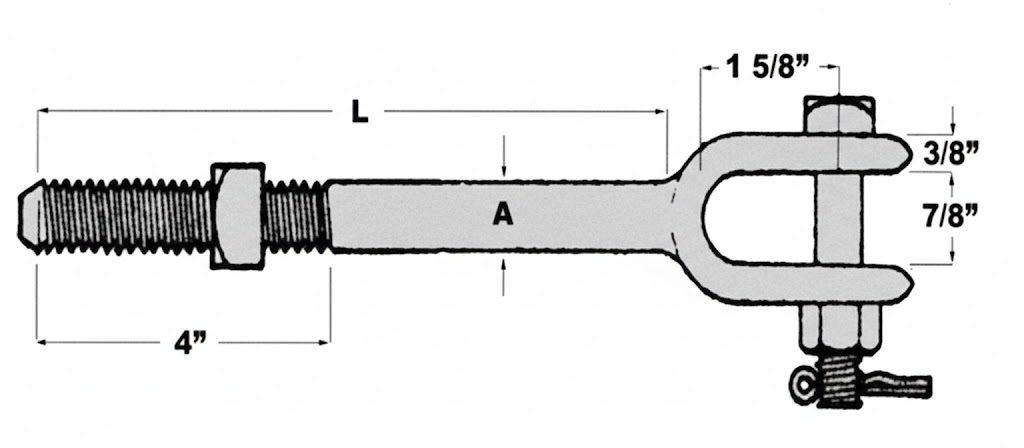
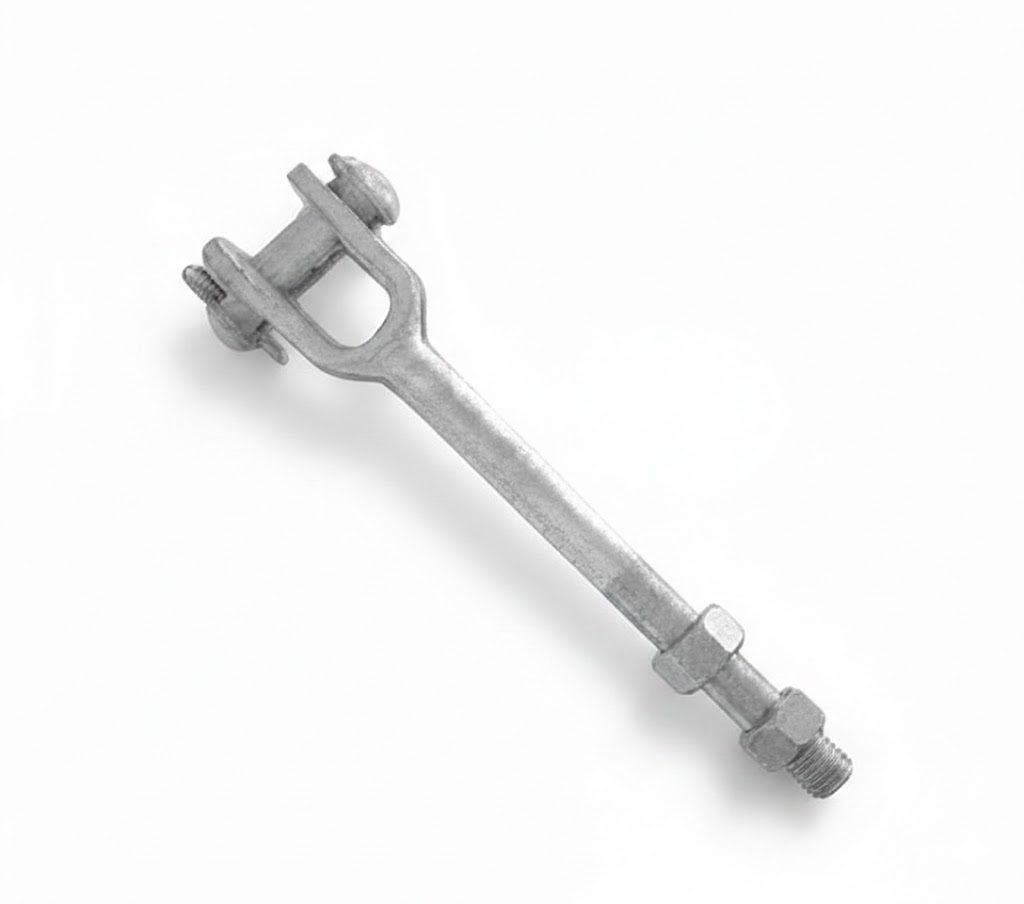
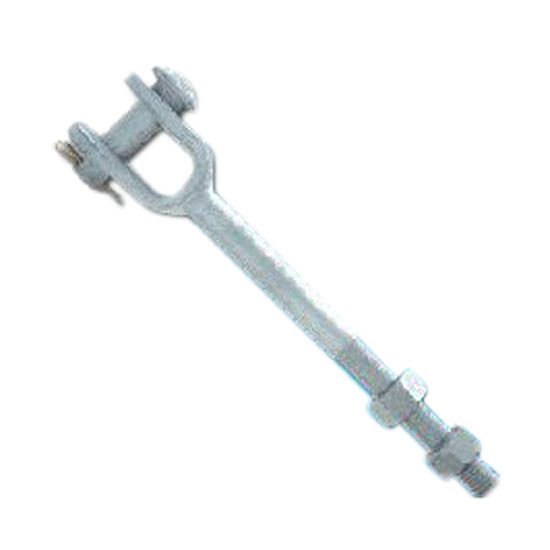
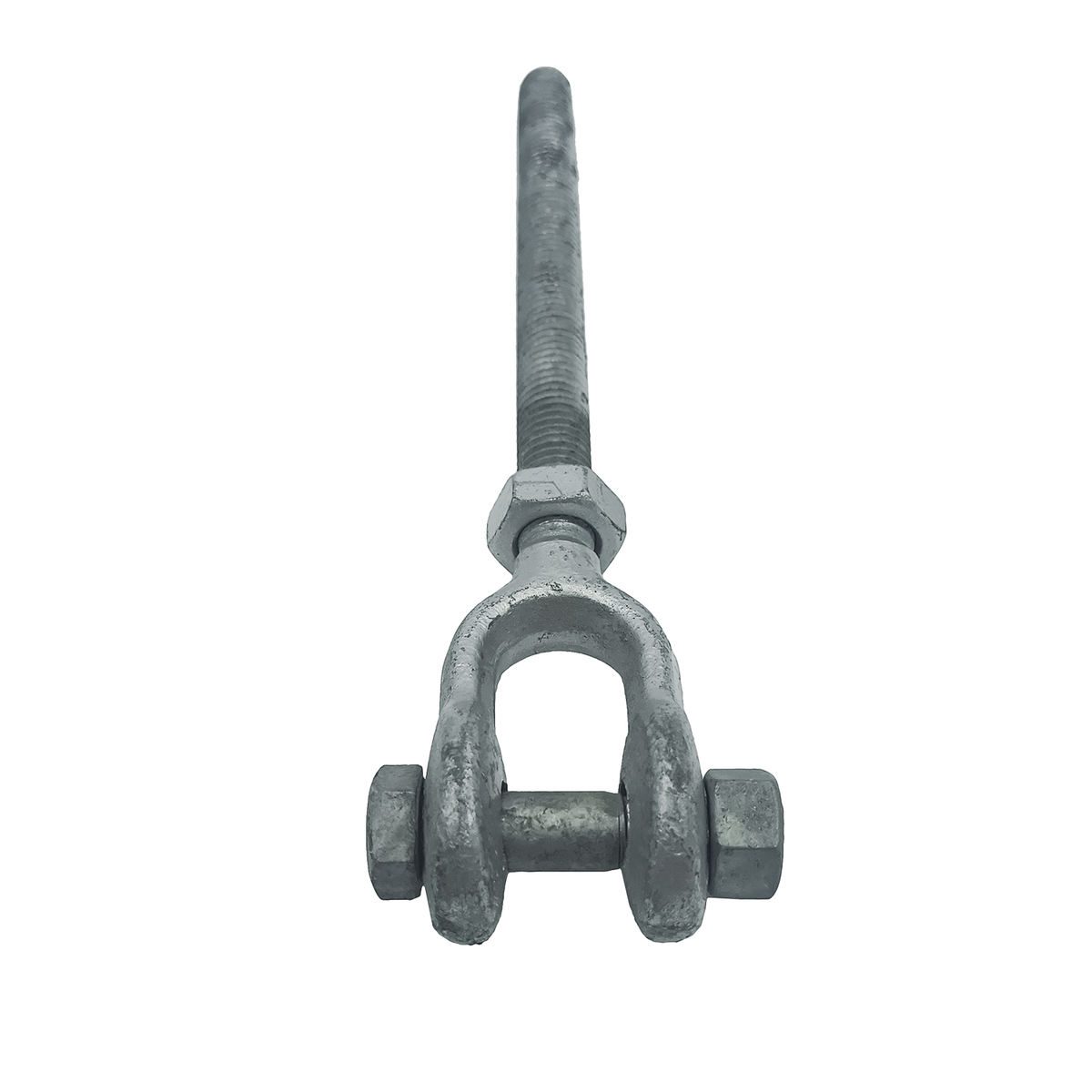
- A clevis bolt the fastener on this page: a bolt with a clevis (forked) head, or the bolt-and-pin that closes a clevis jaw and secures the connection. It’s a fastening component.
- A clevis coupling fitting a load-bearing insulator-string coupling with a clevis jaw at one end: the ball clevis, socket clevis, and thimble clevis. These carry the string’s load and connect to insulators and clamps.
If you’re assembling an insulator string and need the coupling, you want one of those three fittings; follow the links. If you need the bolt or pin that fastens or pins a clevis connection, you’re in the right place. This page is the fastener.
What a Clevis Bolt Does
A clevis bolt secures a clevis connection: it passes through the clevis jaw (or forms the forked head itself) and, with its nut and a locking arrangement, holds the pinned joint closed under load. Its job is to keep a clevis connection assembled and secure through vibration, load cycling, and the years a pole-line connection has to survive untouched.
Like every pinned connection at height, it lives or fails on retention: a pin or bolt that can back out under vibration is a connection with a countdown on it. So the clevis bolt’s specification is as much about the locking provision the nut, cotter, or split-pin arrangement that keeps it home as about the bolt itself.
Why Buyers Choose DAPENG Clevis Bolts
- Made for the connection, with retention specified: The bolt or pin sized to the clevis it closes, supplied with the nut and locking arrangement (cotter, split pin, or lock nut) your standard requires because the point of a clevis bolt is to stay closed.
- Hot-dip galvanized for the connection’s life: Galvanized to ISO 1461 / ASTM A153 class coatings, matched to the hardware it fastens, threads cleared and nuts run before packing.
- Sized to your fitting: Diameter, length, and pin dimensions to the clevis it secures and the load it carries.
- Supplied complete: Kitted with the nuts, locking components, and washers the connection needs and, crucially, spare cotters/pins, since those are the parts dropped at height.
- Volume for the build: Cartons counted and marked, batched to your programmer.
Use-Case Deep Dive
What is a clevis bolt used for on a pole line?
Fastening and securing clevis connections in pole-line and structure hardware closing a clevis jaw around a tongue or member, pinning a clevis-mounted fitting, and holding those connections secure under load. Wherever a clevis-type joint needs its closing fastener, the clevis bolt (with its retention) is that component. For the load-bearing clevis couplings of an insulator string, the ball clevis, socket clevis, and thimble clevis are the fittings this bolt is the fastener class, not those couplings.
How is a clevis bolt kept secure?
Through its locking provision, and it’s the specification that matters most. Three arrangements are common: a cotter/split pin through a drilled pin, a lock nut, or the specific retention your utility standard names. Whichever, the rules are the same as on any pinned pole-line connection: seat it fully, lock it positively, check it visually, and never substitute an improvised pin. We supply the locking components with the bolt and spare cotters/pins in the carton so nothing at height depends on a part someone has to find. A clevis connection that backs out under vibration is the failure this prevents.
Clevis bolt, or a clevis coupling fitting which did I actually need?
If your connection is an insulator string and you need a coupling that carries the string load with a clevis jaw, you need a fitting, not a bolt: socket clevis (socket + clevis), ball clevis (ball + clevis), or thimble clevis (thimble + clevis). If you need the bolt or pin that closes and secures a clevis joint, this page’s clevis bolt is it. Tell us the connection and we’ll confirm which they’re different products, and getting the right one first saves a return.
Specifications and What They Mean for You
| Specification | What we supply | What it means for the buyer |
|---|---|---|
| Form | Clevis-head / clevis-pin bolt | Closes and secures a clevis connection |
| Retention | Cotter, split pin, or lock nut | The connection stays closed under vibration |
| Material & coating | HDG to ISO 1461 / ASTM A153 class | Matches the hardware’s corrosion life |
| Sizes | Diameter, length, pin to your fitting | Fits the clevis it secures |
| Threads | Cleared, nut run before packing | Installs on site after galvanizing |
| Pairing | Nuts, locking components, spares kitted | Connection assembles and stays secure |
Straight Answers to Common Buyer Concerns
“I searched ‘clevis bolt’ but I think I need a coupling help?” Common, and worth clarifying before you order. If it’s part of an insulator string and it carries the string’s load with a clevis jaw, you need a coupling fitting socket clevis, ball clevis, or thimble clevis. If it’s the bolt/pin that closes a clevis joint, this page is right. Send a photo or describe the connection and we’ll point you to the exact product no wrong orders.
“How do we stop the pin backing out at height?” By specifying the retention, which we supply: cotter, split pin, or lock nut to your standard, fitted correctly (seated, locked, visually checked), with spares in the carton because dropped cotters are the routine field loss. The locking arrangement is the clevis bolt’s real specification a bolt without a proper retention is a connection waiting to loosen.
“Can you match a utility standard or a legacy clevis bolt?” Send the standard reference, the clevis dimensions, or a sample. Manufacturing to a utility’s specification (form, size, thread, retention, grade, marking) is routine export work, with confirmation before production.
Complete the Assembly
- Socket clevises, ball clevises, thimble clevises the load-bearing clevis coupling fittings (if that’s what you needed)
- Hex bolts and nuts, square washers, eye nuts the nuts and washers that complete the fastening
- Square head machine bolts, double arming bolts, upset bolts, U bolts the wider bolt range
- Pole line hardware and all overhead line fittings
Get a Connection-Matched Quote Within 24 Hours
Send the clevis connection detail the fitting it secures, the load, and your size and grade requirements or a photo if you’re unsure whether you need the bolt or a coupling. Our team confirms the right product, sizes it to your connection, and returns a factory-direct quotation with the locking components and spares included, typically within one working day.
After You Order
Form and size confirmation before production, material certificates with shipment, threads run and cleared, cartons kitted with nuts, locking components and spare cotters/pins, and an engineering contact who answers quickly because a clevis connection is only as secure as its retention, and a supply question on the small parts shouldn’t hold up the hardware they hold together.