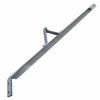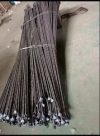
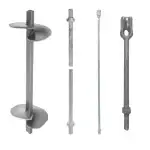
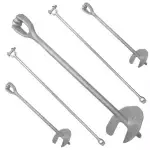
Description
Two Different Jobs, One Confusing Name: Which Do You Need?
“Ground anchors” is one of those terms that means two completely different things depending on who’s asking, so let’s sort it out in one sentence each:
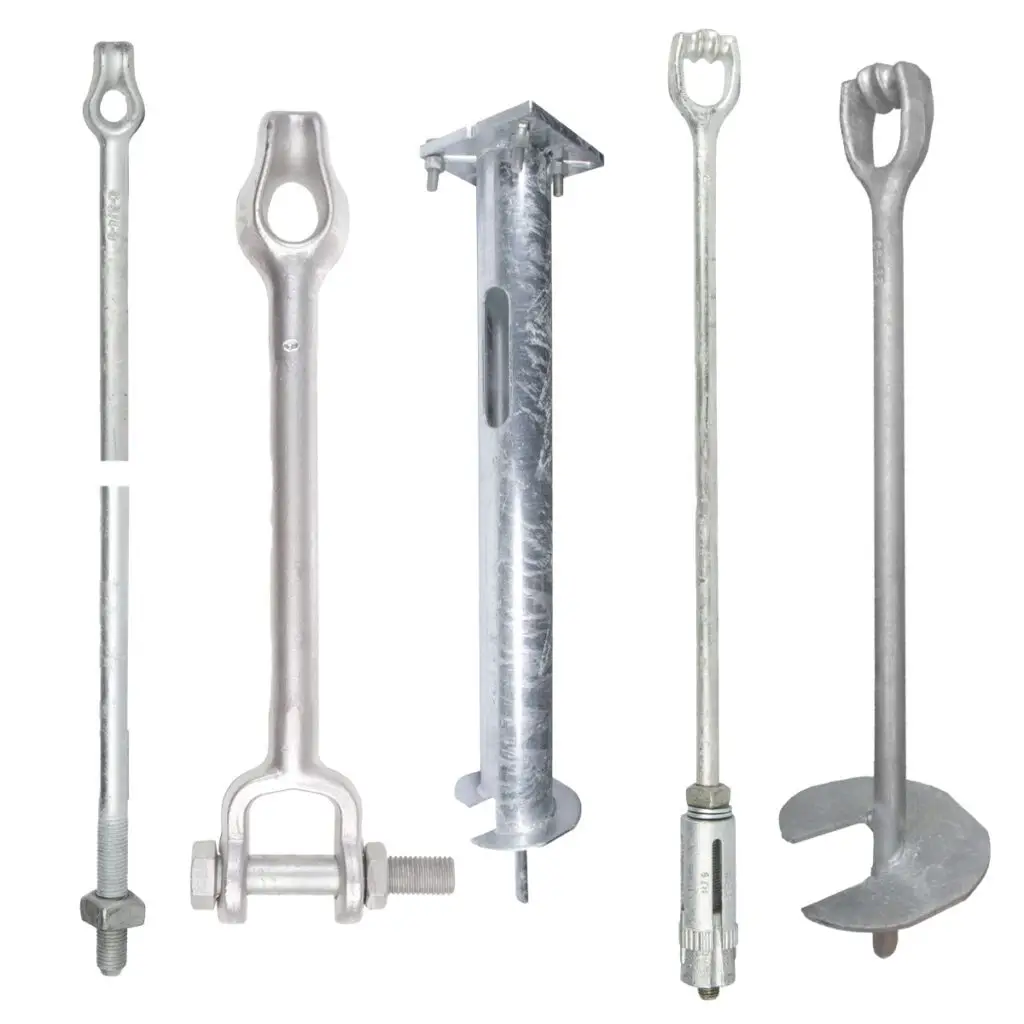
- A guy anchor holds a guy or stay wire in the ground, resisting the mechanical pull of a tensioned stay so the pole stays plumb. It’s a soil- or rock-anchor: manta ray, rock, disk, and screw anchors.
- Grounding (earthing) hardware connects the electrical system to the earth, carrying fault current and lightning safely to ground so equipment and people are protected. It’s rods and clamps: ground rods, rod clamps, and connectors.
They share a word and nothing else: one resists a mechanical pull, the other carries electrical current. We make both. Below, each family with its products so you can reach the right one.
Guy Anchors: Holding the Stay in the Ground
A guy wire is only as good as what holds it in the ground. The anchor takes the full pull of the tensioned stay and resists it through the soil or rock it’s set in and the right anchor depends entirely on the ground:
- Manta ray anchors driven anchors that toggle and lock in soil, developing holding capacity in a wide range of ground without excavation. Fast to install, strong in most soils.
- Expanding rock anchors for rock and very hard ground, where a driven or screw anchor won’t penetrate; they expand to grip a drilled hole.
- Disk anchors a bearing disk set in the ground for holding capacity in softer soils.
- No-wrench screw anchors screwed into soil for a quick, excavation-free anchor in suitable ground.
Each connects to the stay through an anchor rod (extended to grade with a cable extension bolt where set deep), an eye nut presenting the eye, and the guy grip or guy clamp terminating the wire. The anchor choice follows the soil tell us the ground and the guy load, and we’ll match the anchor to it.
Grounding / Earthing: Carrying Current Safely to Earth
Earthing hardware does the opposite job it makes a deliberate, low-resistance connection to the earth so that fault current and lightning have a safe path, protecting equipment and people. The family:
- Ground rods driven electrodes, in copper-bonded and hot-dip galvanized types (the choice between them matters see our guide below).
- Ground coupling rods couple rods to drive deeper for lower resistance.
- Ground rod clamps connect the earth conductor to the rod.
- Strand ground clamps and I-beam grounding clamps bond earth conductors to strand and to steel structures.
Choosing between copper-bonded and galvanized rods and matching the metals to avoid galvanic corrosion is a real decision with long-term consequences; our guide Copper Bonded vs Galvanized Ground Rod walks through it.
Why Buyers Choose DAPENG for Both Families
- Both jobs, one source: Whether you need to hold a stay in the ground or carry fault current to earth, the hardware and honest guidance on which product fits comes from one line-hardware supplier.
- Guy anchors matched to the soil: The anchor type driven by your ground conditions, not a one-size default because a soil anchor in rock, or a rock anchor in soft soil, holds nothing.
- Earthing matched to the system: Rod type (copper-bonded/galvanized), length, and clamps matched to your earthing design and conductor metal, with the galvanic-corrosion trap designed out.
- The complete assembly: Guy anchors with their rods, eye nuts, and guy hardware; earthing rods with their clamps and couplings matched and kitted.
Use-Case Deep Dive
Which guy anchor do I need for my soil?
The ground decides. Rock or very hard ground → expanding rock anchors, which grip a drilled hole where nothing can be driven. Most soils → manta ray anchors, driven and toggled to lock, fast and excavation-free. Softer soils → disk anchors for bearing capacity, or screw anchors where the ground suits screwing in. The wrong anchor for the ground is the commonest guy-anchor failure tell us the soil (and the guy load) and we match the anchor. Where the anchor sets deep, a cable extension bolt brings the connection up to grade.
Which ground rod do I need copper or galvanized?
Copper-bonded for most permanent installations (long life, and the standard where earth conductors are copper); galvanized where the system is zinc-matched or the design life is shorter. The decisive factor is often galvanic corrosion matching the rod metal to the earth conductor so you don’t build a battery in the soil. The full decision is in our guide, Copper Bonded vs Galvanized Ground Rod. Send your earthing design and conductor metal and we’ll match the rod, couplings, and clamps.
Are guy anchors and grounding hardware ever used together?
On the same structure, yes a pole may have both a guy anchor holding its stay and an earthing system bonding it to ground but they’re separate systems doing separate jobs, and specified independently. Don’t let the shared name “ground anchor” merge them in a BOM: the guy anchor is sized to the stay’s pull, the earth rod to the earthing design. We supply both, marked distinctly, so the two don’t get confused in the order.
Straight Answers to Common Buyer Concerns
“I searched ‘ground anchor’ do I need the guy anchor or the earthing rod?” If you’re holding a guy/stay wire so the pole stays plumb, you need a guy anchor (manta ray, rock, disk, screw). If you’re making an electrical earth connection for fault current or lightning, you need a ground rod and clamps. They’re different products for different jobs tell us which problem you’re solving and we’ll point you to the exact family, no wrong orders.
“Can you match the anchor to difficult ground?” Yes send the soil or rock description (and the guy load for anchors, or the earthing design for rods). Guy anchors are matched to the ground’s holding characteristics; earth rods to the soil’s resistivity and your resistance target. Difficult ground is exactly where the right product matters most, and where a generic default fails.
“Can you supply the complete assembly?” Yes, for either family the guy anchor with its rod, eye nut, and guy hardware; or the earth rods with their clamps and couplings matched and kitted per structure.
Explore Both Families
Guy anchors (mechanical):
- Manta ray anchors, expanding rock anchors, disk anchors, no-wrench screw anchors
- Anchor rods, eye nuts, guy grips, guy wire, guy clamps, guy hooks
Grounding / earthing (electrical):
- Ground rods, copper grounding rods, HDG grounding rods
- Ground rod clamps, ground coupling rods, strand ground clamps, I-beam grounding clamps
Get the Right Anchor or Earthing Quote Within 24 Hours
Tell us the job hold a stay (with the soil/rock type and guy load) or make an earth connection (with the earthing design and conductor metal) and your quantities. Our engineers confirm the right product and quote the complete assembly, typically within one working day.
After You Order
Product confirmation before production, test and material documentation with shipment, anchors or rods kitted with their assembly hardware per structure, and an engineering contact who answers precisely and who keeps the guy-anchor and earthing orders distinct, because the shared name is the one place these two systems get confused.