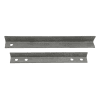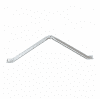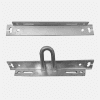




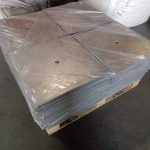
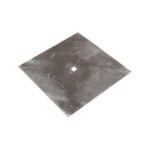
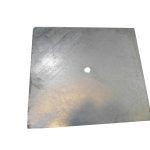
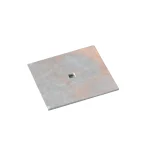
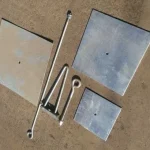
Description
The Bearing Plate That Anchors the Stay in the Soil
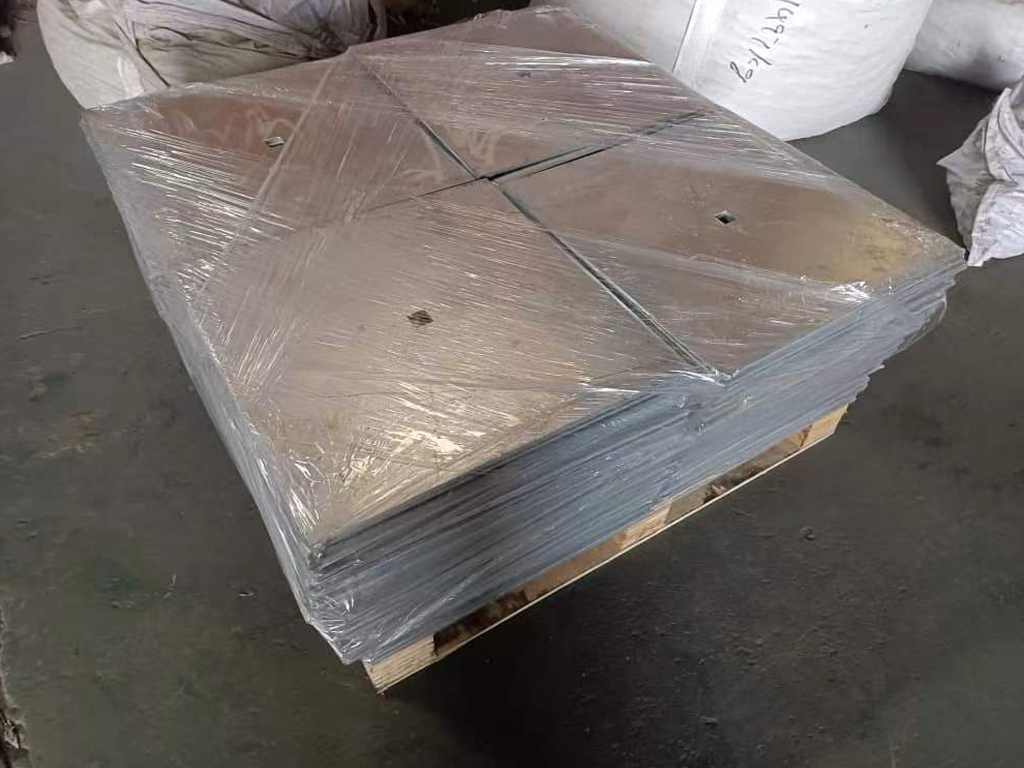
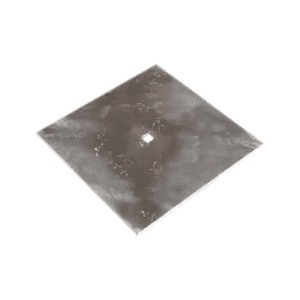
A dug-in guy anchor is simple and effective: dig a hole, set a plate against the undisturbed soil at the bottom or side, run a rod up from it to the surface, and backfill. Under the guy’s pull, the plate has to be pushed through a column of soil before the anchor can move, so the plate is what holds the stay. That plate is the stay plate: a flat steel plate with a central hole that threads onto the stay rod, spreading the guy’s pull across its area against the ground.
It’s the bearing element of the traditional plate-and-rod stay anchor the part that turns the guy’s tension into a hold on the soil. The bigger the plate and the deeper it’s set, the more soil it mobilizes, and the more it holds. This page covers stay plates: how the bearing works, how the plate pairs with the rod, and how it fits the stay.
How the Stay Plate Holds
The stay plate develops its hold from bearing area against the soil:
- The plate is set below grade (in an excavation), the stay rod threaded through its central hole running up to the surface.
- Under the guy’s pull, the plate bears against the column of soil above/behind it to move, the anchor must push that whole mass of soil out of the way.
- The larger the plate area (and the deeper it’s set), the more soil it mobilizes, so the higher the holding capacity.
Because the hold is the soil’s bearing resistance over the plate area, capacity depends on the plate size and the soil strength a bigger plate in the same soil holds more; the same plate holds more in stronger soil. So the plate is sized to the guy load and the ground.
Stay Plate or Disk Anchor?
Both work by bearing area against the soil the difference is the form:
- Stay plate (this page) a flat bearing plate that pairs with a stay/anchor rod, typically dug in (set in an excavation and backfilled). The traditional, economical plate anchor; the plate and rod are the components.
- Disk anchor a manufactured disk-and-rod unit, often a complete factory item (driven or dug in).
If you’re building a dug-in plate anchor with a plate and rod, the stay plate is the bearing component; if you want a complete manufactured disk-and-rod unit, the disk anchor is that. Same bearing principle, different supply form. Tell us the guy load and how you’re anchoring and we’ll advise.
Paired With the Rod: How the Plate Makes an Anchor
A stay plate isn’t used alone it’s the plate half of a plate-and-rod anchor:
- The plate (this page) bears against the soil.
- The stay rod / anchor rod threads through the plate’s central hole and runs up to the surface, carrying the load from the plate to the guy.
- At the surface, the rod’s eye takes the guy hardware the guy grip or clamp terminating the strand, often via an eye nut.
So the plate and rod together make the anchor: the plate holds in the soil, the rod carries the load up, the guy connects at the eye. We supply the plate matched to the rod (hole size to rod diameter) so they pair correctly.
Why Buyers Choose DAPENG Stay Plates
- Bearing area sized to your soil and load: Plate size chosen so its area develops the holding capacity your guy load and soil need.
- Matched to your rod: Central hole sized to your stay rod diameter, so the plate and rod pair correctly.
- Rated to the guy load: Bearing capacity to hold the guy with your margin.
- Hot-dip galvanized for buried service: Galvanized for the below-grade soil environment where the plate lives for the life of the line.
- The stay from one source: Stay plates with the rods, guy wire, grips, and eye hardware matched and kitted.
Use-Case Deep Dive
How do I size the stay plate?
By the guy load and the soil. The plate’s bearing area is chosen so it develops a holding capacity above your guy’s working tension with your margin a bigger plate for a heavier load or weaker soil, a smaller one where the load is light or the soil strong. Send the guy tension and the soil and we’ll size the plate on datasheet capacities, since the plate holds the pole.
Stay plate or a complete disk anchor which?
If you’re building a dug-in plate anchor on site plate set in an excavation, rod up to the surface, backfilled the stay plate (with a rod) is the economical, traditional choice. If you want a complete manufactured unit to drive or set, the disk anchor is that. Both hold by bearing; the choice is dug-in components vs a complete unit, by your install method and preference. Tell us how you anchor and we’ll advise.
How does the plate pair with the rod?
The central hole takes the stay rod so the hole is sized to the rod’s diameter, and the rod is retained at the plate (by the rod’s end form or a nut). The plate bears against the soil; the rod carries the load up to the guy. We supply the plate with the hole matched to your rod, so they pair correctly and the load transfers from plate to rod to guy.
Specifications and What They Mean for You
| Specification | What we supply | What it means for the buyer |
|---|---|---|
| Function | Bearing plate on a stay rod | Spreads the guy’s pull against the soil |
| Plate size | To your soil and load | Bearing area develops the hold |
| Central hole | To your rod diameter | Pairs with the stay/anchor rod |
| Capacity | Above your guy tension | Holds the pole; never the weak point |
| Coating | HDG to class | Survives below-grade in soil |
| Pairing | With rod + guy hardware | Completes the stay anchor |
Straight Answers to Common Buyer Concerns
“How big a plate do we need?” By the guy load and the soil the plate’s bearing area is sized so it develops a holding capacity above your guy’s working tension with your margin, bigger for heavier loads or weaker soil. The plate holds the pole, so it’s sized on datasheet bearing capacities, not estimated. Send the guy tension and the soil and we’ll size it.
“Does the plate come with the rod, or separately?” The stay plate is the bearing plate; it pairs with a stay/anchor rod that threads through its central hole. We can supply the plate matched to your rod (hole to rod diameter), or the plate and rod together as a set tell us what you need and we’ll match them.
“Stay plate or disk anchor?” A stay plate (with a rod) for a dug-in plate anchor built on site traditional and economical; a disk anchor for a complete manufactured unit. Both hold by bearing against the soil; the choice is components vs complete unit, by your install method. Tell us how you anchor and we’ll advise.
Complete the Stay
- Stay rods and anchor rods the rod the plate pairs with
- Disk anchors the complete bearing-anchor unit
- Ground anchors the full anchor category
- Eye nuts, cable extension bolts connection and extension hardware
- Guy wire, guy grips, guy clamps the guy the anchor holds
- Browse all pole line hardware and overhead line fittings
Get a Load-Matched Quote Within 24 Hours
Send your guy tension, the soil, your stay/anchor rod (diameter), your standard, and quantities. Our engineers size the plate and confirm its bearing capacity and the rod match, and return a factory-direct quotation with the rod and stay hardware alongside, typically within one working day.
After You Order
Plate size, capacity, and rod-match confirmation before production, documentation with shipment, plates matched to their rods and kitted with the stay hardware, and an engineering contact who answers precisely because the stay plate holds the guy that holds the pole, and getting the plate size and the rod match right is what makes the anchor hold.