


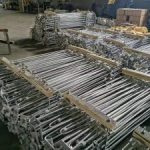
Description
What Size Stay Rod Do You Need for an Electric Pole, and What Else Belongs in the Assembly?
Every angle pole, terminal pole, and heavily loaded structure on a distribution line leans on one modest piece of steel buried in the ground: the stay rod. Ask any procurement engineer preparing a pole-line bill of materials, and the questions are always the same: what diameter and length of stay rod does this pole need, bow type or tubular, and which other fittings complete the stay?
Get those answers wrong, and the consequences arrive slowly, then suddenly: a stay that creeps under conductor tension, a pole that leans a little more each storm season, and eventually a line outage that costs more in one afternoon than the entire stay assembly did.
DAPENG Power manufactures stay rods, known in the Americas as anchor rods or guy rods, along with every component of the stay assembly to which they belong. This page covers the product, the selection logic, and the assembly, so your order arrives complete and matched.
Why Buyers Choose DAPENG Stay Rods
- Steel where it counts. Forged from high-strength carbon steel bar, with the eye or bow formed hot, not welded, so the loaded end has no seam to open under decades of tension.
- Galvanizing you can measure. Hot-dip galvanized to ISO 1461 / ASTM A153 class coatings. The buried half of a stay rod lives in wet, corrosive soil for its entire service life; coating thickness is the difference between a 30-year rod and a 10-year one, and ours is verifiable with a gauge at your incoming inspection.
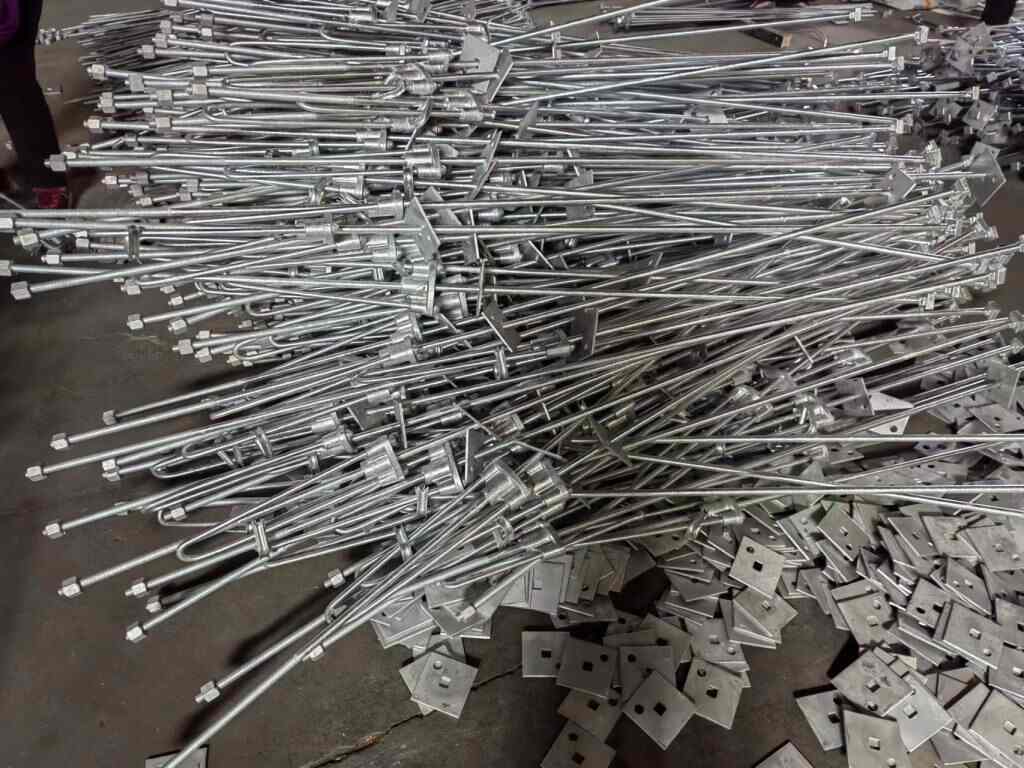
- Threads that still turn on site. Rolled threads, galvanized and cleared, with nuts run before packing, because a linesman fighting a seized nut over an anchor hole remembers the supplier’s name for the wrong reason.
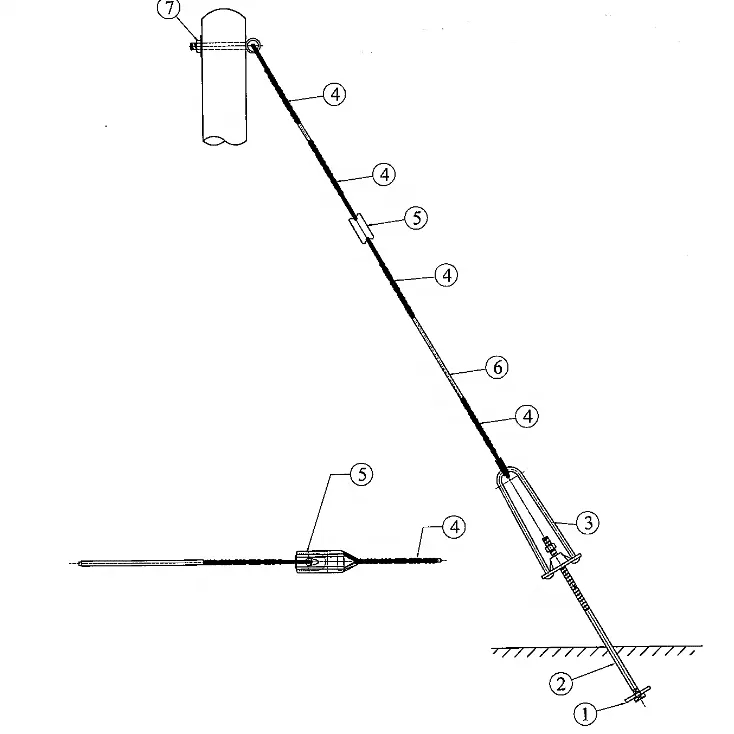
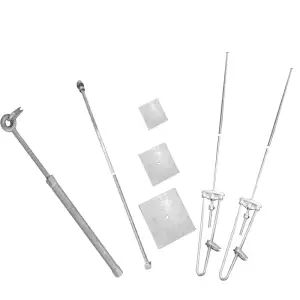
- The whole assembly, one factory. Rod, stay plate, guy wire, guy grips, thimbles, and stay insulators , matched in rating, shipped together, nothing left to source elsewhere.
- OEM to your utility’s drawings. National utilities specify stay rods precisely, diameter, length, eye form, thread length, marking. We manufacture to your specification or standard drawings and supply the documentation your inspector expects.
Bow Type vs Tubular Type: Which Stay Rod Do You Need?
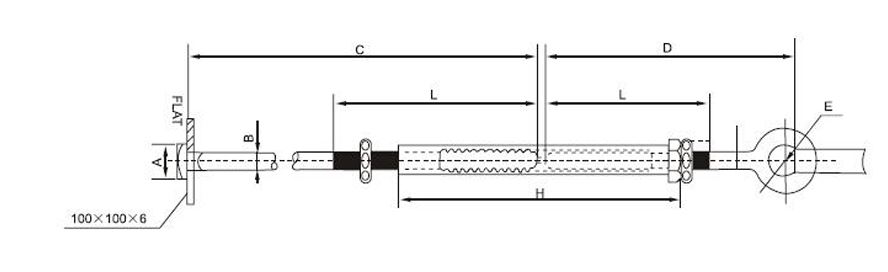
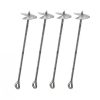
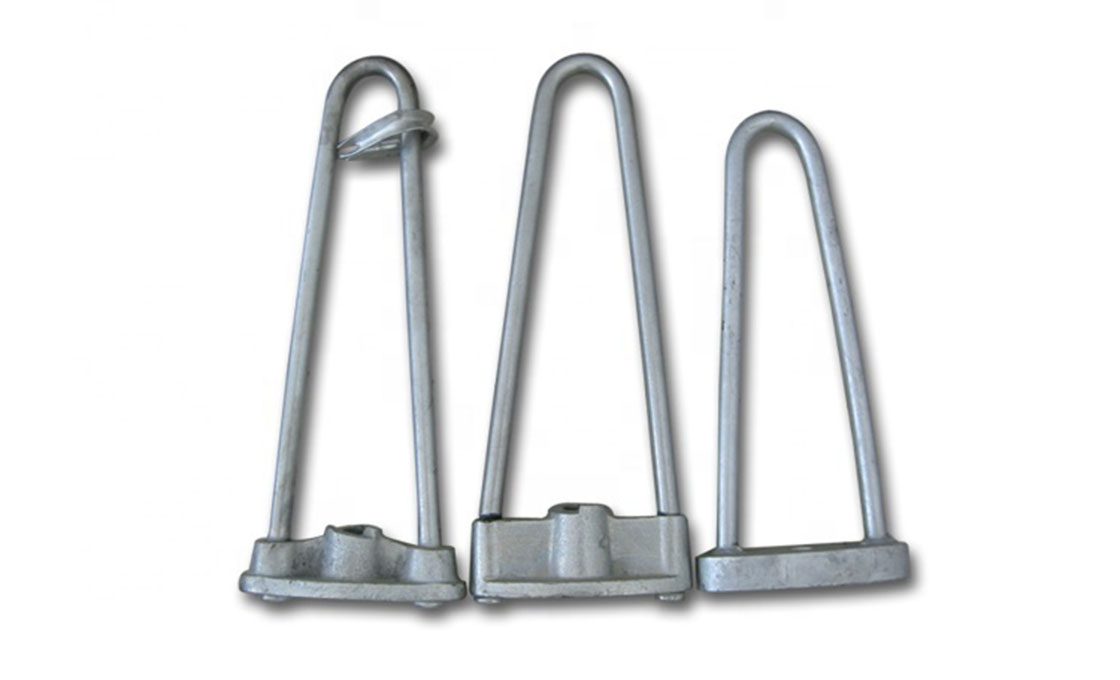
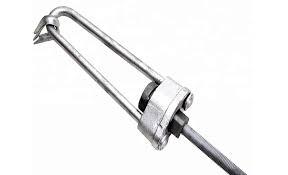
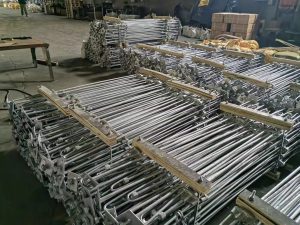
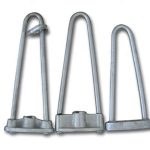
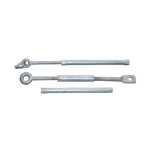
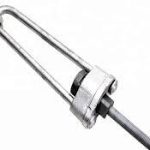
Bow type stay rod. The classic pattern: a solid round rod with a formed bow (an elongated loop) at the top end. The bow is not decorative, its purpose is to accept a stay insulator or guy strain insulator within the stay, electrically isolating the lower section of the stay wire so that a fallen conductor cannot energize the accessible portion near the ground. Where your utility requires insulated stays, most distribution networks do, the bow type is the standard answer.
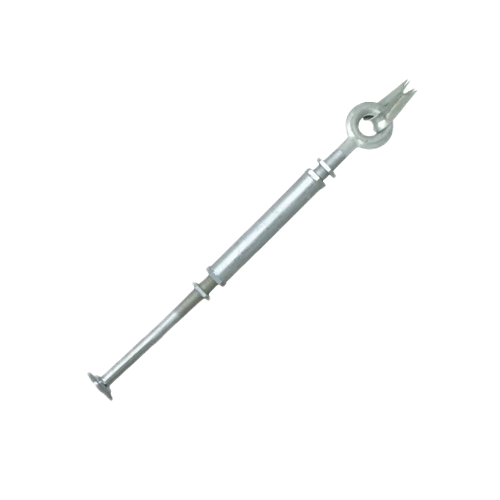
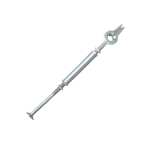
Tubular type stay rod. A lighter high-strength pattern used where the stay design calls for it, with the same anchoring function. Selection between the two is normally dictated by your utility’s construction standard rather than preference, send us the drawing reference and we match it.
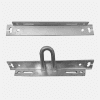
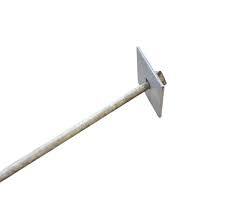
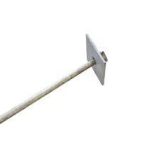
Both types anchor the same way: the threaded lower end passes through a buried stay plate (anchor plate) that bears against undisturbed soil, and the nut clamps the assembly so the rod transfers stay tension into the ground.
Typical Sizes and Selection Logic
Common stay rod sizes run 16 mm, 20 mm, and 24 mm diameter, in lengths from 1.2 m to 2.4 m (1.8 m being the most frequently ordered), matched to stay wire sizes from 7/2.00 mm up to heavy EHS strand. (Exact catalog sizes, thread lengths, and rated loads: confirm against DAPENG order drawings, (Custom size are also available.)
The selection logic your bill of materials should follow:
- Start from stay tension, calculated from conductor tension and pole geometry in your line design.
- Size the stay wire to that tension with your standard’s safety factor.
- Match the rod to the wire, rod rated load ≥ stay wire rated load, always. The rod must never be the weak link buried where you cannot inspect it.
- Size the stay plate to the soil, larger plates for softer ground, per your utility’s soil classes.
- Add the insulator if your standard requires an insulated stay, bow type rod, insulator rated to match.
Send us the pole schedule and we will return the matched assembly list, a routine service with every quotation.
Use-Case Deep Dive
Can I use a stay rod for both power poles and telecom poles?
Yes. The mechanics are identical: the stay resists the horizontal pull on the pole, whether that pull comes from power conductors, ADSS fiber cable, or telephone drops. Telecom stays typically run lighter, smaller wire, 16 mm rods, while power line angle and terminal structures step up in size. The insulation requirement is the key difference: power line stays usually require the stay insulator; pure telecom stays often do not. One factory, both configurations.
What is the difference between a stay rod and an anchor rod?
Mostly geography. “Stay rod” is the Commonwealth term (Africa, South Asia, UK-standard networks); “anchor rod” or “guy rod” is the North American term for the same class of component, used there with expanding, screw, or plate anchors. If your project documents say anchor rod, see our anchor rod range, and note that rods pair with different ground anchors by soil type: no-wrench screw anchors for soft soils, expanding rock anchors for rock, disk anchors and plate types for general duty.
How is a stay rod installed correctly?
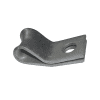
The sequence that protects the rating: excavate to the design depth and angle (the rod should align with the stay wire’s pull, typically continuing its line into the ground); fit the stay plate and nut to the threaded end; backfill and compact in layers against the plate; connect the stay wire to the rod eye or bow using a guy grip or guy clamp with a thimble protecting the wire at the eye; tension per your construction standard; leave the specified thread projection for future re-tensioning. Then inspect on the network’s normal cycle, the ground-line section works unseen, which is exactly why the galvanizing specification matters more here than on any visible fitting.
Specifications and What They Mean for You
| Specification | What we do | What it means for the buyer |
|---|---|---|
| Material | High-strength carbon steel bar, hot-formed eye/bow | No welded seam at the loaded end; full-section strength |
| Coating | Hot-dip galvanized, ISO 1461 / ASTM A153 class | Decades of service in buried, wet, corrosive conditions |
| Types | Bow type (insulator-ready) and tubular type | Matches insulated and non-insulated stay standards |
| Threads | Rolled, with nut supplied and run before packing | Assembles on site without rework |
| Rated loads | Marked per drawing; batch tensile testing | Safety factors calculated on tested numbers |
| Customization | OEM to utility drawings – dimensions, marking, packing | Passes your inspector’s document check, not just ours |
Straight Answers to Common Buyer Concerns
“Buried steel is where cheap suppliers cut corners. How do I know yours doesn’t?” Because you can check before anything ships: coating thickness readings and batch tensile reports accompany the order, and third-party inspection (SGS/BV or your nominated agency) is welcome at the factory. The buried half of our rods is galvanized to the same measurable class as the visible half, verify it with a gauge on arrival.
“I can buy stay rods locally. Why import?” For a handful, buy locally. For project quantities, factory-direct pricing on the complete assembly, rod, plate, wire, grip, insulator, thimble, matched and kitted, typically lands below the cost of assembling the same set from local distributors, and eliminates the mismatch risk of five components from five vendors.
“What if my utility’s specification is unusual?” Send the drawing. OEM manufacturing to national utility specifications is the majority of our stay rod production, not the exception, eye dimensions, thread lengths, marking requirements, and packing lists included.
Complete the Stay Assembly
- Stay plates , the buried bearing plate every rod needs
- Guy wire and guy grips , the tension members and their terminations
- Stay insulators and guy strain insulators, for insulated stays
- Browse the full pole line hardware range
Get a Matched Assembly Quote Within 24 Hours
Send your pole schedule, drawings, or simply the stay wire sizes and quantities. Our engineers will confirm rod sizing, flag any mismatch in the assembly list, and return a factory-direct quotation, typically within one working day. Container production slots are scheduled on confirmation, so early inquiries ship earlier.
After You Order
Confirmation drawings before production, batch test reports and galvanizing certificates with shipment, seaworthy export packing marked to your PO, and engineering support that remains one email away after delivery, through installation questions, inspection queries, and your next project’s pole schedule.