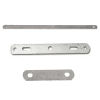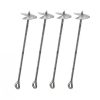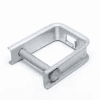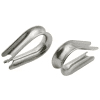
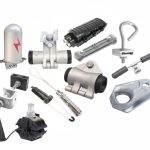
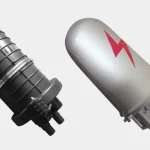
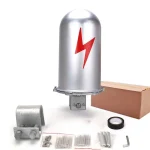

Description
Which Fittings Does Your Fiber Optic Cable Project Actually Need: ADSS, OPGW, or Both?
Every fiber-over-powerline project reaches the same moment: the cable is specified, the route is fixed, and someone has to turn a line diagram into a hardware bill of materials. That is where the questions start. Which fittings suit ADSS cable, which suit OPGW, how many dampers per span, and what happens if the clamp doesn’t match the cable diameter?
The last question is the one that matters most, because fiber cable is unforgiving hardware territory. A tension clamp sized incorrectly for an ADSS sheath crushes the fibers it is meant to protect; a suspension set sized incorrectly for an OPGW diameter chews the outer strands with every vibration cycle. The fitting is cheap; the failure it causes- a dark fiber route, a splice crew, a tower climb- is not.
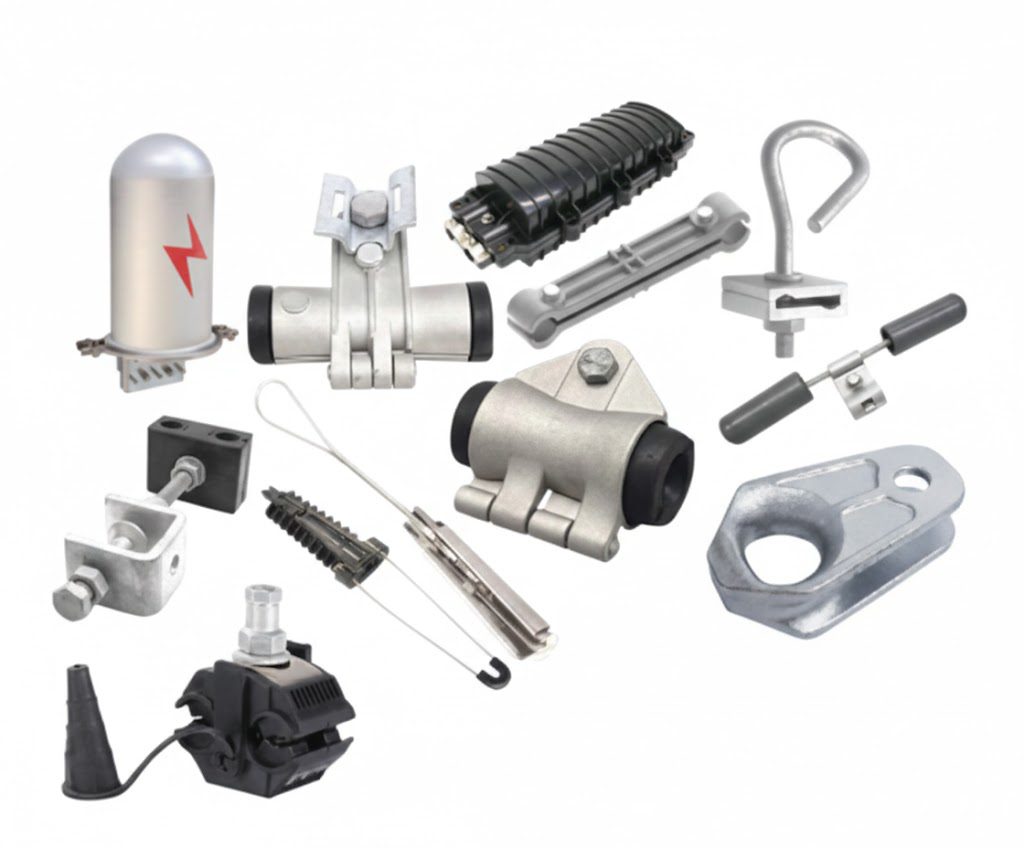
DAPENG Power manufactures the complete range of ADSS/OPGW fittings and matches every item to your cable datasheet and span schedule before production. This page is organized the way your project needs it: hardware for ADSS, hardware for OPGW, and the components both share.
Why Buyers Choose DAPENG ADSS/OPGW Fittings
- Matched to the cable, not “compatible with standard sizes.” Send the cable datasheet, manufacturer, diameter, sheath type, RTS, and every clamp, grip, and damper in the quotation is confirmed against it. Compatibility is engineered before manufacturing, not discovered at the tower.
- Gentle where the cable is delicate, unbreakable where the load lives. Elastomer-lined suspension for dielectric ADSS sheaths; helical preformed grips that spread OPGW tension over metres of cable instead of millimetres; hot-dip galvanized steel and corrosion-resistant aluminum alloy at every load path.
- Span-engineered, not just cable-sized. Short distribution spans and long transmission crossings need different hardware counts and damping plans. Quotations come with per-span hardware logic, so the BOM is complete the first time.
- One factory for fiber hardware AND the line hardware around it. The same order can include the pole line hardware, insulator assemblies, and overhead line fittings for the same structures, one container, matched documentation, one supplier to hold accountable.
- Export-proven in your markets. Supplied to utility and telecom projects across Africa, Latin America, the Middle East, and Southeast Asia, with seaworthy packing and the certificates your inspector expects.
Hardware for ADSS Cable
ADSS (All-Dielectric Self-Supporting) cable carries its own weight on aramid strength members and hangs below the conductors, so its hardware must grip a polymer sheath firmly without crushing it.
- Anchoring clamps – the tension/dead-end fittings at terminal poles, angles, and section points, wedge- or preformed-type, sized to the sheath diameter
- Armor grip suspension – tangent-structure support with helical rods and elastomer inserts that spread the clamping load across the sheath
- Spiral vibration dampers – the standard Aeolian vibration protection for dielectric cable, snapped on by hand
- Aluminum support for ADSS – pole-mounted cable support for distribution routes
- Drop wire clamps – for service drops and light-duty fiber spans
- Insulation piercing connectors – where the route shares poles with LV ABC networks
Hardware for OPGW Cable
OPGW (Optical Ground Wire) rides the topmost position on transmission towers, doubling as the lightning shield wire, metallic, tensioned hard, and exposed to every wind the route offers.
- Preformed tension clamps – helical dead-ends that develop the cable’s rated strength at strain towers without point-loading the strands
- Suspension clamps with armor rods, tangent-tower support engineered for decades of vibration cycles
- Stockbridge vibration dampers – tuned mass dampers, effectively mandatory on OPGW spans, sized to cable diameter and placed by calculation
- Down lead clamps – routing the OPGW down the tower to the splice point, clamped at regular intervals
Hardware Both Cable Types Share
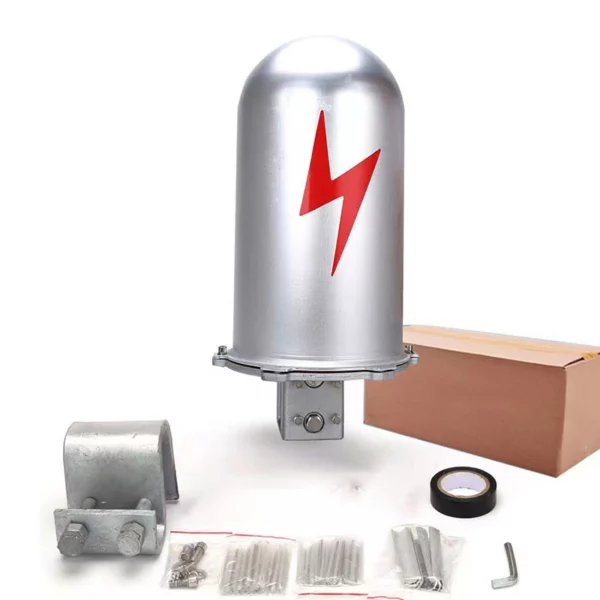
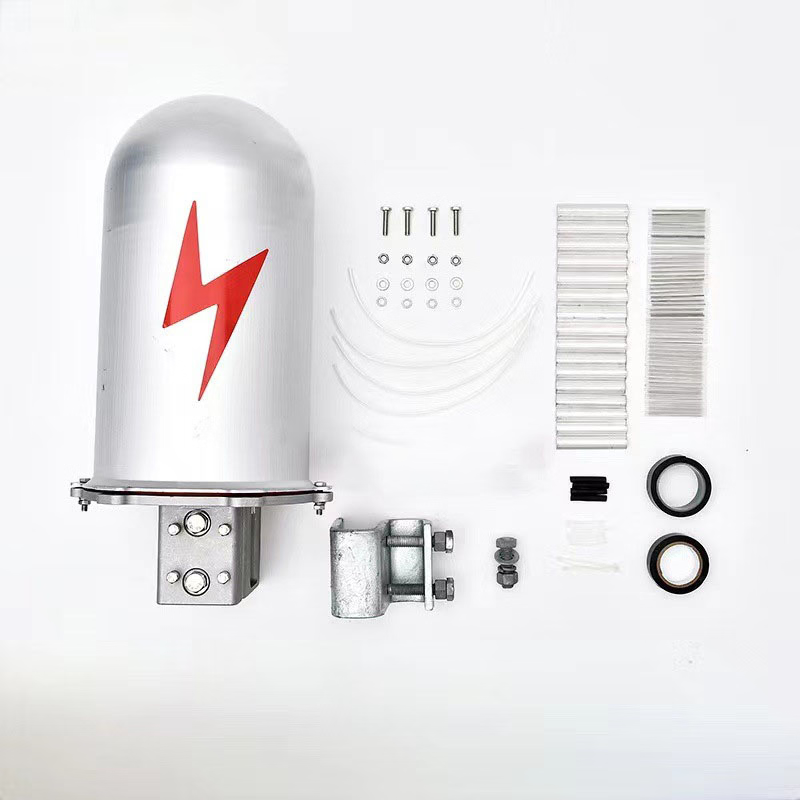
- ADSS/OPGW metal junction boxes – tower- and pole-mounted enclosures where cable sections meet
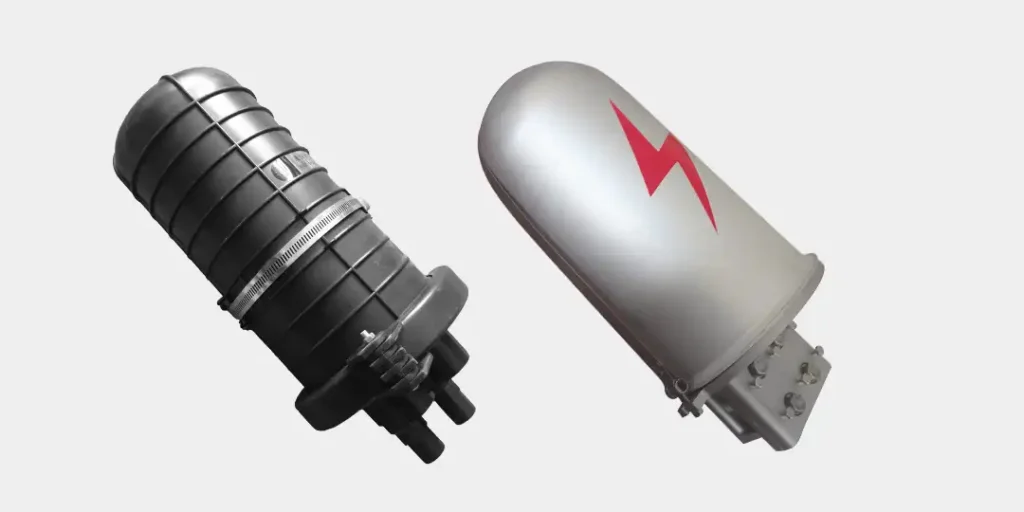
- Fiber optic closures – sealed splice protection against moisture, dust, and time
- Span clamps and bolted cable spacers – mid-span management where routes run parallel or cross
- Thimble clevises and attachment hardware completing the fixing chain to the structure
Not sure which cable type your project should specify in the first place? Our engineering guide compares them point by point: ADSS vs OPGW: Which Fiber Optic Cable Is Right for Your Project? .
Use-Case Deep Dive
What fittings do I need for an ADSS installation on an existing distribution line?
The standard set per route: anchoring clamps at every terminal, angle, and section pole; armor grip suspension (or ADSS suspension sets) at tangent poles; spiral vibration dampers on longer or exposed spans; downlead hardware and a junction box or closure at each splice location. Because ADSS installs on live lines, hardware that fits first time matters double, there is no outage window to absorb delays. Send us the pole schedule and cable datasheet; the quotation returns as a per-pole hardware list your crews can pick from the container.
What hardware does an OPGW route require at each tower?
Tension towers take preformed tension clamps (one set per cable end, plus jumper management); tangent towers take a suspension clamp with armor rods; every span end takes Stockbridge dampers per the placement calculation; and the terminal towers add down lead clamps at intervals down the structure to the splice box. The discipline that separates a quiet OPGW route from a noisy one is damping: dampers sized to the exact cable diameter and placed at the calculated distance from the clamp, a calculation we supply with every OPGW hardware order.
Can one supplier really cover both ADSS and OPGW hardware, and should they?
Yes, and on mixed networks it is the smarter procurement. Grids increasingly run OPGW on the transmission backbone and ADSS on distribution laterals, spliced at substations. Sourcing both hardware families from one factory means one compatibility review, one set of documentation, one container, and no finger-pointing between vendors if anything queries at inspection. It is the configuration most of our utility customers in Africa and Southeast Asia now order.
Specifications and What They Mean for You
| Specification | What we do | What it means for the buyer |
|---|---|---|
| Cable matching | Every fitting confirmed against your cable datasheet (diameter, sheath, RTS) | No crushed sheaths, no slipping grips, no site surprises |
| Materials | Hot-dip galvanized steel (ISO 1461/ASTM A153 class), aluminum alloy, elastomer inserts, UV-stable polymers | Each material where its properties matter; decades of design life outdoors |
| Load ratings | Rated per product, batch-tested; preformed grips developing cable RTS-class holding | Safety factors on tested numbers, not catalog optimism |
| Standards alignment | Manufactured in line with IEEE 1222 (ADSS) and IEEE 1138 (OPGW) hardware practice; OEM to utility specs | Passes your client’s specification review |
| Span engineering | Damper counts and placement per span/tension data | The BOM is complete and correct the first time |
| Documentation | Test reports, material certs, packing lists per PO | Clears inspection at both ends of the voyage |
Straight Answers to Common Buyer Concerns
“How do I know the fittings will actually match my cable?” Because matching is the first step of our quotation, not a disclaimer in our terms. You send the cable datasheet; we return the hardware list with each item’s size confirmation. If a diameter sits between standard sizes, we flag it and tool accordingly, before production, in writing.
“Fiber hardware failures are invisible until the route goes dark. What’s my assurance?” Verifiable manufacturing, not adjectives: coating-class galvanizing you can gauge on arrival, batch test reports with every shipment, and third-party inspection (SGS/BV or your agency) welcome at the factory. The design life of properly specified, properly installed fiber hardware is measured in decades, and every element of that specification is checkable before the container closes.
“Can you handle a mixed order, fiber hardware plus the line hardware for the same structures?” That is precisely our advantage. Fittings, insulators, pole hardware, and grounding for the same project ship together, kitted per your structure schedule on request.
Get a Cable-Matched Quote Within 24 Hours
Send your cable datasheet, span schedule, or project BOM, even a marked-up line diagram works. Our engineers confirm every size, flag every gap, and return a factory-direct quotation, typically within one working day. Container production slots are scheduled on confirmation; early inquiries ship earlier.
After You Order
Size-confirmation sheet before production, progress updates through manufacturing, pre-shipment inspection access, full export documentation with test reports, and engineers who still answer the email after the route is lit, because fiber networks grow, and we intend to supply the next phase too.