
Description
How Do You Attach a Service Drop Between Poles Without Planting a New Pole?
Every aerial network build meets this customer eventually: the house, shop, or unit that sits between the poles. The strand passes right over it; the subscriber is paying from day one; and the nearest pole attachment is half a span away in each direction. Planting a new pole for one drop kills the connection economics. Running the drop diagonally from the pole looks bad, sags worse, and fails inspection.
The purpose-built answer weighs a few hundred grams: the span clamp. It grips the suspension strand (messenger wire) at any point along the span and presents a bail or eye from which a drop wire clamp and the subscriber’s service drop hang securely. One clamp, one climb or bucket stop, one connected customer, no new pole.
If your FTTH rollout, telecom rebuild, or CATV plant is asking how to attach drops mid-span, this is the hardware, and this page covers selecting and deploying it at project scale.
What a Span Clamp Is, Precisely
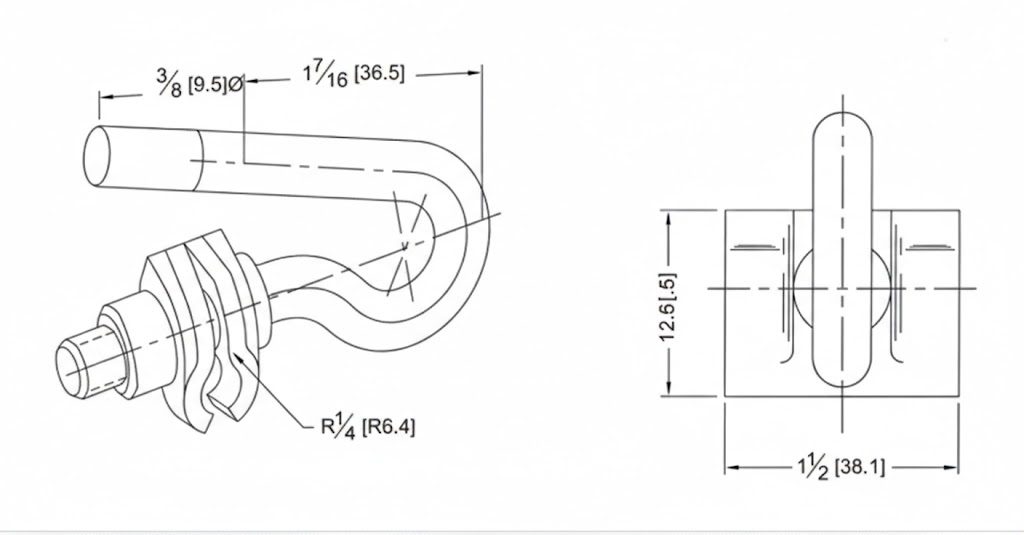
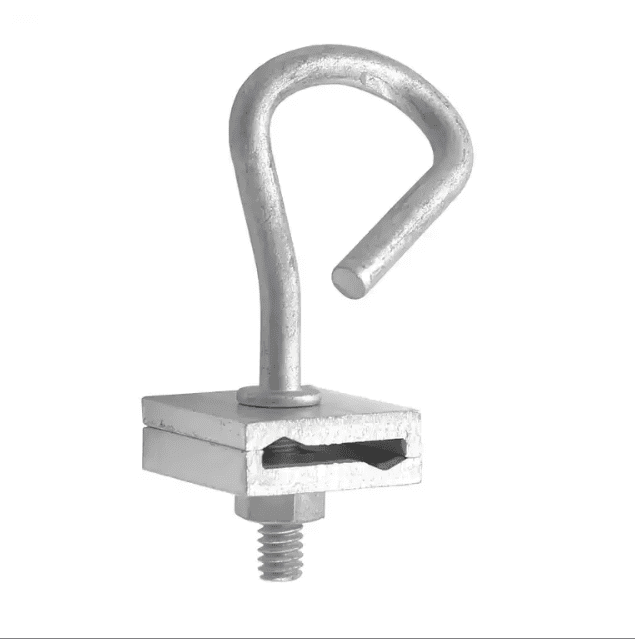
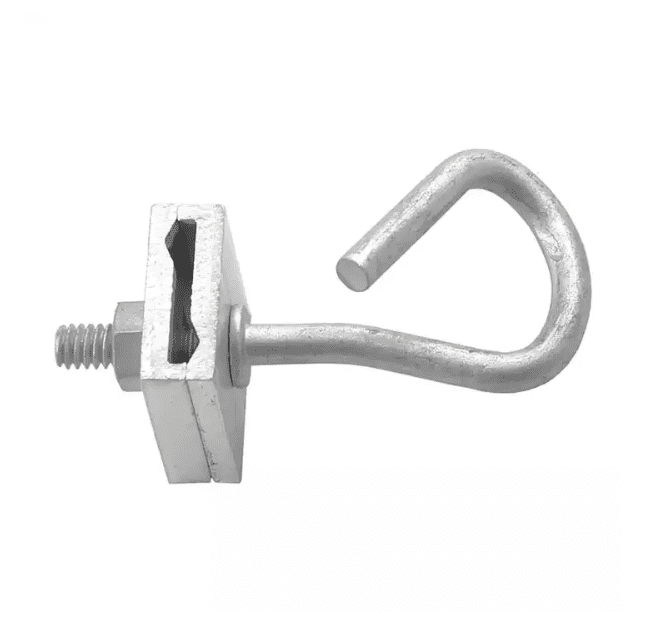
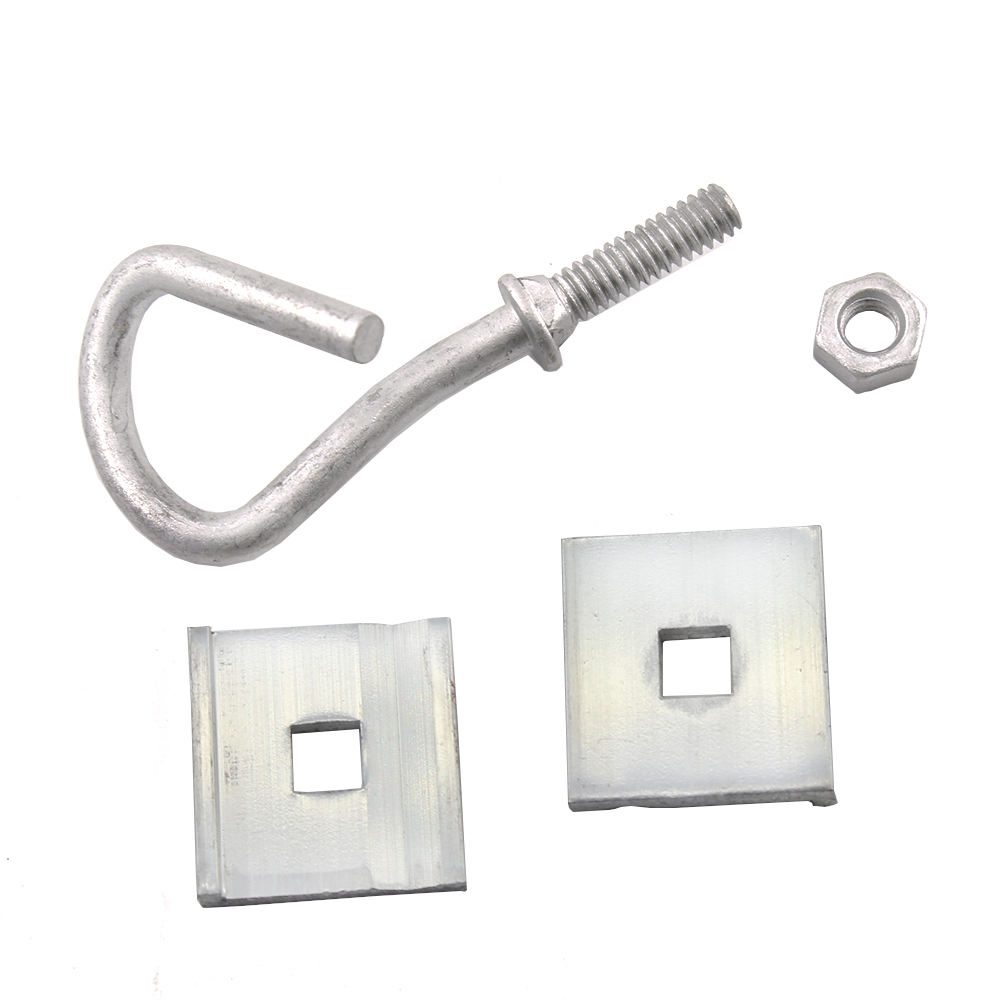
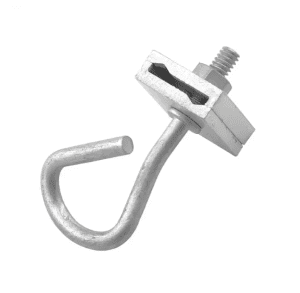
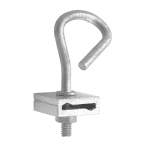
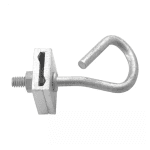
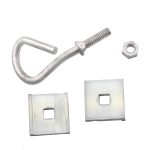
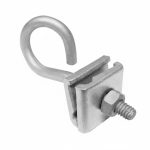
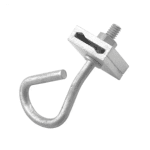
A span clamp is a two-part galvanized clamp that closes around the steel messenger strand and locks with a bolt (or bolts), gripping the strand firmly without crushing or displacing it. Formed into the clamp body is an attachment point, typically a bail, hook seat, or eye, engineered to receive the wedge or spiral of a standard drop wire clamp.
The load logic is simple and sound: the subscriber drop’s tension pulls on the drop wire clamp; the drop wire clamp hangs on the span clamp; the span clamp transfers that load into the messenger strand, which was engineered to carry distributed loads along its length in the first place. The drop hangs plumb from directly above the premises, with the sag and clearance your standard requires.
The widely used Q-type pattern, the hook-profile span clamp familiar from North American telecom plant, is among the configurations we manufacture, alongside bail and eye patterns to regional standards.
Why Buyers Choose DAPENG Span Clamps
- Grip that holds through weather, not just installation day. The clamp faces are profiled to the strand diameter, spreading clamping force so the strand is held, not notched, because a notched messenger is tomorrow’s corrosion point and next storm’s break.
- Galvanizing you can measure. Hot-dip galvanized to ISO 1461 / ASTM A153 class coatings, this clamp lives its whole life exposed mid-span, where nobody re-paints and nobody inspects closely. The coating is the maintenance plan.
- Sized to your strand, stated plainly. Clamps matched to standard messenger sizes (6.0 mm / 1/4″ and 7/2.00-class strand among the common ones, confirm your strand spec with the RFQ and we match it). No “universal fit” vagueness that turns into slippage on the thin strand and won’t-close on the thick one.
- Volume economics for rollout scale. FTTH builds consume span clamps by the thousand. Factory-direct pricing, export cartons counted the way crews draw stock, and production scheduling that keeps pace with your activation targets.
- The whole drop path from one factory. Span clamps ship with the drop wire clamps they carry, the anchoring clamps and suspension clamps that hold the strand and cable at the poles, and the fiber optic closures where the drops originate, matched, kitted, and documented together.
Use-Case Deep Dive
Can I use a span clamp to add a fiber drop for a customer between two poles?
Yes, that is the product’s defining job. Locate the clamp on the strand directly above (or per your standard’s offset from) the service entry point, close and torque it, hang the drop wire clamp from the bail, and dress the drop to the premises. The customer connects from where the plant already is. For rollouts, this changes the survey math: any premises under the strand is serviceable without civil work, which is why span clamps are ordered by the carton, not the piece.
How do I choose the right span clamp size?
Match the clamp to the messenger strand diameter, that is the controlling dimension. Check three things: (1) the clamp’s stated strand range covers your strand size and construction; (2) the attachment bail suits your drop wire clamp pattern (wedge-type spiral bails and hook seats differ, send your drop clamp spec and we confirm the pairing); (3) the working load covers your drop weight and span of drop wire with your standard’s factor. Mixed-strand networks (legacy 1/4″ plus newer metric strand) simply order two sizes, marked distinctly, tell us and we mark the cartons accordingly.
Are span clamps only for telecom, or can they support other mid-span attachments?
The core application is communications drops fiber, copper pairs, coax, hung from a messenger. The same mid-span logic serves streetlight feed drops and similar light service attachments where the local standard permits. What a span clamp is not for: terminating or tensioning the main cable itself. That is the job of the tension and suspension families (anchoring clamps and bolt type tension clamps at dead-ends; suspension clamps at supports). Keeping those roles straight is what keeps the plant standing, and we’re glad to review a mixed BOM before you order.
Specifications and What They Mean for You
| Specification | What we do | What it means for the buyer |
|---|---|---|
| Body | Galvanized steel, two-part bolted closure | Closes around live strand mid-span, no threading from the end |
| Coating | Hot-dip galvanized, ISO 1461 / ASTM A153 class | Decades exposed at mid-span with zero maintenance access |
| Strand range | Sized to standard messenger diameters; range marked per clamp | The right bite on your strand, confirmed at RFQ, not discovered aloft |
| Attachment | Bail / hook / eye patterns incl. Q-type profile | Mates with your standard drop wire clamps, first time |
| Load rating | Rated working load per size; batch tested | Drop weight and wind load carried with your safety factor intact |
| Packing | Rollout-scale cartons, counts and markings per PO | Stockrooms and crews draw exactly what the day’s drops need |
Straight Answers to Common Buyer Concerns
“It’s a low-cost item, why not just buy the cheapest listing?” Because the cost of a span clamp was never the clamp; it’s the truck roll when one fails. A slipped clamp is a sagging drop across a driveway; a rusted one is a service call in year six instead of year twenty-six. Measurable galvanizing class and batch load testing cost cents more per unit and remove both failure modes.
“We order tens of thousands of pieces for a rollout, how do you handle QC at that volume?” By batch: each production batch is load-tested and coating-checked with reports supplied, and third-party inspection (SGS/BV or your nominated agency) is welcome before dispatch. Sampling plans per your QA standard are routine for rollout-scale orders.
“Our network mixes strand sizes and drop clamp brands. Can you match all of it?” Send the strand specs and a sample or datasheet of your drop wire clamp. We confirm every pairing in writing before production, mismatch discovered at the RFQ stage costs nothing; discovered on the strand, it costs the afternoon.
Complete the Aerial Drop System
- Drop wire clamps – the other half of every mid-span drop
- Anchoring clamps and suspension clamps, holding the strand and cable at the poles
- Fiber optic closures – where the drops begin
- Browse all ADSS/OPGW fittings for the full aerial fiber hardware range
Get a Rollout-Ready Quote Within 24 Hours
Send your strand specification, drop clamp pattern, and estimated quantities, or simply the network standard you build to. Our engineers confirm sizes and pairings and return a factory-direct quotation, typically within one working day. Rollout orders are scheduled in production batches aligned to your activation calendar.
After You Order
Pairing confirmation before production, batch test and coating reports with every shipment, cartons marked for crew-level stock draws, and an engineering contact who answers when a field question comes in from the bucket, because rollouts move fast, and hardware questions can’t wait for next week.