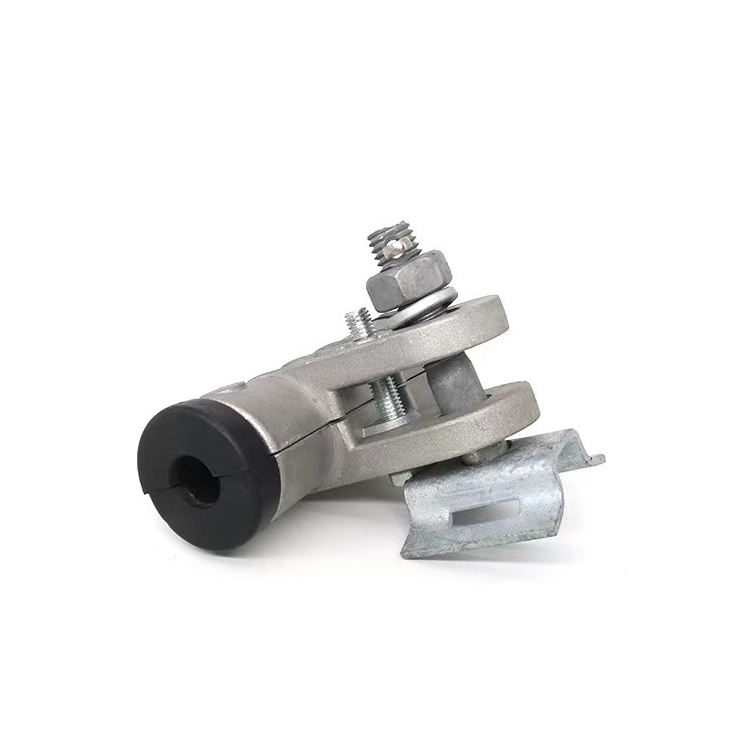
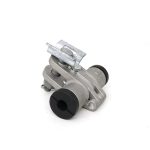
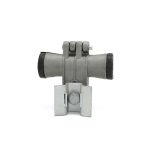
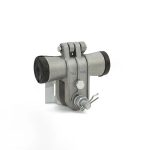
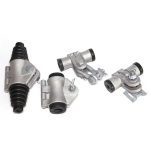
Description
What Holds ADSS Cable at the Pole, and Why Does the Bracket Matter More Than It Looks?
The cable is engineered. The spans are calculated. The clamps are rated. And then the route reaches a pole, and the ADSS has to be held somewhere, at some distance from the pole face, at some height, through some curve, and a small aluminum bracket decides all three.
Get it right and the cable sits where the clearance design put it, turns on a radius the fiber never notices, and stays there for thirty years. Get it wrong, and you have a cable pressed against a pole face, a bend tighter than the datasheet permits, or a fiber route sitting closer to energized conductors than anyone intended.
Aluminum supports for ADSS are the brackets that make the design real at the structure. If your route drawings show ADSS on distribution poles and you are pricing the pole hardware, this page covers what the bracket does, how to mount it, and what to specify.
What Does an Aluminum ADSS Support Actually Do?
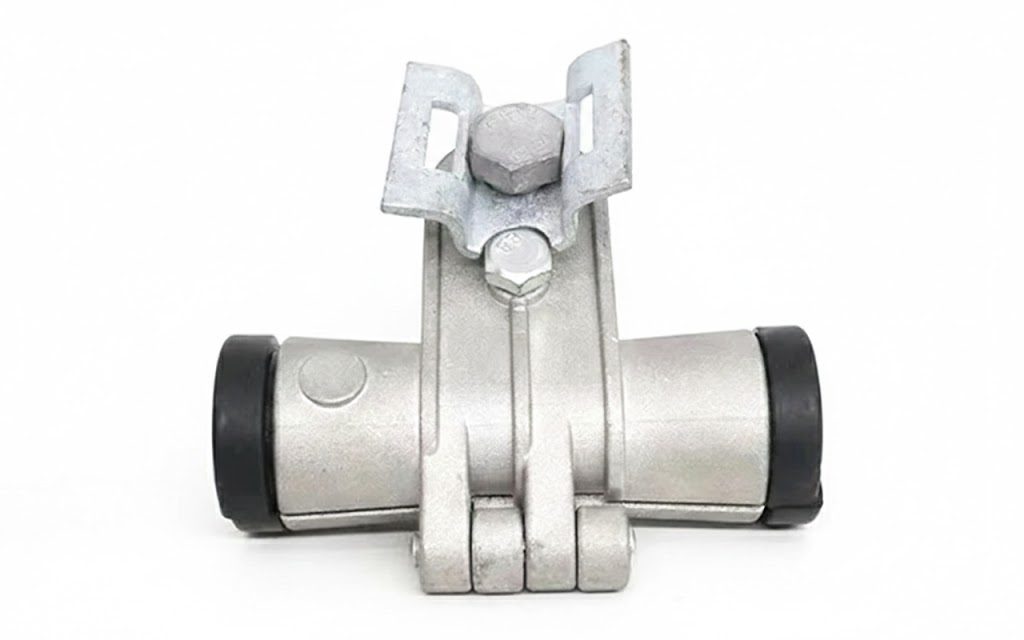
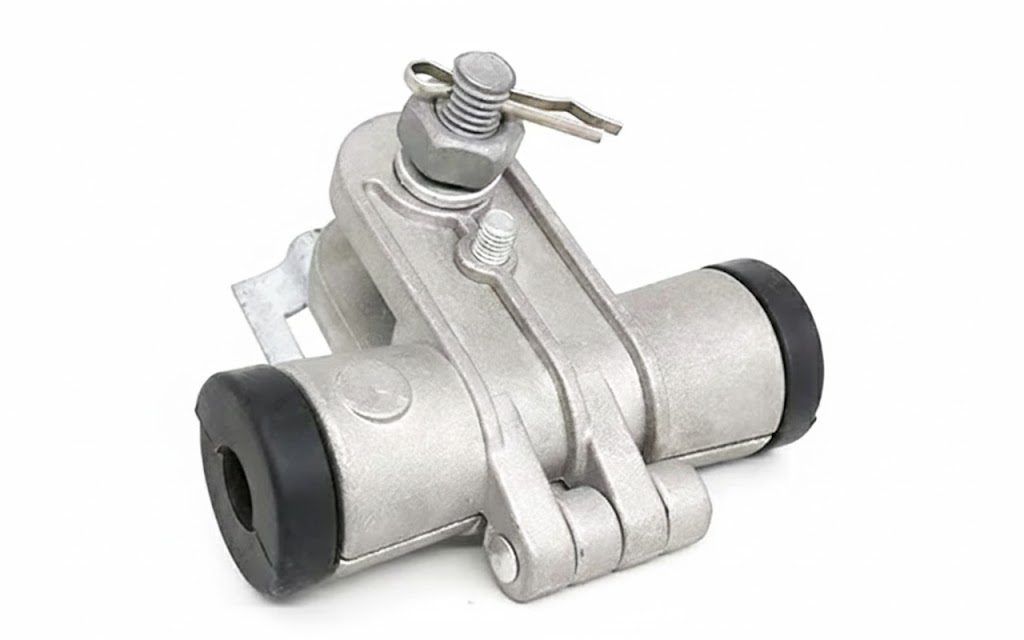
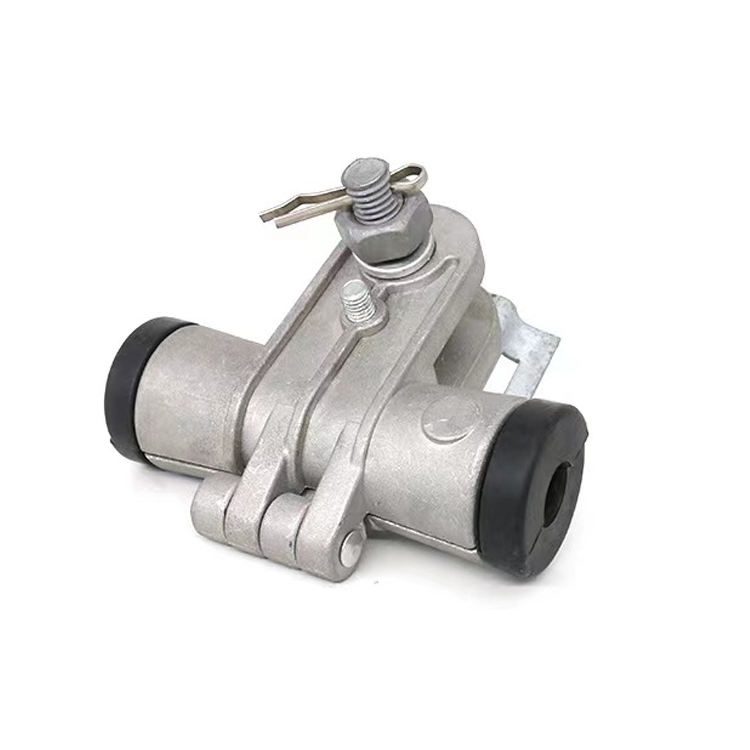
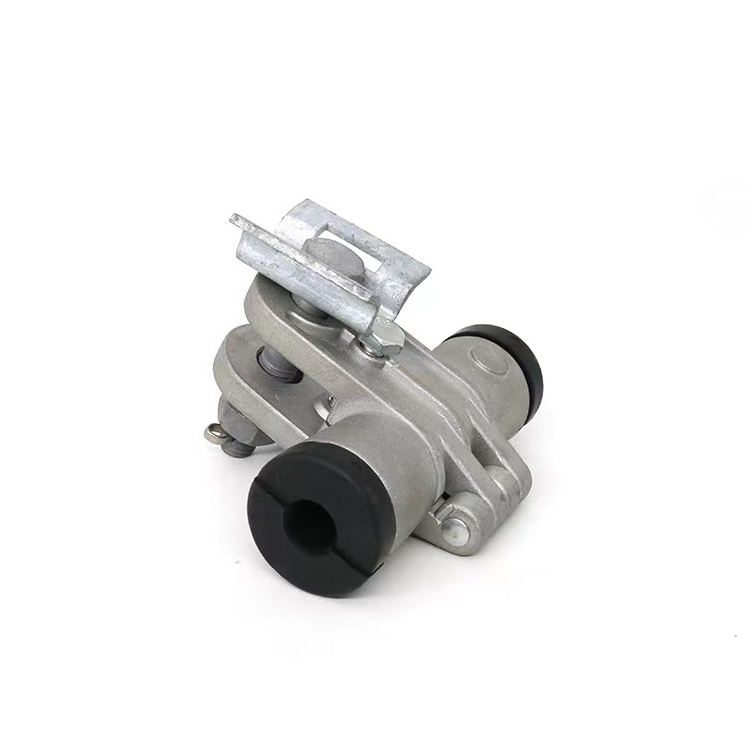
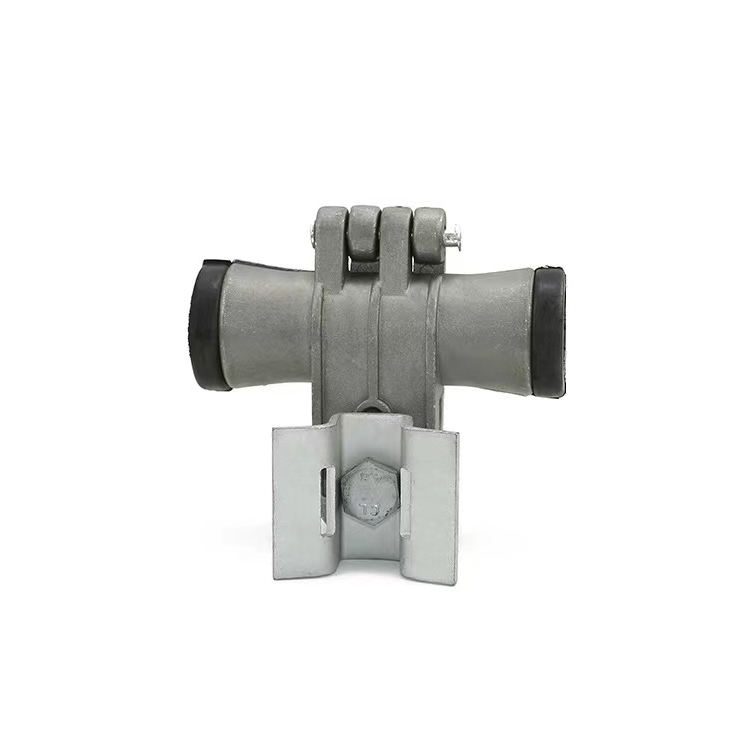
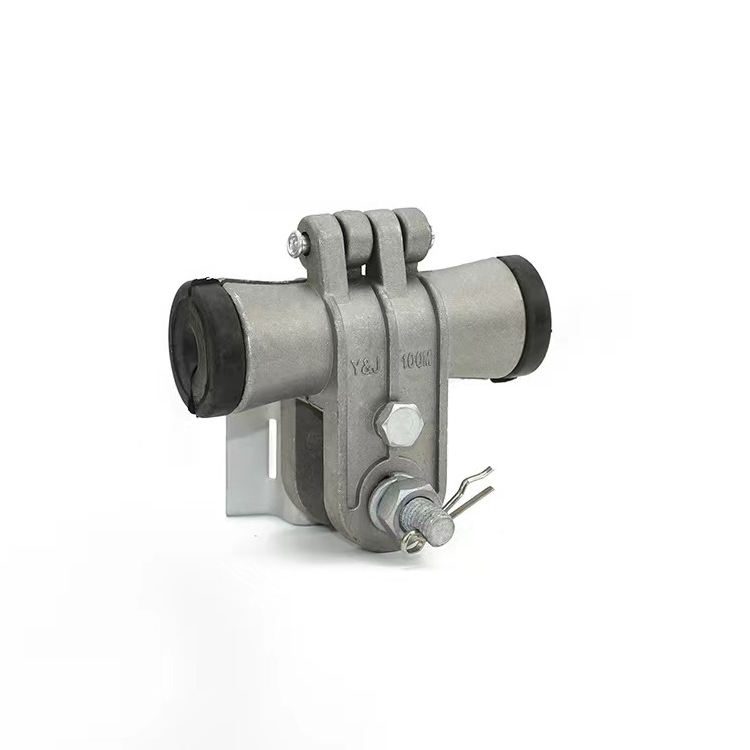
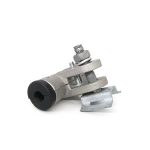
An aluminum support for ADSS is a pole-mounted bracket that carries the cable or its clamp away from the pole face, fixing the cable’s position and protecting its bend radius through the transition. It mounts by stainless steel banding or bolts, provides the attachment point for suspension or anchoring hardware, and is made in aluminum alloy so it adds minimal weight to the pole and never corrodes or rust-stains the structure.
Three jobs, done at once:
- Standoff. It holds the cable a fixed distance off the pole, so the cable is never pressed against timber, concrete, or steel, and so its position matches what the clearance design assumed.
- Attachment. It presents the point where anchoring clamps or suspension hardware hang, transferring span loads into the pole through the bracket rather than through improvised fixings.
- Radius control. Where the cable changes direction, around a pole, down toward a closure, or into a storage loop, the bracket’s geometry holds the curve above the cable’s minimum bend radius. Below that radius, attenuation begins; the bracket is what keeps the route on the right side of the line.
Why Position at the Pole Is an Engineering Decision, Not a Convenience
Here is the part competitor pages leave out.
On shared distribution poles, ADSS runs below energized conductors, and the cable’s exposure to the electric field varies with where it sits. That exposure is what drives dry-band arcing, the slow tracking degradation that erodes an ADSS sheath over years in high-field positions. Route designers choose the cable’s attachment height and standoff for exactly this reason, alongside statutory clearances to conductors, to the ground, and to anything a person might climb.
A bracket is what turns that decision into an installed fact, and holds it there after a crew has moved on. Which is why “any bracket that fits” is the wrong specification, and why standoff dimension belongs on the RFQ alongside pole diameter.
(For the wider cable-choice context, where ADSS is the right specification and where OPGW is, see our engineering guide: ADSS vs OPGW: Which Fiber Optic Cable Is Right for Your Project?
Why Buyers Choose DAPENG Aluminum ADSS Supports
- Aluminum alloy, for the reasons that actually matter. Light enough that a bracket at every pole adds negligible load to structures already carrying conductors; corrosion-free in coastal and humid climates; and it never leaves rust streaks down a concrete pole, a small thing that municipal clients notice for twenty years. (Aluminum is chosen for weight and corrosion resistance, not for electrical insulation, the ADSS cable is the dielectric element in the design, and the bracket is metal hardware. Any supplier implying otherwise is selling you a claim, not a component.)
- Mounts without drilling. Fixed by stainless steel banding straps and buckles around poles of any diameter, essential on concrete poles where drilling is prohibited and on timber poles where a drilled hole is an invitation to rot. Bolt-fixed patterns available where your standard specifies them.
- Standoff and geometry to your drawing. Standoff distance, bracket length, and attachment configuration built to your route specification rather than a generic pattern.
- Radius-friendly by design. Cable-bearing surfaces shaped and finished so the sheath is supported over a curve, not laid across an edge, the difference between a support and a wear point.
- Ordered as a pole kit, not a line item. Brackets ship with the banding that mounts them, the anchoring or suspension hardware they carry, and the dampers, down lead clamps and closures of the same route, one review, one container, one supplier answerable for the fit.
Use-Case Deep Dive
How is an aluminum ADSS support mounted to different pole types?
Concrete poles: banding, always, most utility standards prohibit drilling concrete, and stainless straps grip any diameter without touching the reinforcement. Timber poles: banding is preferred for the same reason a linesman avoids unnecessary holes, every penetration is a moisture path; bolt patterns are used where the standard calls for them. Steel and composite poles: banding or bolting to the structure’s own provisions. Mixed networks order both patterns, marked by pole type on the cartons, which is how a crew avoids improvising at the fourth pole of the morning. Send the pole schedule with diameters and the mix comes back with the quotation.
Can these supports be used for cable storage loops at splice poles?
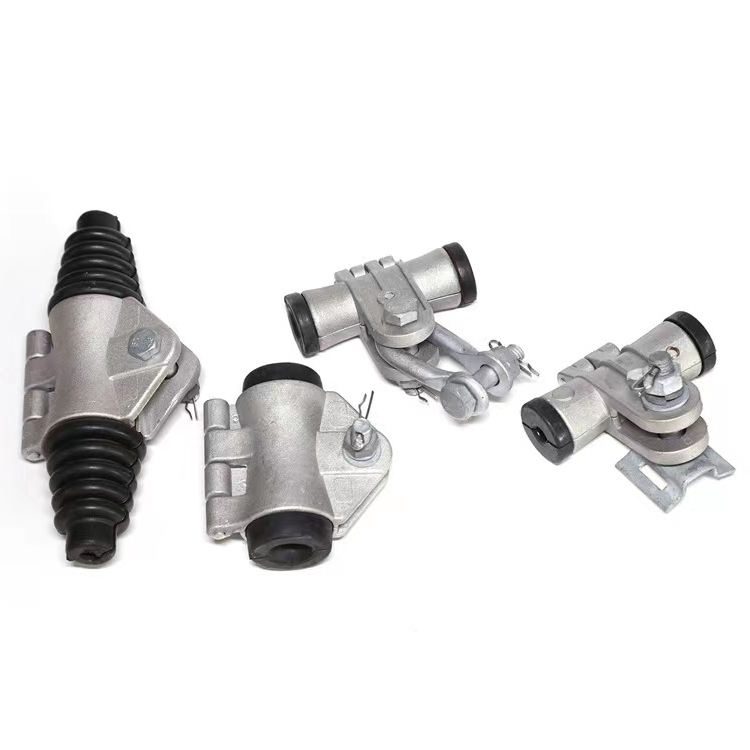
Storage brackets are a related pattern in the same family and serve the splice-pole case: at every joint location an ADSS route needs slack, enough cable to lower into a splice van and re-terminate more than once over the route’s life, coiled and held where wind cannot work it loose. Specify storage brackets with the junction box or closure and the down lead clamps that route the cable between them, and the splice pole arrives as one kit.
What do I need to specify when ordering?
Four inputs, and the quotation writes itself:
- Pole type and diameter range – fixes banding versus bolting, and strap lengths.
- Standoff distance required – from your clearance design, not from habit.
- Cable diameter and what hangs from the bracket – anchoring clamp, suspension assembly, or a passing support.
- Quantities by structure class – tangent poles, angle poles, splice poles; each usually takes a different bracket count.
Send those with the route drawing and the return quotation lists brackets per structure class with the mounting hardware alongside.
Specifications and What They Mean for You
| Specification | What we supply | What it means for the buyer |
|---|---|---|
| Material | Aluminum alloy body | Negligible added load per pole; corrosion-free; no rust staining on concrete |
| Mounting | Stainless banding (any pole diameter) or bolt patterns | No drilling on concrete or timber, where standards forbid or discourage it |
| Standoff | Built to your clearance design | The cable sits where the design put it, permanently |
| Cable seating | Radius-shaped, smooth-finished bearing surfaces | Bend radius respected; no edge wear on the sheath |
| Attachment | Configured for anchoring or suspension hardware | Span loads land on the bracket, not on improvised fixings |
| Ratings | Published only from tested figures – never indicative numbers |
Straight Answers to Common Buyer Concerns
“It’s a bracket. Does the supplier really matter?” It matters at exactly two moments: the day it’s installed, and the day it fails. A bracket that flexes lets the cable move against the pole; one that corrodes at the banding interface stains the pole and eventually releases; one with a sharp bearing edge wears a sheath for years before anyone sees it. None of that is visible in a product photo, and all of it is checkable, material certificates, coating and finish inspection, and samples before the programmed order.
“Can you match the bracket we already use on this network?” Send a photo with a tape measure in frame, or the drawing if you have it. Matching existing hardware on a network mid-build is routine OEM work: dimensions confirmed to you before production, so the new poles look and behave like the old ones. Mixed-vintage plant is normal; mismatched geometry at the same route is avoidable.
“We’re buying the whole ADSS route. Can this come in one order?” That’s the intended way. Brackets, banding, anchoring clamps (our PAL series covers 10-150 mm² with messenger diameters of 5-18 mm at 10-15 kN breaking load; the PA series covers 4-15 mm cable at 2.5-10 kN), vibration dampers, down lead clamps, junction boxes and closures , quoted together, kitted per structure class, shipped in one container with one set of documents.
Complete the ADSS Pole
- Anchoring clamps and armor grip suspension – what the bracket carries
- Stainless steel banding straps, buckles and pole bands – the mounting system
- Spiral vibration dampers – span protection between poles
- Down lead clamps, junction boxes and fiber optic closures – the splice pole
- Span clamps and drop wire clamps – service drops off the route
- Browse all ADSS/OPGW fittings and pole line hardware
Get a Pole-Matched Quote Within 24 Hours
Send your pole schedule, standoff requirement, cable datasheet and structure counts, or simply the route drawings. Our engineers confirm the bracket pattern per pole type, propose the mounting method your standard allows, and return a factory-direct quotation, typically within one working day, with the rest of the pole kit quoted alongside.
After You Order
Dimension confirmation before production, material certificates with shipment, cartons kitted by structure class so each crew carries what that pole needs, and an engineering contact who answers while the bucket is still up, because route builds are measured in poles per day, and a bracket question shouldn’t cost one.