
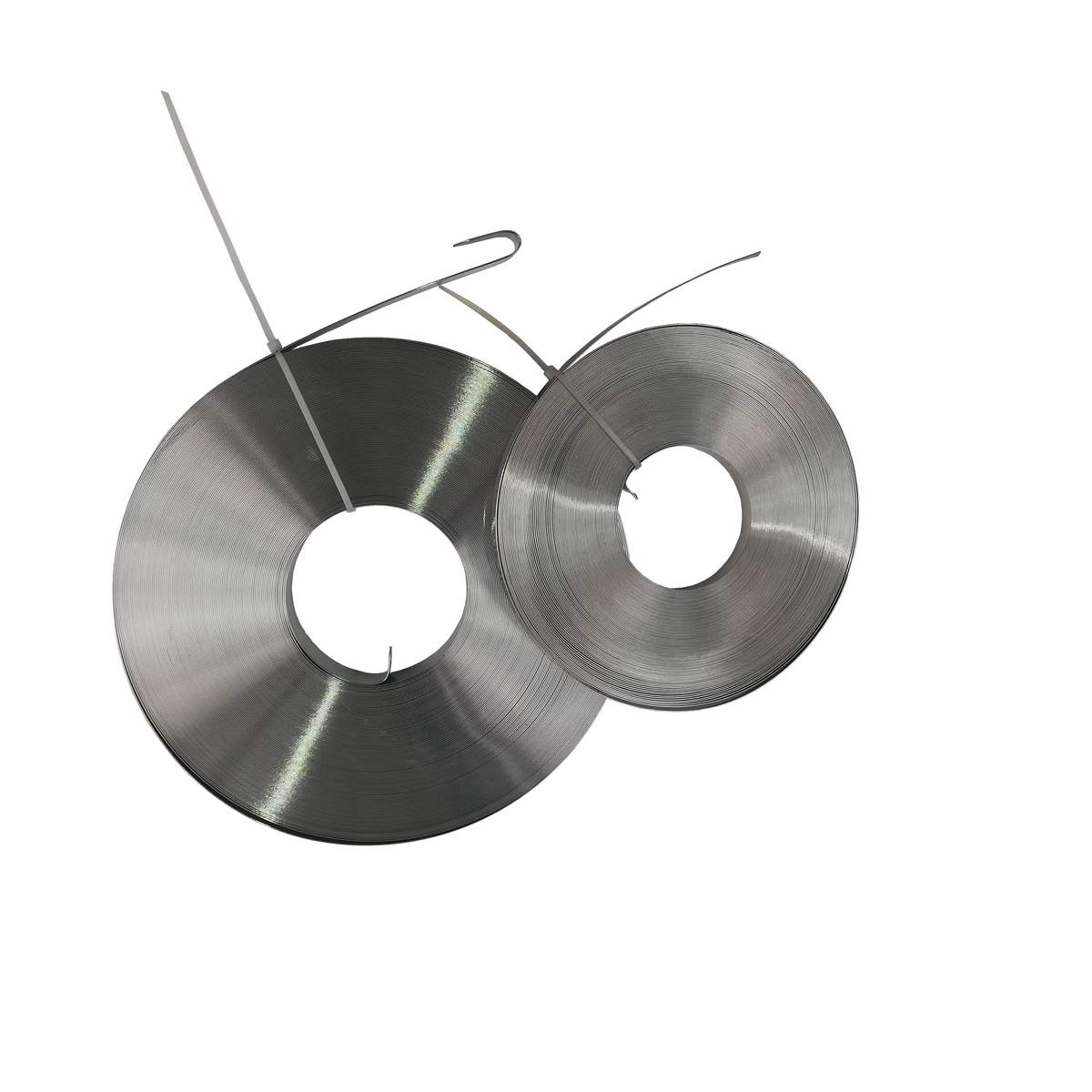
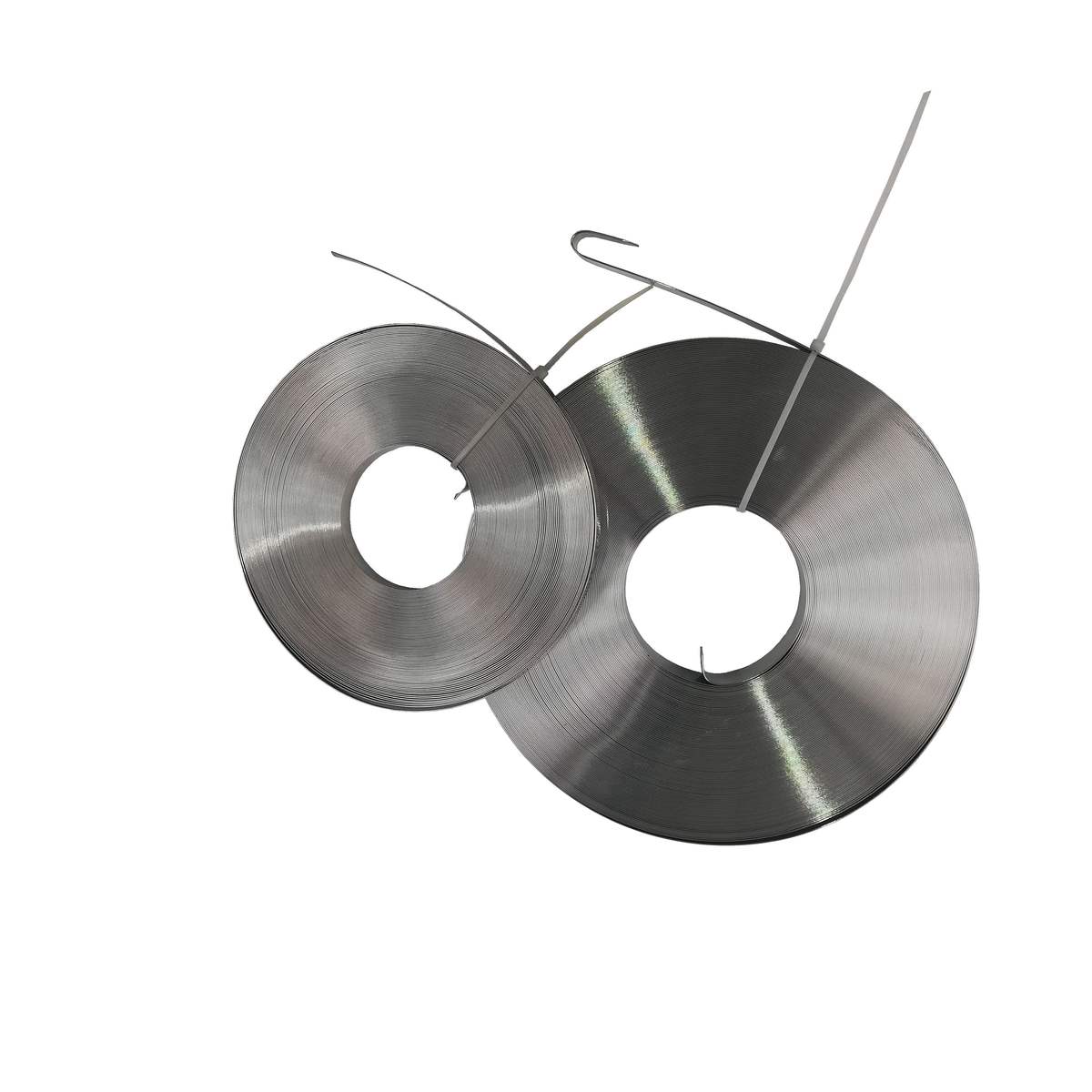
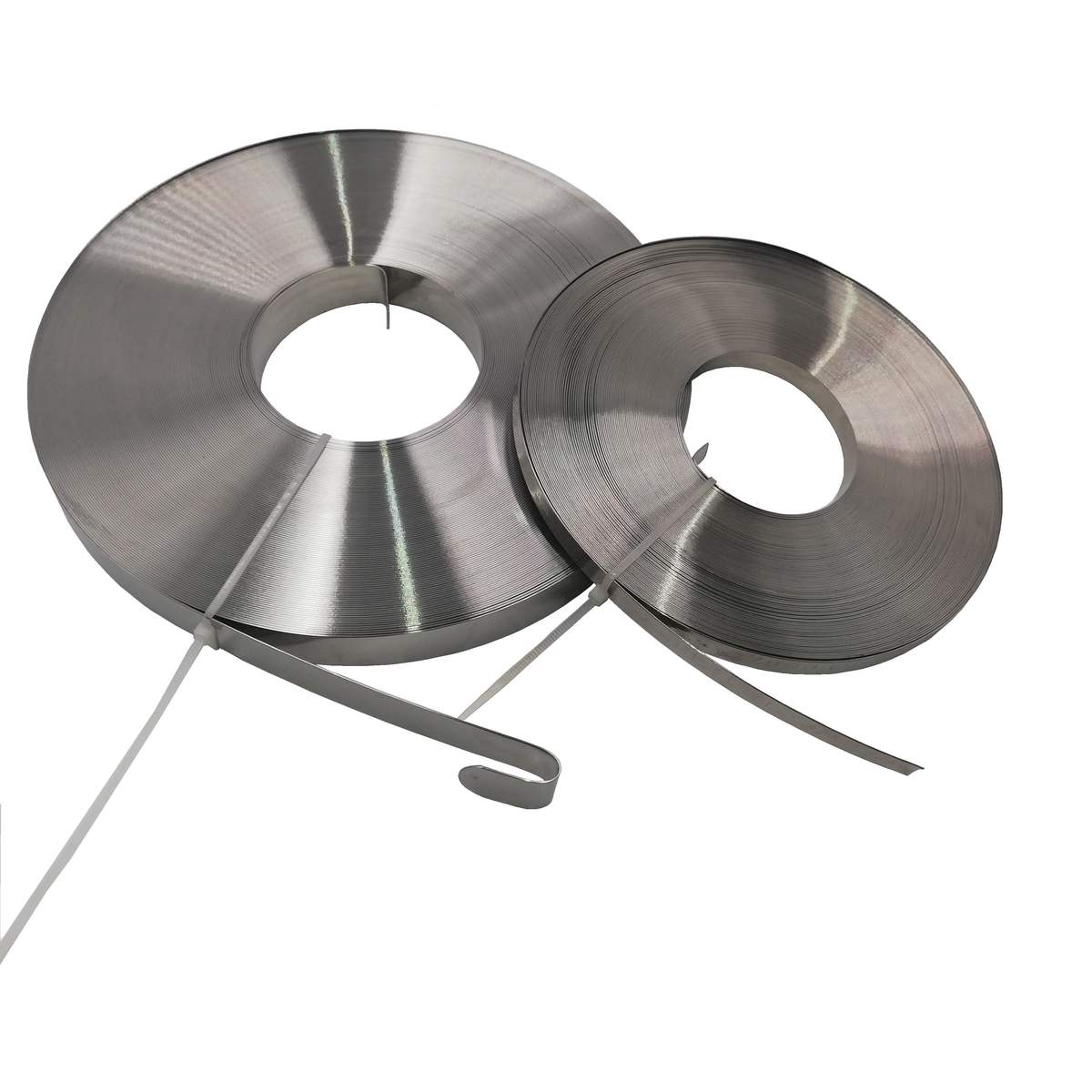
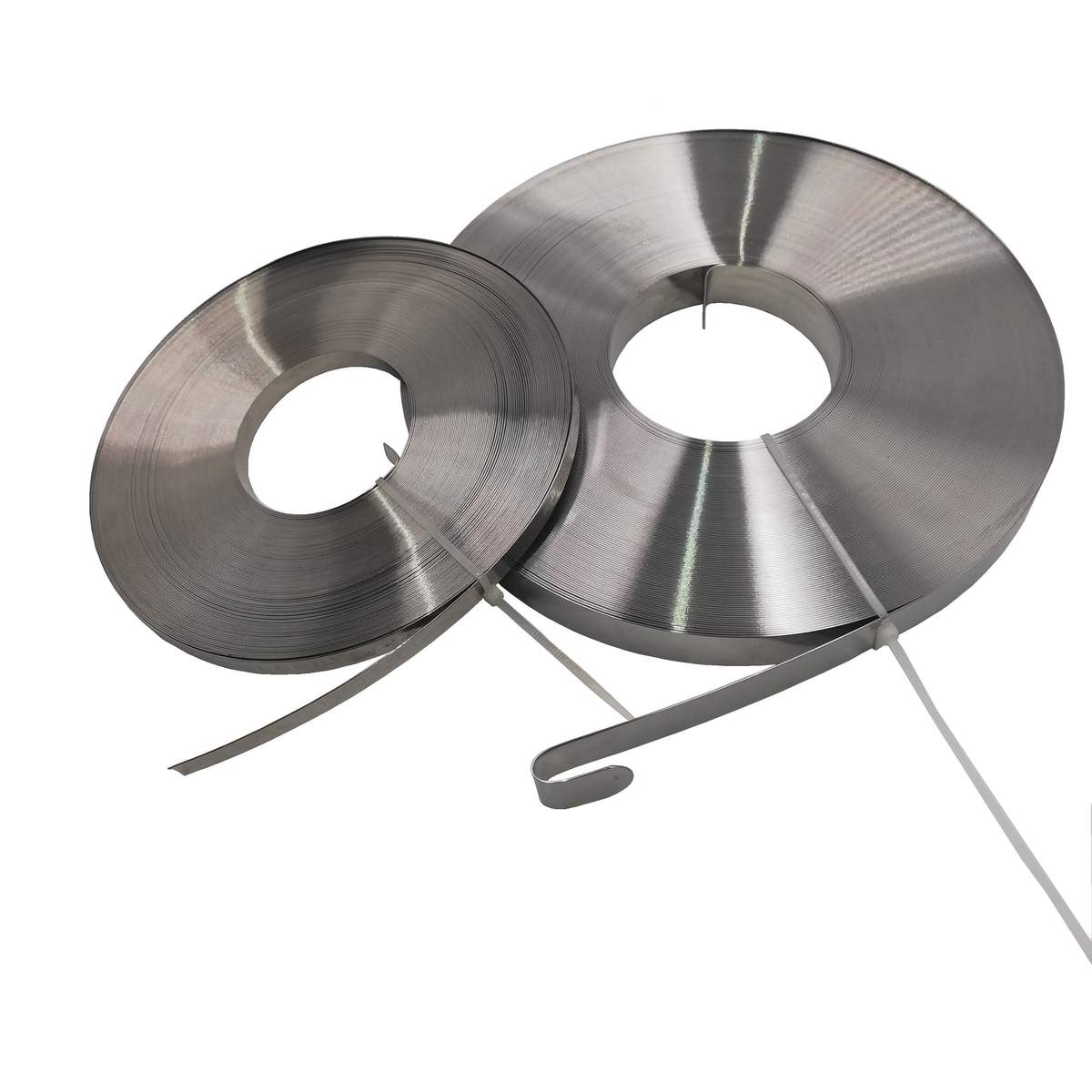
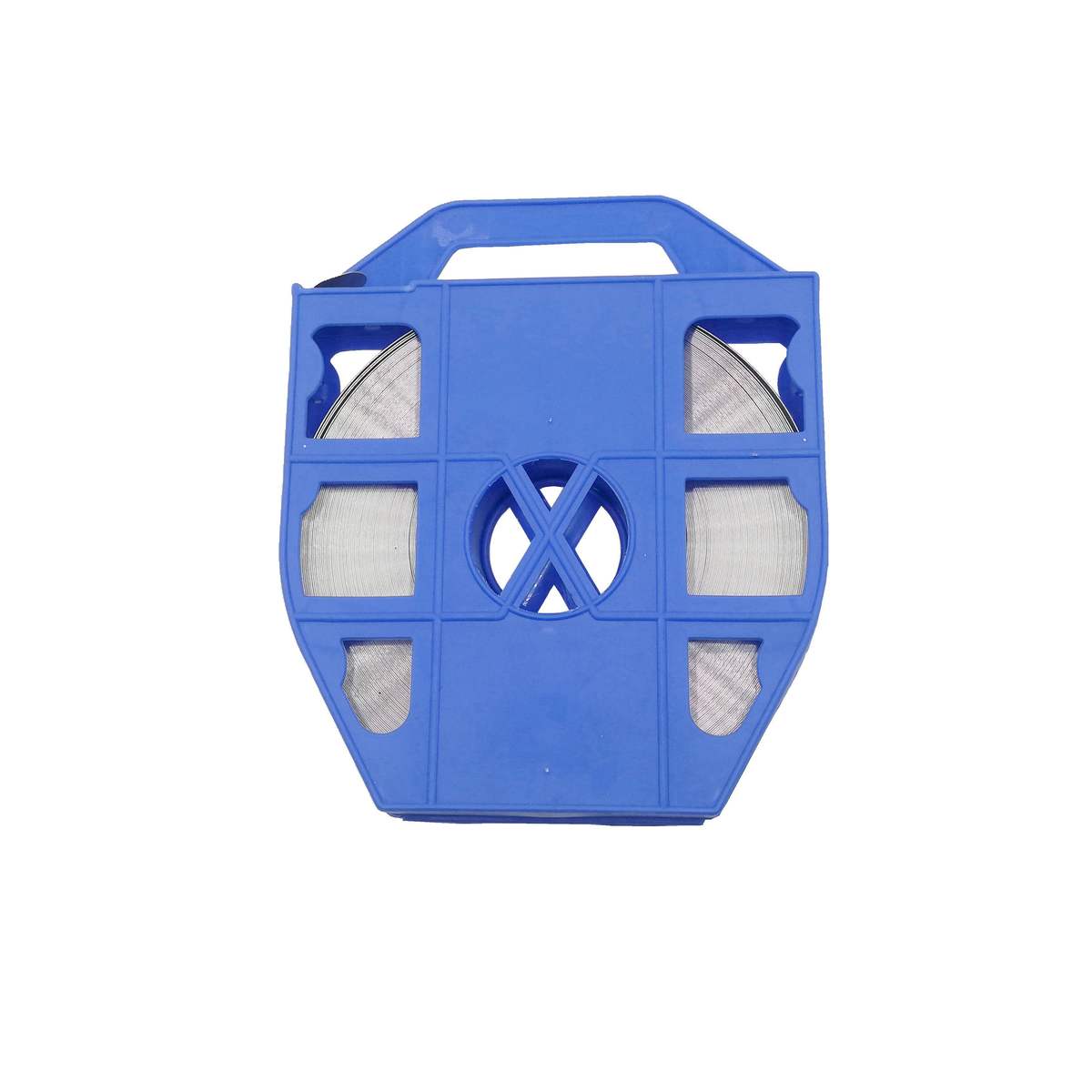
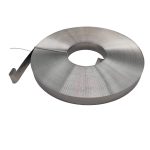
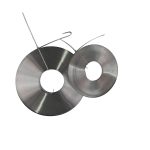
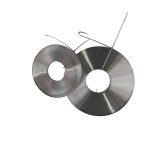
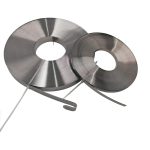
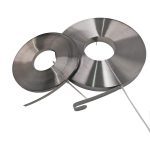
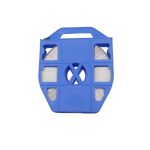
Description
How Do You Mount Hardware to a Concrete Pole You’re Not Allowed to Drill?
Most utility standards prohibit drilling concrete poles; a hole risks the reinforcement and voids the pole’s structural warranty. On timber poles, every penetration is a moisture path and a slow invitation to rot. On steel and composite poles, you get whatever fixings the manufacturer provided and nothing else.
Yet brackets, junction boxes, terminal blocks, downlead clamps, signs and street furniture all have to go somewhere.
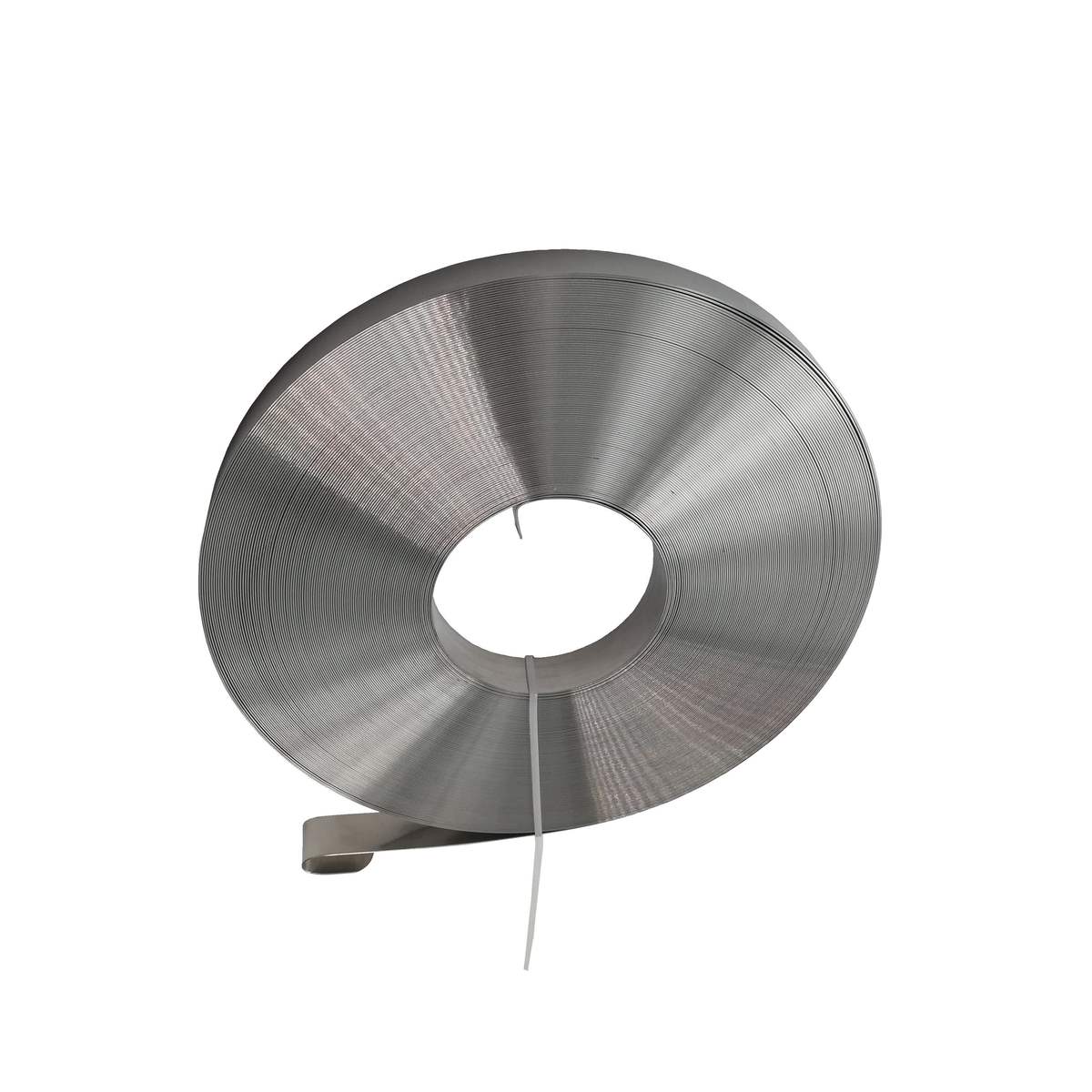
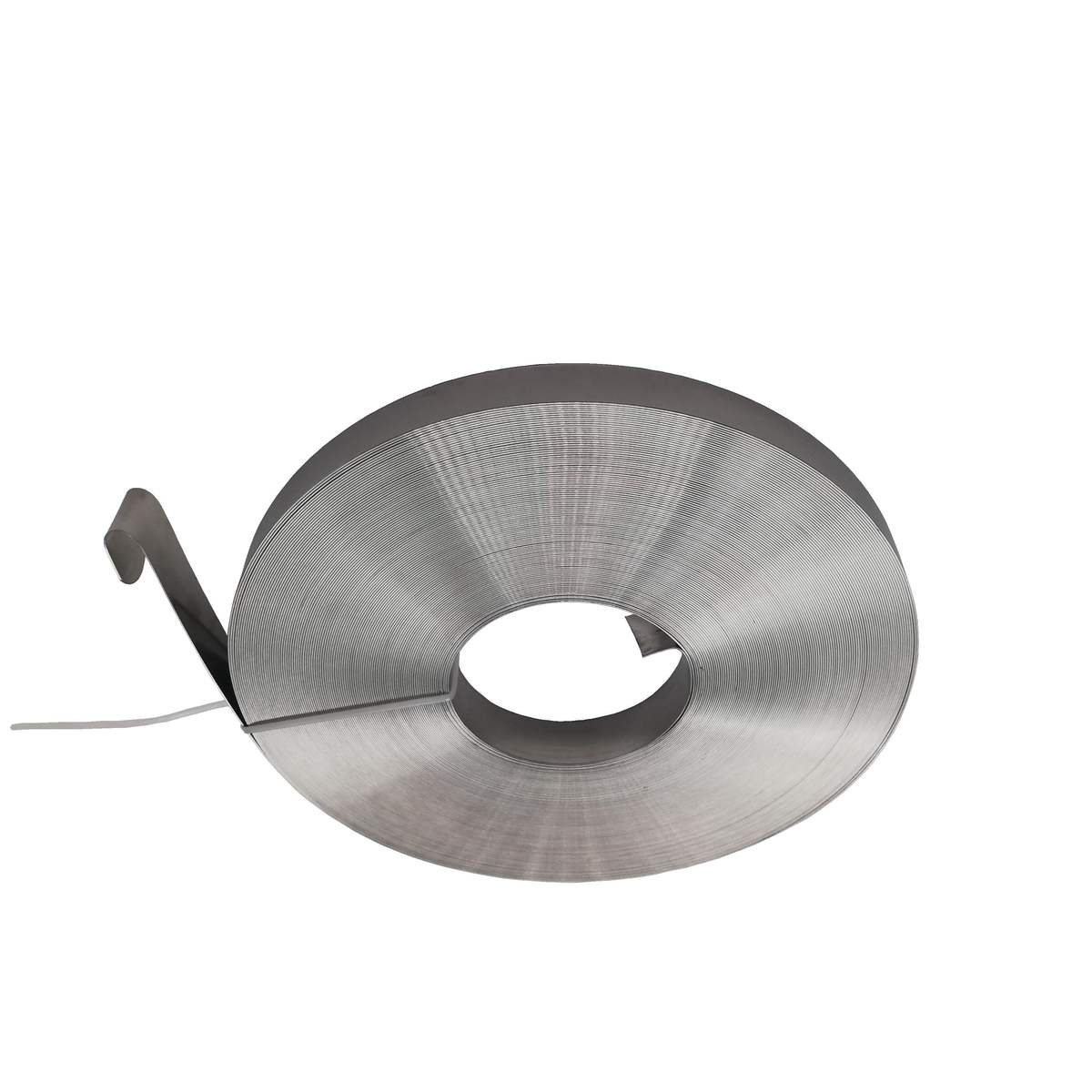
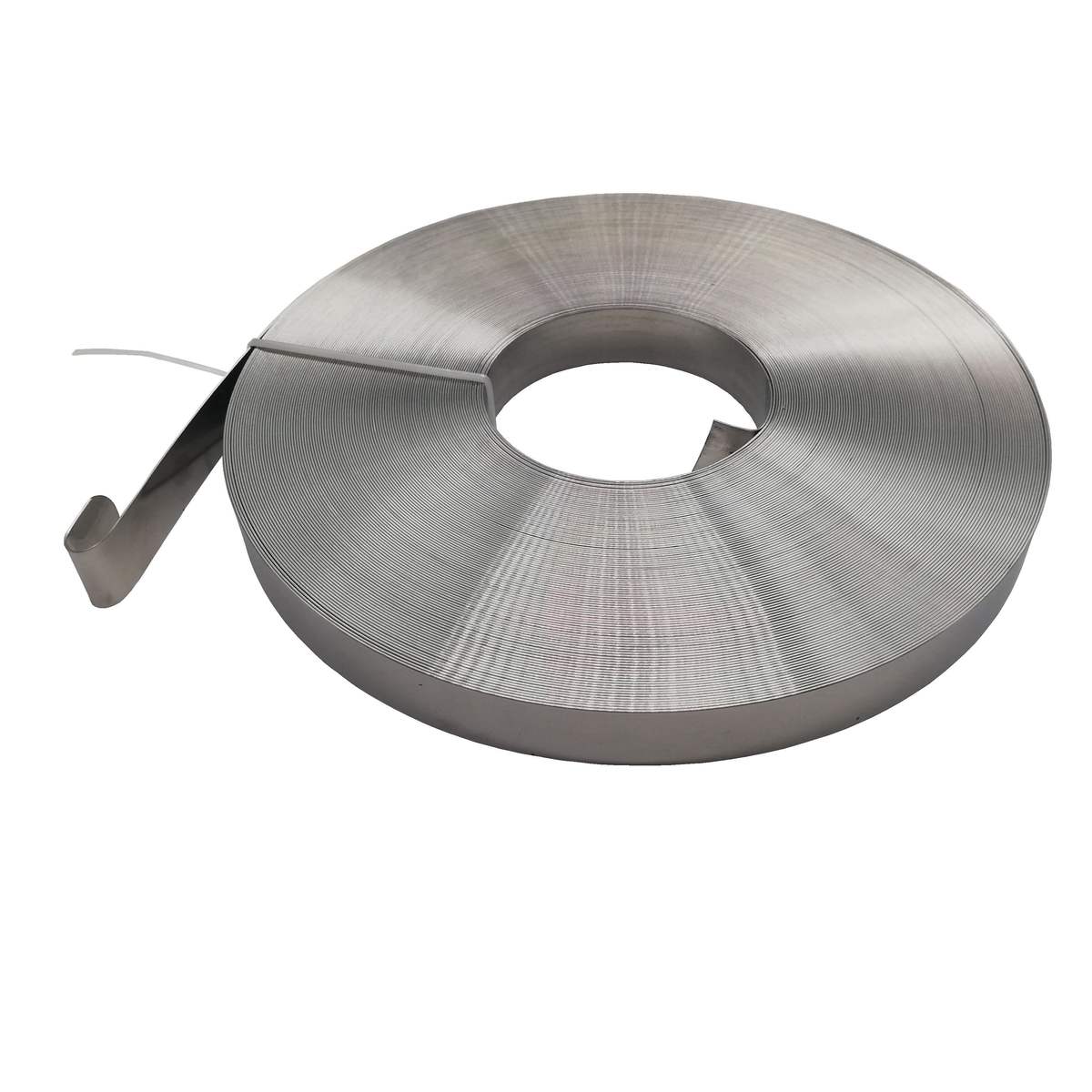
Stainless steel banding strap is how the industry answers that, and has for decades: a coil of stainless strap wrapped around the pole, threaded through a buckle, tensioned with a hand tool, and cut. No holes, no pole-diameter restrictions, no drilling permit, and a fixing that will still be there in thirty years if the grade is right.
That last condition is where most of this product’s problems begin, so let’s start there.
The Question Nobody in This Industry Wants Asked: Which Grade?
“Stainless steel” is not one material. Three grades dominate banding, and they behave very differently outdoors:
| Grade | Corrosion resistance | Typical suitability | Relative cost |
|---|---|---|---|
| 201 | Lowest of the three | Inland, dry, benign environments; short design life; budget-led projects | Lowest |
| 304 | Good general-purpose | The standard utility choice for most inland and mixed environments | Moderate |
| 316 | Highest, molybdenum-bearing, chloride-resistant | Coastal, marine, high-humidity, industrial or polluted air, chemical plant environments | Highest |
The problem across this product category is that grade is routinely not stated. Strap is listed as “stainless steel banding”, priced attractively, and only the supplier knows whether the coil is 201 or 304. In a dry inland network, the buyer may never learn the difference. On a coastal route, they learn it around year four, as rust bleeds down a concrete pole and a bracket works loose.
So ask every supplier which grade, including us. Our quotations state the grade explicitly, per line, and we will tell you honestly when the cheaper grade is genuinely adequate for your environment rather than upselling 316 for an inland distribution network that will never need it.
Why Buyers Choose DAPENG Banding Strap
- Grade stated, not implied: Every quotation names the grade. Every coil is marked. If your specification says 304, that is what ships and what the certificate says.
- Strap and buckles as one system: Widths matched to the banding buckles that close them, so the order arrives complete and a crew is never holding strap that its buckles won’t grip.
- Edges finished for handling: Strap comes off the coil under tension in a gloved hand at the top of a ladder. Deburred, smoothly finished edges are a small manufacturing detail with real safety consequences, and they cost nothing to specify, we do.
- Coil packaging built for stores, not showrooms: Coils packed and marked so a stores clerk issues the right width to the right crew, and cartons counted the way rollout programmer actually draw stock.
- The whole banded assembly from one factory: Strap and buckles ship with the pole bands, down lead clamps, junction boxes, aluminum supports and closures they will fasten, one order, matched widths, one container.
Use-Case Deep Dive
What can I mount with banding strap, and on which pole types?
Practically anything that needs to sit on a pole. On concrete poles, banding is usually the only permitted method: junction boxes, aluminum ADSS supports, down lead clamps at 1.5-2 m intervals down a structure, terminal brackets, and grounding hardware including strand ground clamps. On timber poles, banding avoids the moisture path a drilled hole creates. On steel and composite poles, it fixes hardware where no provision was cast in.
Because strap wraps rather than fits, one width serves every pole diameter on the network, which is exactly why stores like it and why rollout programmer buy it by the coil rather than by the part number.
Do I need buckles and a tool as well as the strap?
Yes to both, and this is the most common incomplete order in the category. The system is three parts:
- The strap – wrapped around the pole and the hardware’s fixing lugs
- The buckle – threaded on, holding the tensioned loop; must match the strap width
- The banding tool – a hand tensioner/cutter that pulls the strap tight and shears it off cleanly
Strap without buckles cannot be closed; buckles of the wrong width will not grip; and without a tensioner, a crew cannot achieve the tension the fixing relies on hand-tightened banding loosens. Order all three together, and tell us how many crews you’re equipping so tool quantities match the programmer rather than the pallet.
How do I choose the width and grade for my project?
Two decisions, both simple once framed:
Grade, by environment. Coastal, marine, or industrial/polluted air → 316. General inland utility and telecom networks → 304. Dry, benign, or short-design-life installations where budget dominates → 201, chosen deliberately and with its limits understood. If your route crosses environments (a coastal section and an inland one), specify by section; it costs less than specifying 316 for the whole network and lasts longer than specifying 304 for the coast.
Width and thickness, by load and by what’s being mounted. Light brackets, signs and small clamps take the narrower widths; junction boxes, heavier supports and anything carrying span load take wider, thicker strap, often doubled. Send the list of what you’re mounting and the pole diameters, and the quotation comes back with widths per application rather than one width for everything.
Specifications and What They Mean for You
| Specification | What we supply | What it means for the buyer |
|---|---|---|
| Grades | 201 / 304 / 316 – stated per quotation, marked per coil | You know what you bought, and so does your inspector |
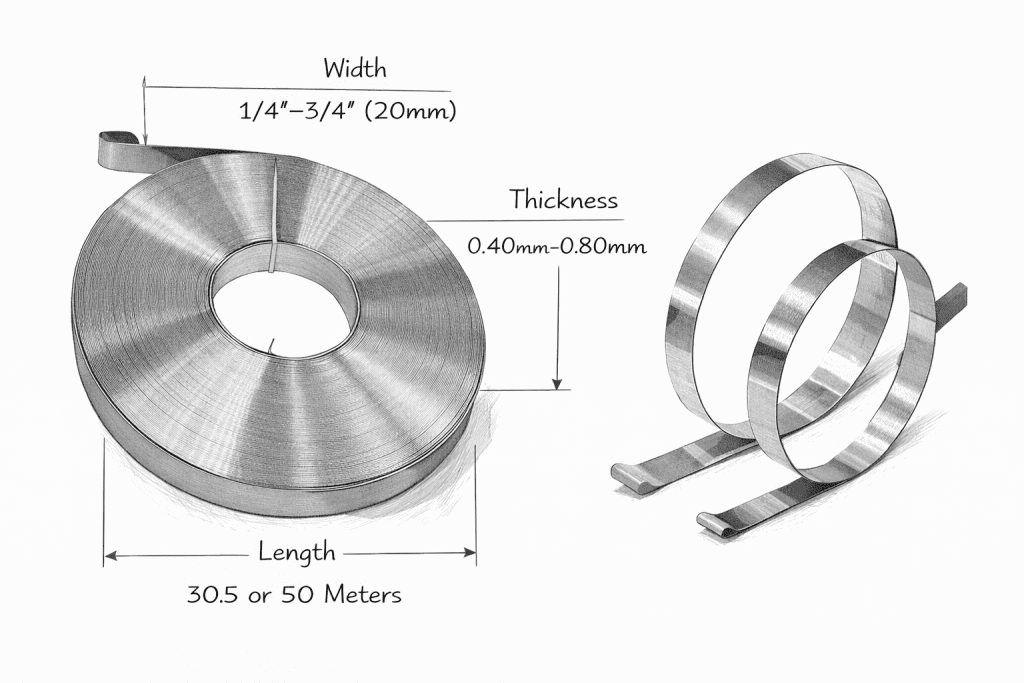
| Widths & thickness | [CONFIRM range] | Matched to load: light brackets to heavy boxes |
| Coil length | [CONFIRM] | Stores and crews draw predictable quantities |
| Breaking load | [CONFIRM per width/grade] | Fixings specified from tested figures, not assumption |
| Edge finish | Deburred, smooth | Safer handling on ladders and in gloves |
| Buckle compatibility | Width-matched buckles supplied | Orders arrive complete and usable |
A note on the markers: every figure on this page will come from factory data. We don’t publish breaking loads or grade claims borrowed from another supplier’s catalogue, on a fixing that holds a junction box above a public footpath, a borrowed number is worse than no number.
Straight Answers to Common Buyer Concerns
“Is stainless banding safe to use against hot-dip galvanized hardware?” Yes, pairing stainless banding with galvanized brackets and boxes is standard utility practice worldwide, and the geometry works in your favour: a small stainless area against a large galvanized surface keeps any galvanic effect negligible. Where environments are genuinely aggressive, the more consequential decision is the strap grade itself, not the pairing.
“We’re ordering hundreds of coils. How is quality controlled at that volume?” By batch and by document: material certificates stating grade per batch, breaking-load verification, and third-party pre-shipment inspection (SGS/BV or your nominated agency) welcome at the factory. For programmer orders we also encourage a sample coil for your own testing before the bulk order ships, grade is verifiable in any competent lab, and we would rather you confirmed it than trusted it.
“Our existing network uses another brand’s strap and buckles. Can we mix?” Width for width, generally yes, but confirm buckle geometry against a sample before committing a programmer, because buckle profiles vary between manufacturers even at nominally identical widths. Send us a sample buckle or a clear photograph with a rule in frame and we’ll confirm compatibility in writing. Mixed-vintage stores are normal; discovering the mismatch at the fortieth pole is not.
Complete the Banded Assembly
- Stainless steel banding buckles – the other half of the system, width-matched
- Pole bands – pre-formed bands where a fixed-diameter fitting suits better
- Down lead clamps, junction boxes, aluminium ADSS supports, fibre optic closures – the hardware most often banded to poles
- Anchoring clamps, span clamps, drop wire clamps, insulation piercing connectors – the aerial network around them
- Browse all pole line hardware, overhead line fittings and ADSS/OPGW fittings
Get a Grade-Stated Quote Within 24 Hours
Tell us the environment (coastal, inland, industrial), what you’re mounting, your pole types and diameters, and the programmer quantity. Our team returns a factory-direct quotation with the grade named on every line, widths matched per application, buckles and tool quantities included, typically within one working day.
After You Order
Material certificates stating grade with every shipment, coils marked by width and grade so stores never issue the wrong one, buckles and tooling packed alongside, and an engineering contact who answers while the crew is still on the pole, because banding is what a rollout runs out of first, and a supply question shouldn’t cost a day’s connections.