

Description
A Bundled Conductor Has Two Problems. A Spacer Damper Solves Both.
Run a phase as two, three, or four sub-conductors, and you gain current capacity, lower reactance, and better corona performance. You also inherit two problems that a single conductor never had.
The first is geometry: Sub-conductors must stay at their designed spacing. Wind pushes them together; a short-circuit fault throws them together violently, with electromagnetic forces that can collapse a bundle in milliseconds and leave clashed, arc-scarred conductors behind.
The second is motion: Bundles suffer everything a single conductor suffers, Aeolian vibration in light steady wind, plus sub-conductor oscillation between spacers, a wake-induced motion that only bundles experience.
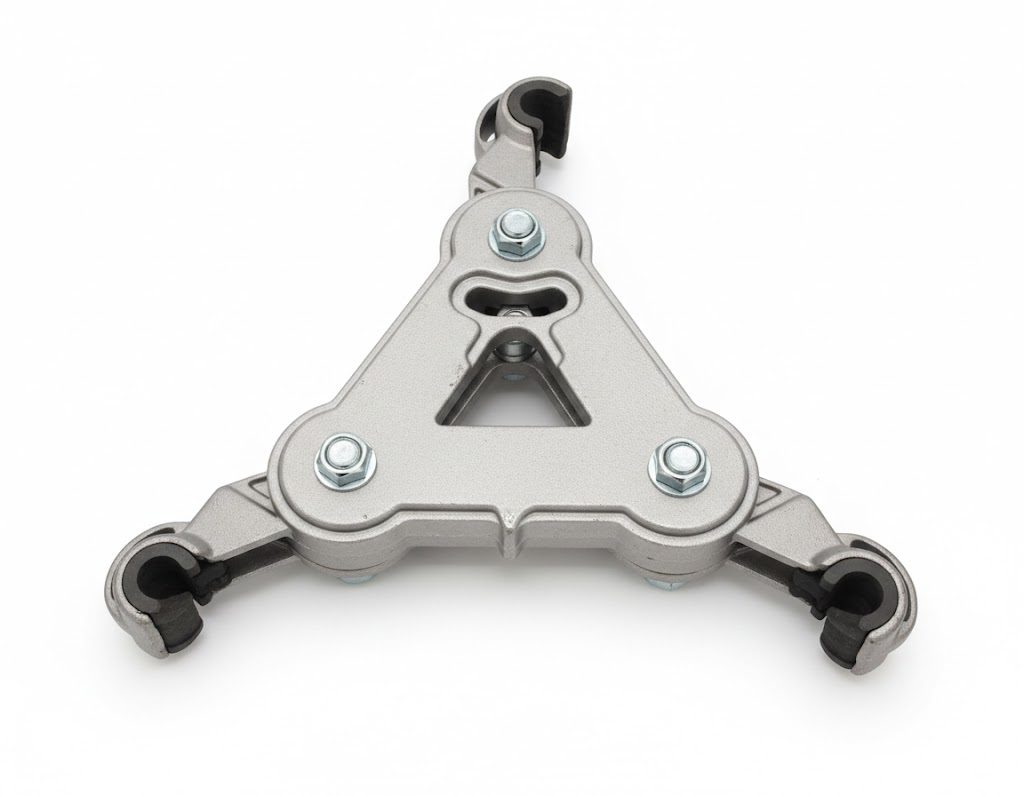
A rigid spacer answers the first problem and ignores the second. A spacer damper answers both: it holds the bundle geometry through articulated arms whose elastomer joints simultaneously absorb vibration energy, converting it to heat instead of passing it along to the clamps and the sub-conductors.
Requirements and testing for spacers on overhead lines are covered by IEC 61854, and any utility specification review will ask about it, as will ours, when we quote you.
Specification Tables
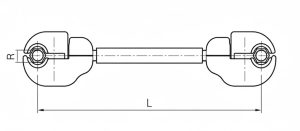
Twin Type
| Conductor designation | L (mm) | Weight (kg) |
|---|---|---|
| JL/G1A-240/30 | 200 | 0.9 |
| JL/G1A-240/40 | 200 | 0.9 |
| JL/G1A-300/25 | 200 | 0.9 |
| JL/G1A-300/40 | 200 | 0.9 |
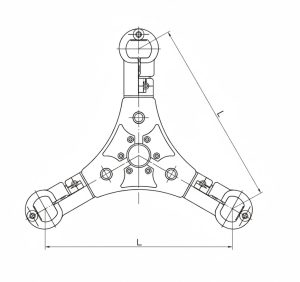
Triple Type
| Conductor designation | L (mm) | Weight (kg) |
|---|---|---|
| LGJ-185/25, 30, 45 | 350 | 3.5 |
| LGJ-210/25, 35, 50 | 350 | 3.5 |
| LGJ-240/30, 40, 55 | 350 | 3.5 |
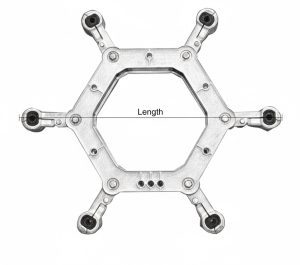
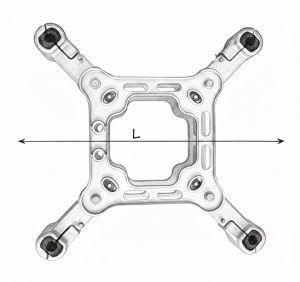
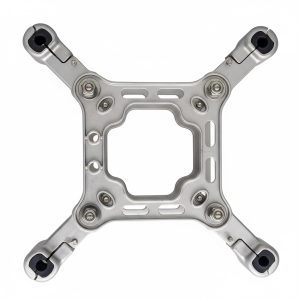
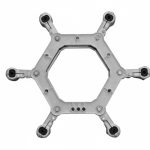
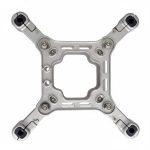
Quad and Hex Types
Manufactured to project requirements, conductor range, bundle spacing and configuration to your line design.
(Table note: the L dimension is stated as supplied by the factory; confirm whether it denotes sub-conductor spacing or damper body length before publishing, and label the column accordingly. Sizes and spacings outside these tables are manufactured to your drawings.)
What Do JL/G1A and LGJ Mean? Decoding Conductor Designations
If you specify conductors as ACSR by code name, the practice across most African, Latin American, Middle Eastern and Commonwealth networks, the designations in the tables above will look unfamiliar. They are Chinese national designations for the same conductor family:
- JL/G1A, the current designation under Chinese standard practice for aluminum conductor, steel reinforced (ACSR). “JL” denotes the stranded aluminum conductor; “G1A” denotes the steel core and its galvanizing class. The numbers give aluminums and steel cross-sections in mm²: JL/G1A-240/30 is ACSR with 240 mm² aluminum over a 30 mm² steel core.
- LGJ, the earlier Chinese designation for the same ACSR construction, still widely quoted. LGJ-240/30 is likewise ACSR 240/30.
So the practical translation is simple: read the two numbers as aluminum mm² / steel mm², and match them to your conductor’s cross-sections. An ACSR conductor your network calls by a code name has a published aluminum and steel area; if those figures land in one of the rows above, the spacer damper fits.
And if they don’t, send us the conductor you actually use, by code name, by IEC or ASTM designation, by datasheet, or simply by diameter and construction. Matching international designations to our tooling is routine work, and it is the single most useful thing we do before quoting an export project.
Why Buyers Choose DAPENG Spacer Dampers
- Damping built into the geometry, not bolted alongside it. Articulated arms with elastomer joints hold the bundle while absorbing energy at every clamp, one fitting doing both jobs, in the place the bundle actually needs it.
- Clamps that grip without fretting. Groove profiles matched to your conductor diameter with cushioned interfaces and defined torque, because a spacer that frets its sub-conductor for twenty years causes exactly the damage it was installed to prevent.
- Fault-force capable. The bundle’s worst moment is a short circuit, not a windy afternoon, spacer construction and clamp retention are specified for the electromagnetic forces of fault events, and batch-tested accordingly.
- Configurations to your line, not to a catalogue. Twin, triple, quad and hex; spacing dimensions and clamp sizes to your design drawing; and any conductor designation you use.
- The whole span from one factory. Spacer dampers ship with the suspension clamps, tension hardware, armor rods, yoke plates and span-end dampers of the same line, matched to one conductor datasheet, kitted per structure.
Use-Case Deep Dive
Spacer damper or rigid spacer, which does my line need?
We manufacture both, so here is the honest split.
Spacer dampers are the modern standard for bundled transmission conductors on normal spans: the bundle needs vibration energy absorbed along its length, and the articulated design does spacing and damping together.
Rigid bolted cable spacers are correct where spacing is the requirement and damping is handled elsewhere or unnecessary: jumper loops, substation connections, slack spans, short or sheltered spans, and cable-separation duty in shared corridors.
Most bundled lines end up ordering both, spacer dampers through the spans, rigid spacers in the jumpers. Send the span schedule and the split comes back with the quotation.
How many spacer dampers does a span need, and where?
From your line design’s spacer schedule, and the placement is deliberately uneven. Sub-spans, the lengths between adjacent spacers, are set at differing distances along the span, because equal sub-spans would tune the bundle to a single resonant frequency and let wind excite it efficiently. Staggering the sub-spans breaks that up.
Typical transmission spans take several spacers, with the sub-span lengths and count derived from span length, conductor tension, bundle configuration and terrain exposure. Send span lengths, tensions and conductor data with the RFQ, and the quantity and placement schedule returns with the quotation, consistent with your utility’s standard.
Do I still need Stockbridge dampers if the line has spacer dampers?
Usually yes, and they are not redundant. Spacer dampers work along the span, absorbing bundle motion between structures. Stockbridge dampers work at the span ends, where Aeolian vibration concentrates into bending at the suspension and tension clamps , the classic fatigue location. A well-specified bundled line typically carries both, sized to the same conductor and placed by calculation. On ADSS and small cables, the equivalent span protection is the spiral vibration damper, a different family entirely, for a different cable.
Specifications and What They Mean for You
| Specification | What we supply | What it means for the buyer |
|---|---|---|
| Configurations | Twin, triple, quad, hex | Matches your phase construction, not a compromise |
| Damping | Articulated arms with elastomer joints | Spacing and vibration control from one fitting |
| Clamps | Groove-profiled to conductor diameter, cushioned, torque-defined | Decades of grip without fretting the sub-conductor |
| Conductor matching | JL/G1A, LGJ, ACSR and international designations | Send whatever designation you use; we translate |
| Standards | Manufactured in line with IEC 61854 practice | Passes your utility’s specification review |
| Verification | Batch mechanical testing, reports supplied | Fault-force performance on tested figures |
Straight Answers to Common Buyer Concerns
“Our conductor isn’t in your table. Does that mean you can’t supply us?” No, it almost certainly means your network uses a different designation system for the same conductor. Send the conductor’s aluminum and steel cross-sections, or its datasheet, or its code name and we’ll look it up. Manufacturing to international conductor specifications is the bulk of our export work; the tables above are a starting point, not a boundary.
“How do we know the clamps won’t damage the sub-conductors over twenty years?” Because fretting is a known failure mechanism with known countermeasures, and all of them are verifiable before you buy: groove profiles machined to your stated conductor diameter, cushioned clamp interfaces (ask for the liner material specification with the quotation, a supplier who can’t name it is telling you something), defined installation torque, and batch test reports with every shipment. Third-party pre-shipment inspection (SGS/BV or your nominated agency) is welcome at the factory.
“Our line has a legacy bundle spacing that doesn’t match standard products.” Send the drawing. Non-standard spacings are routine OEM work: the frame is built to your dimension, the clamps to your conductor, and confirmation drawings reach you before production begins. A line built to a national standard thirty years ago deserves hardware that fits it, not hardware that nearly does.
Complete the Bundled Span
- Bolted cable spacers – rigid spacing for jumpers, slack spans and separation duty
- Stockbridge vibration dampers – span-end vibration control
- Spiral vibration dampers – for ADSS, guy strand and small cables
- Suspension clamps, armor rods, preformed tension clamps, strain clamps, bolt type tension clamps – span-end hardware
- Yoke plates (100–600 kN), U shackles, ball eyes – bundled string hardware
- Browse all overhead line fittings
Get a Bundle-Matched Quote Within 24 Hours
Send your conductor designation (any system), bundle configuration and spacing, span schedule and tensions. Our engineers confirm the conductor match, propose the spacer count and sub-span placement, flag where rigid spacers serve better than dampers, and return a factory-direct quotation, typically within one working day.
After You Order
Configuration drawings before production, batch test reports and material certificates with shipment, spacers kitted per span section so crews install to the schedule rather than the guess, and engineering support that stays reachable through stringing, because spacer placement questions arrive with the wind, not with office hours.