
Description
What Anchors a Conductor Where the Line Ends or Turns?
At every dead-end structure and every heavy angle, the conductor stops running through and starts pulling away, the full tension of the span, concentrated at one termination, trying to drag the conductor out of whatever holds it. Whatever holds it there is the most heavily loaded connection on that structure, and if it slips or fails, the span comes down.
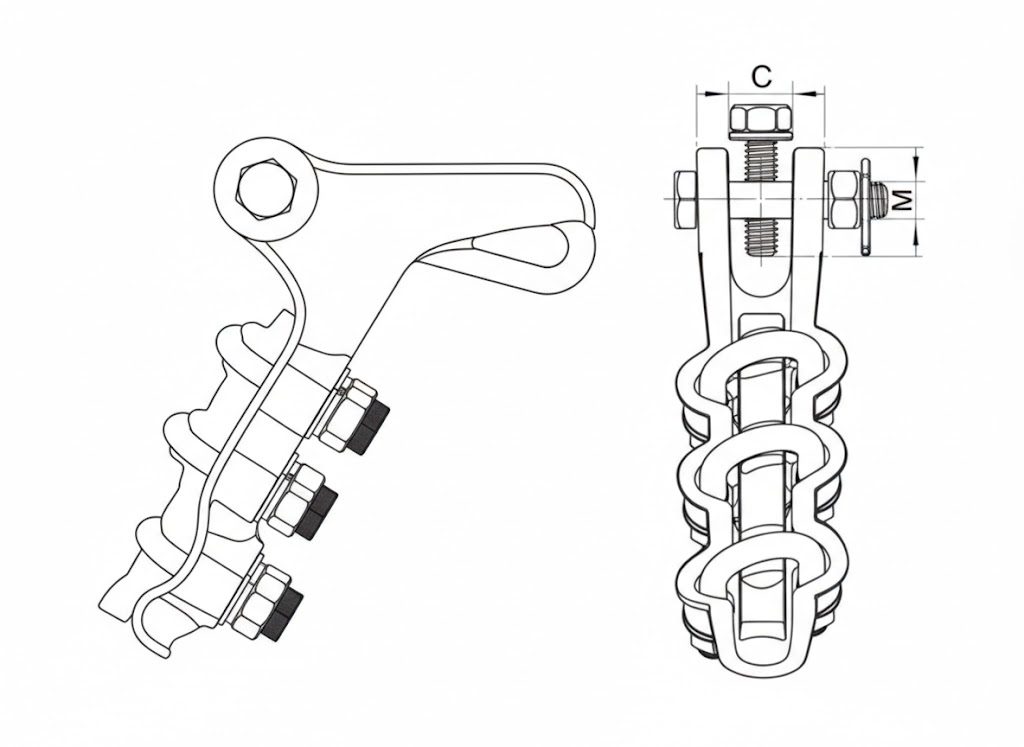
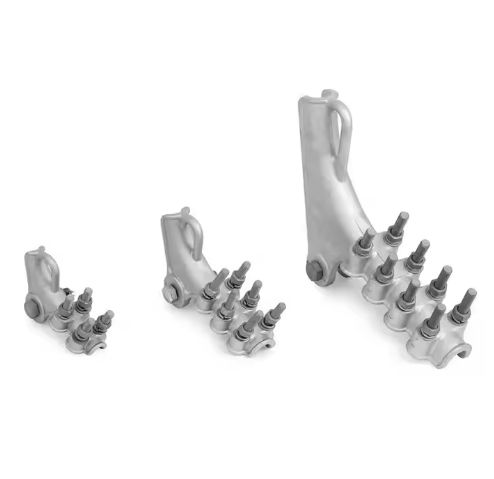
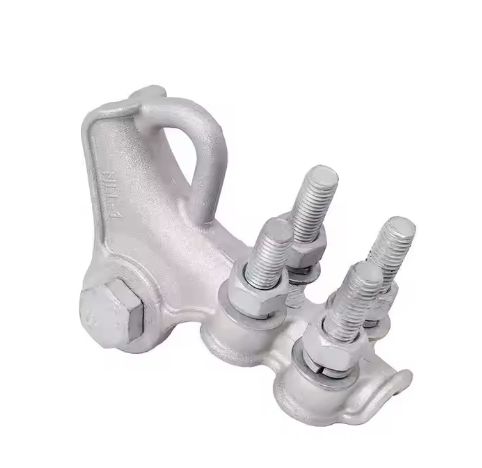
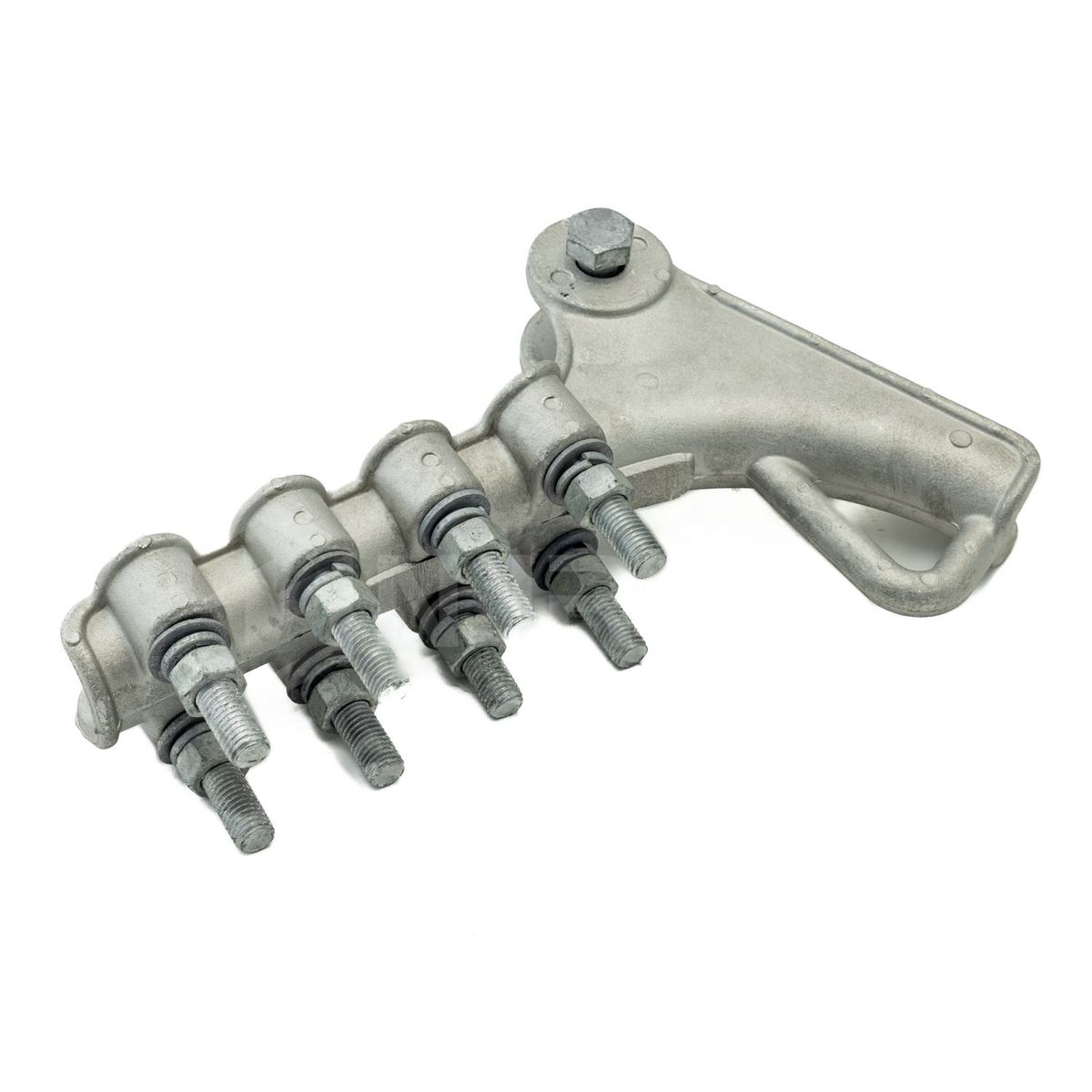
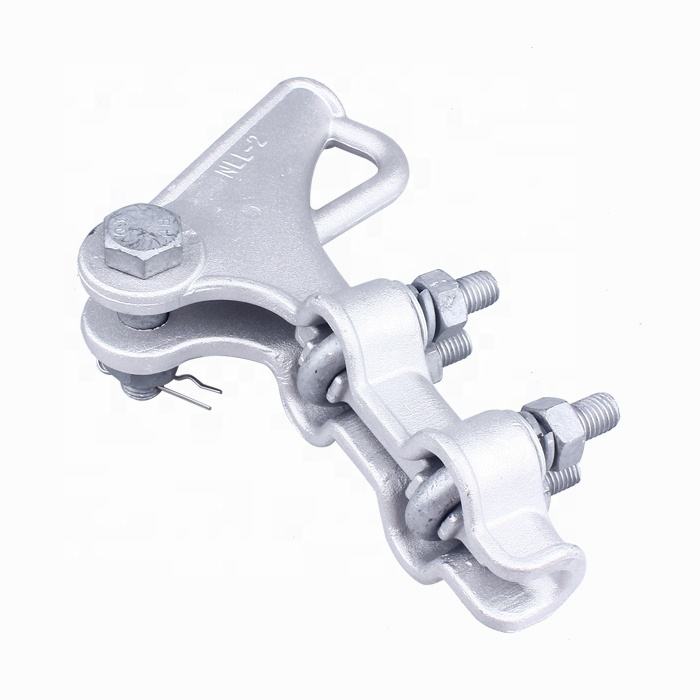
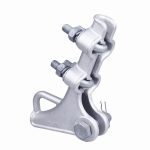
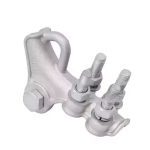
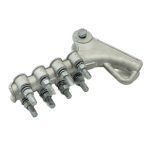
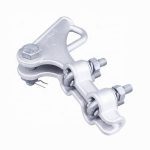
The bolt-type tension clamp, the bolted pistol-grip dead-end, is one of the standard fittings for that job. The conductor lies in the clamp body; a bolted keeper closes over it; and the clamp’s tongue or eye connects into the insulator string, handing the span’s entire tension to the structure through a joint a crew can install, inspect, and re-torque with ordinary tools.
This page publishes the conductor ranges and rated loads, and because a bolted dead-end is not the only kind, helps you decide whether it’s the right dead-end for your conductor and duty.
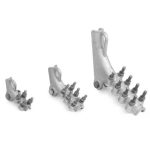
NLL Series Selection Table
(Pistol-grip bolt type. Conductor range in mm; rated failure load in kN. From the Dapeng catalog.)
| Type | Applicable conductor range (mm) | Rated failure load (kN) |
|---|---|---|
| NLL-1 | 5.0 – 10.0 | 40 |
| NLL-2 | 10.1 – 14.0 | 40 |
| NLL-3 | 14.1 – 18.0 | 70 |
| NLL-4 | 18.1 – 23.0 | 90 |
(Sizes outside this range are manufactured to your conductor schedule. Confirm the bolt count/size per type with the quotation.)
Reading the table: conductor diameter gets you to the type; then check the rated failure load against your conductor’s strength. The clamp’s rated failure load should sit above the conductor’s rated tensile strength with the margin your standard sets, the clamp must not be the weak point of the termination. A conductor at the top of a diameter band may pair with a higher-RFL type than a lighter conductor in the same band; quote the conductor’s actual strength and design tension and we confirm both dimensions of the choice.
Which Dead-End Do You Need: Bolt Type, Preformed, or Compression?
This is the decision most supplier pages skip, and it’s the one that matters. Three dead-end families, three duties, and we make more than one, so here is the honest split:
- Bolt type tension clamp (this page): A bolted keeper grips the conductor. Re-usable, inspectable, re-torturable, and installable with hand tools, the practical workhorse for distribution and many sub-transmission dead ends and angles. What you re-tension by hand, you can also check by hand.
- Preformed tension clamp: Helical rods develop the conductor’s strength over a long grip length with no bolts and no point loading, favored on OPGW and where a full-strength, vibration-friendly termination is wanted.
- Strain clamp (other types): Depending on your standard and conductor, compression or other strain-clamp forms terminate the heaviest transmission conductors at full rated strength.
The deciding factors are conductor type, the strength you need to develop, whether the termination must be re-openable, and your utility’s standard. Tell us the conductor and the duty and we’ll point you to the right family, including when it isn’t this one.
Why Buyers Choose DAPENG Bolt Type Tension Clamps
- A grip that holds without crushing: The pistol-grip body and bolted keeper are profiled to the conductor so the grip develops holding strength across a length rather than pinching at a point, the difference between a termination that holds for decades and one that necks the conductor.
- Hot-dip galvanized for the long term: Galvanized to ISO 1461 / ASTM A153 class coatings, at a fitting that lives permanently at a dead-end carrying full tension.
- Rated loads that are tested: RFL marked per type, batch load-tested, reports supplied, so your termination’s safety factor rests on a tested figure.
- Bolts specified to stay torqued: Keeper bolts and any locking provision specified to hold the clamping force the grip depends on, through load cycling and time.
- Matched into the string from one factory: The clamp connects into the insulator string via the coupling fittings we make to matched load classes, socket clevises, ball eyes (70–420 kN), U shackles (70–170 kN), and yoke plates (100–600 kN), so the whole tension assembly comes matched and kitted.
Use-Case Deep Dive
Where is a bolt type tension clamp used?
At dead-end (terminal) structures, where the line begins or ends and the full one-sided tension must be anchored; and at heavy angle structures, where the line changes direction sharply enough that the conductor is effectively terminated and re-tensioned on each side. It’s also used at section points where a long line is broken into tensioned sections. In each case the clamp takes the span tension and delivers it, through the insulator string, into the structure. Distribution and sub-transmission lines are its heartland; the bolted design suits crews who value a termination they can inspect and re-tension without special tooling.
How do I match the clamp to my conductor?
Two steps. First, diameter, find the NLL type whose conductor range covers your conductor’s overall diameter. Second, strength, confirm the type’s rated failure load exceeds your conductor’s rated tensile strength by your standard’s margin. Both matter: a clamp that fits the diameter but sits below the strength requirement is a termination that caps the line. Send the conductor (type, diameter, and rated strength) and the design tension, and we confirm the type and, where a band spans a wide strength range, the right RFL within it.
Can the same clamp be re-used or re-tensioned?
This is a real advantage of the bolt type. Because the grip is bolted rather than formed, a bolt type tension clamp can be slackened, adjusted, and re-torqued, for re-sagging during construction, for maintenance, or for re-tensioning a section, within the manufacturer’s guidance and your standard’s limits. A preformed tension clamp, by contrast, is a formed termination not intended for casual re-use. If re-openability matters on your line, that’s a point in the bolt type’s favors, tell us and we’ll factor it into the recommendation.
Specifications and What They Mean for You
| Specification | What we supply | What it means for the buyer |
|---|---|---|
| Type | NLL pistol-grip, bolted keeper | Re-openable, inspectable, hand-tool installable dead-end |
| Conductor range | 5.0–23.0 mm across NLL-1 to NLL-4 | Published above, match your conductor diameter |
| Rated failure loads | 40, 40, 70, 90 kN | Set above conductor rated strength with your margin |
| Body & coating | HDG to ISO 1461 / ASTM A153 class | Decades at a full-tension dead-end |
| Keeper bolts | Specified with locking provision | Holds clamping force through load cycling |
| String interface | Tongue/eye to your coupling fittings | Matches into the insulator string cleanly |
| Verification | Batch load testing, reports supplied | Termination safety factor on tested figures |
Straight Answers to Common Buyer Concerns
“How do we know it will hold the full span tension for decades?” Because the number is tested, not asserted: rated failure loads are batch-verified with reports supplied, and you can add third-party pre-shipment inspection (SGS/BV or your nominated agency) at the factory. Match the RFL to your conductor’s rated strength with your standard’s margin, the table and our engineers make that straightforward, and the termination has the safety factor your design intends, on a figure you can audit.
“Bolt type or preformed, which is right for our line?” It depends on conductor type, the strength you must develop, whether you need to re-tension, and your standard. Bolt type wins where inspect ability and re-openability matter and the conductor suits it; preformed wins where a full-strength, bolt-free, vibration-friendly termination is wanted, especially on OPGW. We make both and will tell you honestly which your line calls for, send the conductor and duty.
“Can you match our conductor schedule, including legacy sizes?” Send the schedule, conductor types, diameters, and rated strengths. Matching tension clamps to a real network’s conductor mix is routine, and where a conductor falls outside the standard bands we manufacture to it. A mismatch caught at RFQ costs nothing; caught at a failed dead-end, it costs the span.
Complete the Tension Assembly
- Preformed tension clamps – the helical dead-end alternative, and the OPGW choice
- Strain clamps – other strain-clamp types for the heaviest conductors
- Socket clevises, ball eyes, U shackles – the string couplings above the clamp
- Yoke plates – where a dead-end feeds twin strings or bundles
- Stockbridge dampers – vibration control on the spans the dead-end anchors
- Parallel groove clamps and hot line clamps – jumper connections around the dead-end
- Browse all overhead line fittings and pole line hardware
Get a Conductor-Matched Quote Within 24 Hours
Send your conductor schedule, types, diameters, and rated strengths, the design tensions, and the count of dead-end and angle structures. Our engineers confirm the NLL type and rated load against your conductors, flag where a preformed or other strain type serves better, and return a factory-direct quotation with the string couplings quoted alongside, typically within one working day.
After You Order
Confirmation of type and rating before production, batch load-test reports and galvanizing certificates with shipment, clamps kitted with their string couplings per structure, and an engineering contact who answers while the crew is still stringing, because dead-ends are where a line’s tension lives, and a termination question shouldn’t hold up the pull.