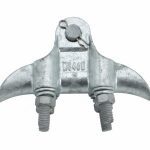
Description
The Fitting That Holds the Conductor at Every Straight-Line Tower
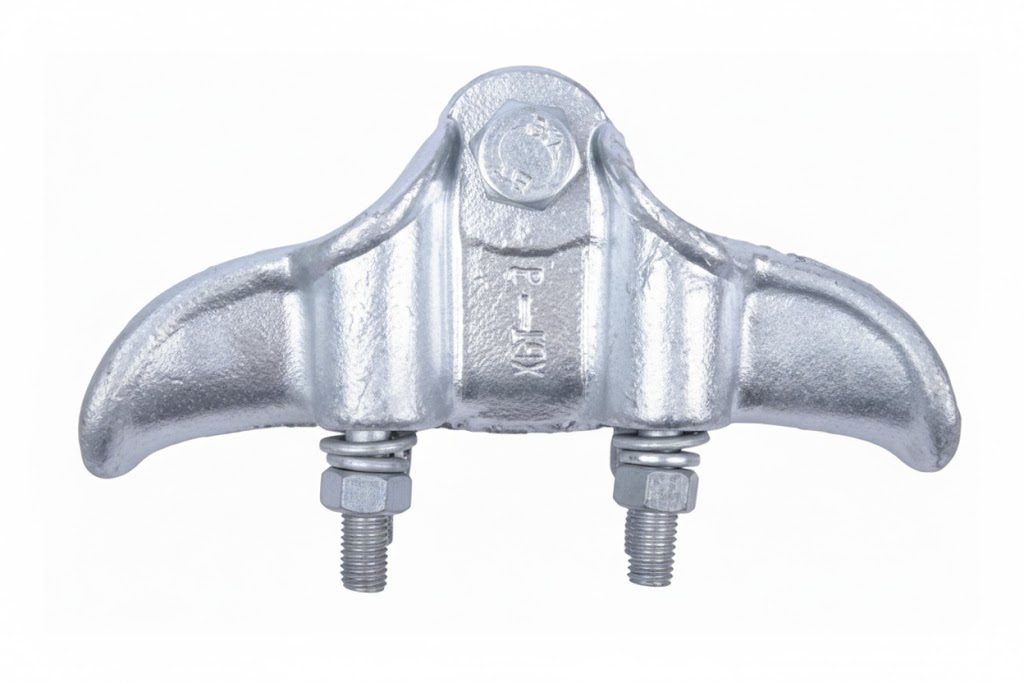
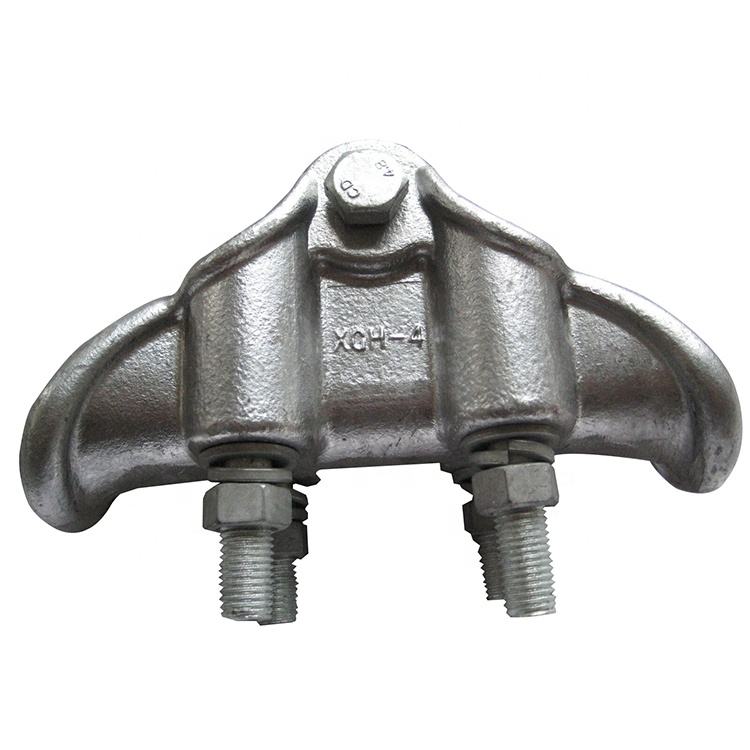
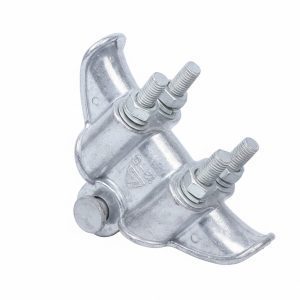
Between the angle and dead-end structures where a line is tensioned, most towers are tangent straight-line supports where the conductor simply passes through, held up but not terminated. At every one of them, a suspension clamp cradles the conductor: supporting its weight, allowing the tension to run continuously through the span, and letting the conductor articulate as wind and temperature move it.
It is the most numerous piece of hardware on a transmission line, and the most predictable point of long-term wear. Get the clamp and its supporting hardware right and it holds the conductor quietly for decades. Get it wrong undersized, unprotected against vibration and the clamp mouth becomes the place the conductor fatigues and fails.
This page covers suspension clamps sized to your conductor, the vibration protection they need, and how to choose between a standard clamp and the cushioned alternatives.
Sizing a Suspension Clamp: Conductor First, Then Verify the Load
A suspension clamp is selected in two steps, and both matter:
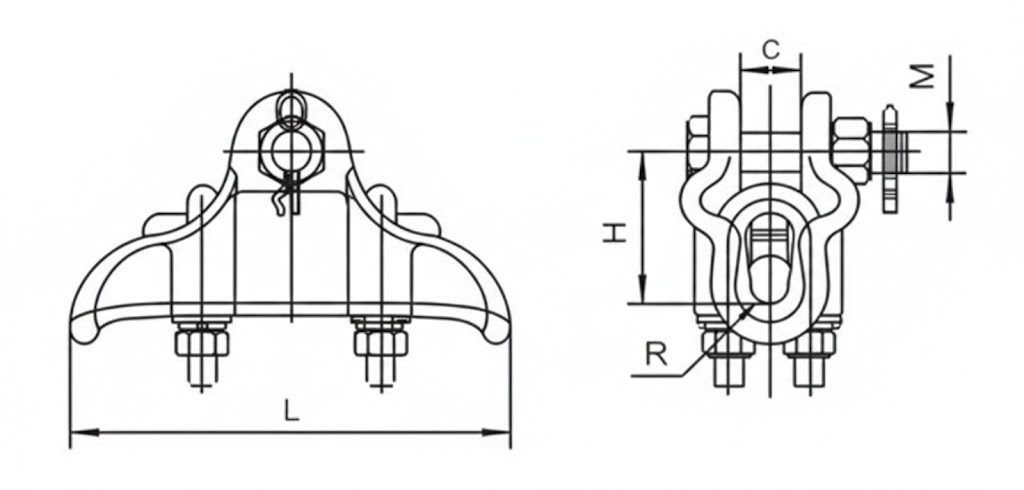
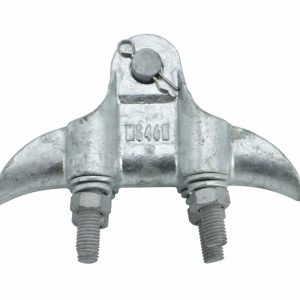
- Conductor diameter gets you to the clamp. Our aluminium alloy range covers conductors from approximately 5.1 mm to 28.0 mm, so a clamp matched to your conductor’s overall diameter cradles it correctly the groove profiled to seat the conductor over a length, not pinch it at a point.
- Then verify the slip and mechanical loads. A suspension clamp must hold the conductor’s vertical load and resist longitudinal slip up to the design limit, while still allowing the conductor to move under load imbalance. Matching the diameter is necessary but not sufficient; the clamp’s rated loads must suit your span’s weight and tension conditions.
Send the conductor (type and diameter) and the span conditions, and we confirm both the fit and the load.
The Real Long-Term Concern: Fatigue at the Clamp Mouth
The suspension point is where conductors fail first, and it’s worth understanding why because the fix isn’t a better clamp alone.
In steady wind, Aeolian vibration sends millions of small bending cycles into the conductor each season, and they concentrate exactly where the clamp grips: a short contact length, a hard mouth, a tight exit radius. Over years, strands crack at that point. A suspension clamp on its own doesn’t prevent this it’s where the problem localizes.
Two things address it, and a well-specified tangent structure uses them together:
- Vibration dampers on the span Stockbridge dampers sized to the conductor and placed by calculation, absorbing the vibration energy before it fatigues the conductor at the clamp. On most transmission spans, dampers are not optional.
- Cushioned or reinforced support where the fatigue duty is severe (long or exposed spans, or dielectric cable), an armour grip suspension assembly spreads the support over a long length with an elastomer insert, moving the fatigue point out of the equation rather than managing it. Armour rods reinforce the conductor at a standard clamp for the same reason.
We make all of these so the honest guidance is: specify the clamp for the conductor, the dampers for the span, and the cushioned support where the duty demands it. The clamp alone is the right answer only where vibration duty is light.
Why Buyers Choose DAPENG Suspension Clamps
- Aluminium alloy bodies, conductor-matched. Corrosion-resistant, non-magnetic, and profiled to seat the conductor over length the groove that supports rather than pinches.
- Keeper and bolts that hold. The keeper closes to a defined clamping load with fasteners specified to hold it through load cycling, so the support the clamp gives on day one is the support it gives in year twenty.
- Rated for the span, not just the conductor. Slip and mechanical loads verified per type and batch-tested, so the clamp holds the conductor’s weight and resists longitudinal movement within your design limits.
- Paired with the protection that makes it last. Clamps quoted with the dampers, armour rods, and where specified armour grip suspension of the same spans.
- The full tangent assembly from one factory. Suspension clamps ship with the ball eyes, socket clevises, U shackles, yoke plates and insulators of the string above matched in class, kitted per structure.
Use-Case Deep Dive
Where does a suspension clamp sit in the assembly?
At the bottom of a suspension string, holding the conductor. A standard tangent assembly runs: structure attachment → U shackle → ball eye → insulator string → socket clevis → suspension clamp → conductor. The clamp hangs from the socket fitting and cradles the conductor; the insulators isolate it from the structure. On twin-string arrangements a yoke plate distributes the load to two strings and two clamps. Send the string drawing and every fitting is matched in class before production.
Standard suspension clamp, armour grip, or envelope clamp which do I need?
By the conductor and the vibration duty:
- Standard suspension clamp (this page) the correct, economical choice for the many tangent structures where spans are short-to-moderate and vibration duty is manageable with dampers. Distribution and much of sub-transmission live here.
- Armour grip suspension where fatigue duty is severe (long or exposed spans, water crossings) or the cable is dielectric (ADSS): distributed, cushioned support that protects the cable at the mouth.
- Envelope/trunnion variants for particular conductor and articulation requirements.
Specifying the premium option everywhere wastes money; specifying the standard clamp on a severe-duty span invites fatigue. Send the span profile and conductor and we’ll advise per structure class including where the standard clamp is exactly right.
Do all suspension spans need dampers?
Most transmission spans do; short, sheltered distribution spans may not. The need follows span length, conductor tension, and terrain exposure, not the clamp choice. Because the clamp mouth is where unmanaged vibration does its damage, the damper decision belongs with the clamp decision — order them together, sized to the same conductor, and the tangent structure is protected as a system rather than a collection of parts. Send the span data and the damping recommendation comes back with the clamp quotation.
Specifications and What They Mean for You
| Specification | What we supply | What it means for the buyer |
|---|---|---|
| Conductor range | ~5.1 to 28.0 mm (aluminium alloy range) | Matches your conductor; per-type sub-ranges |
| Body | Aluminium alloy, groove-profiled | Corrosion-resistant, non-magnetic, seats over length |
| Keeper & bolts | Defined clamping load, holding fasteners | Support holds through decades of load cycling |
| Slip/mechanical loads | Rated per type, batch-tested | Holds weight, resists slip, within design limits |
| Vibration protection | Paired with dampers / armour grip | The clamp mouth is protected, not left to fatigue |
| Coating (steel parts) | HDG to ISO 1461 / ASTM A153 class | Decades outdoors at the support point |
Straight Answers to Common Buyer Concerns
“How do we know the clamp won’t let the conductor slip or fatigue it?” Two separate assurances. Slip is a rated, tested figure: batch load reports confirm the clamp holds to its design slip load, with third-party inspection (SGS/BV or your agency) welcome. Fatigue is prevented not by the clamp alone but by the damping and support around it which is why we quote the dampers and, where needed, the armour grip with the clamp. A supplier who sells you a clamp without asking about your span’s vibration is selling half a solution.
“Can you match our conductor schedule across a mixed line?” Yes, send the conductor types and diameters, span by span if they vary. Clamps are matched per conductor from the range, marked by size for stores issue, with the dampers and string hardware of each structure quoted alongside. Mixed conductors across a line are normal; mismatched clamps are avoidable at RFQ.
“Standard or cushioned support which is right for our line?” It depends on span length, exposure, and conductor. We make both and will tell you honestly: standard clamps where vibration duty is light, armour grip where it’s severe or the cable is dielectric. Send the span profile and the recommendation comes back per structure class the goal is the right hardware per structure, not the premium part everywhere.
Complete the Tangent Structure
- Stockbridge and spiral vibration dampers – span vibration control
- Armour grip suspension and armour rods – cushioned and reinforced support for severe duty
- Ball eyes, socket clevises, U shackles, yoke plates – the string above the clamp
- Insulators and insulator strings – the string the clamp hangs from
- Strain clamps, bolt type tension clamps, preformed tension clamps – the tension-structure counterparts
- Browse all overhead line fittings and pole line hardware
Get a Conductor-Matched Quote Within 24 Hours
Send your conductor schedule types, diameters, and span conditions (lengths, tensions, terrain) and the count of tangent structures. Our engineers confirm the clamp per conductor, recommend the damping and any cushioned support the spans need, and return a factory-direct quotation with the full tangent assembly quoted alongside, typically within one working day.
After You Order
Confirmation of type and rating before production, batch load-test reports with shipment, clamps kitted with their string and damping hardware per structure, and engineering support that stays reachable through stringing because tangent structures are the most numerous on the line, and getting the support right at every one is what keeps the conductor up.