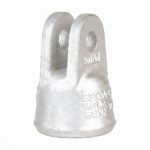
Description
The Cap That Couples One Disc to the Next in a String
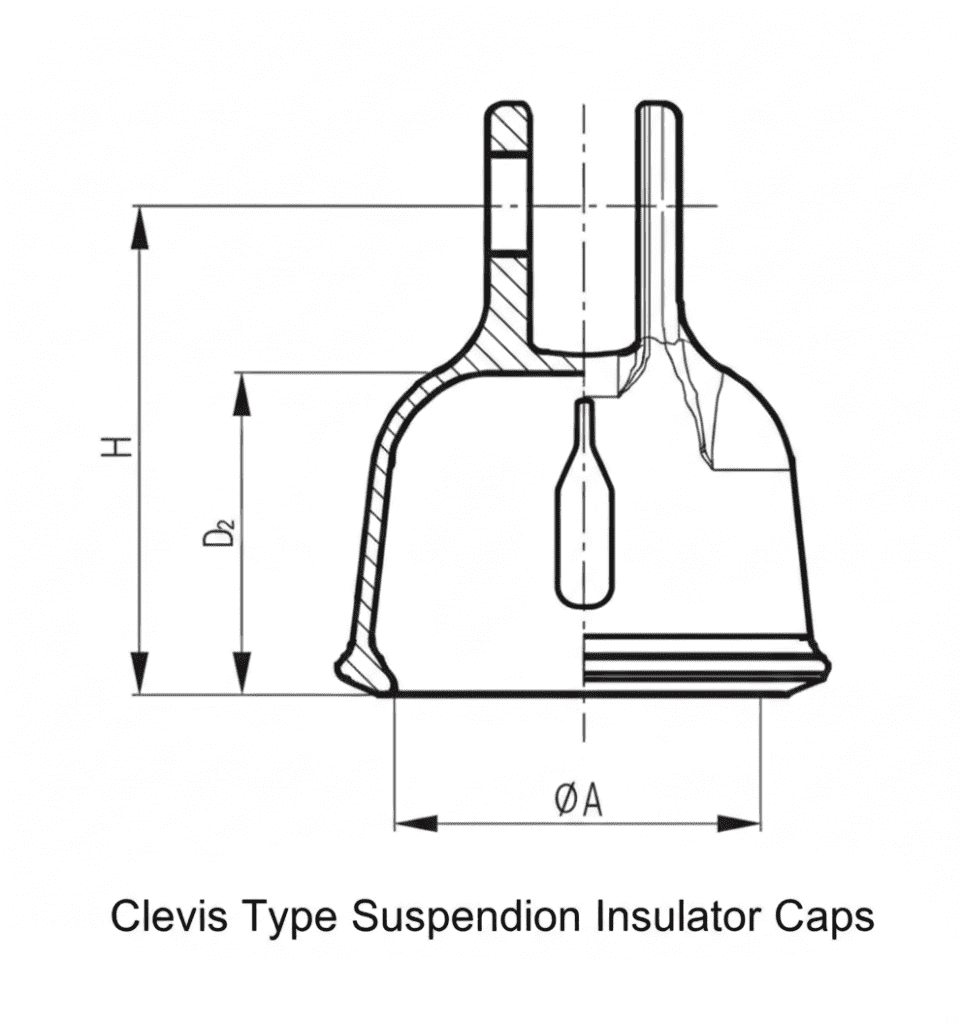
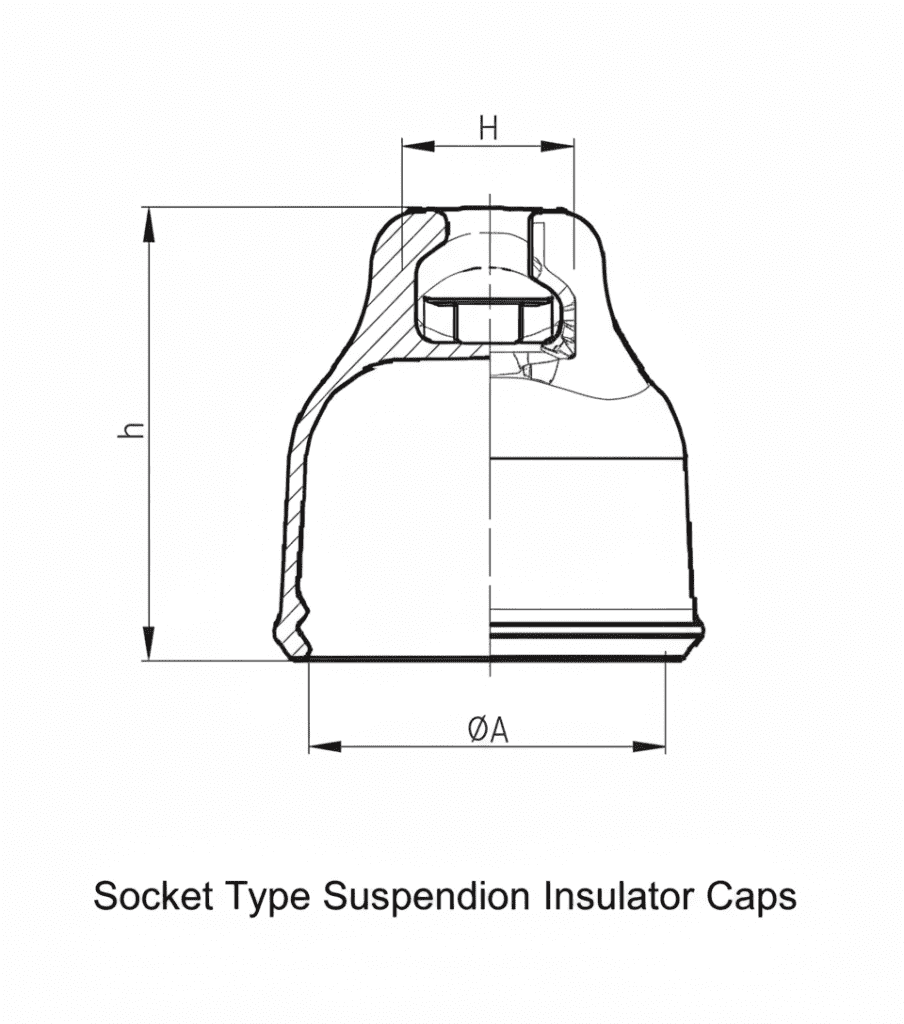
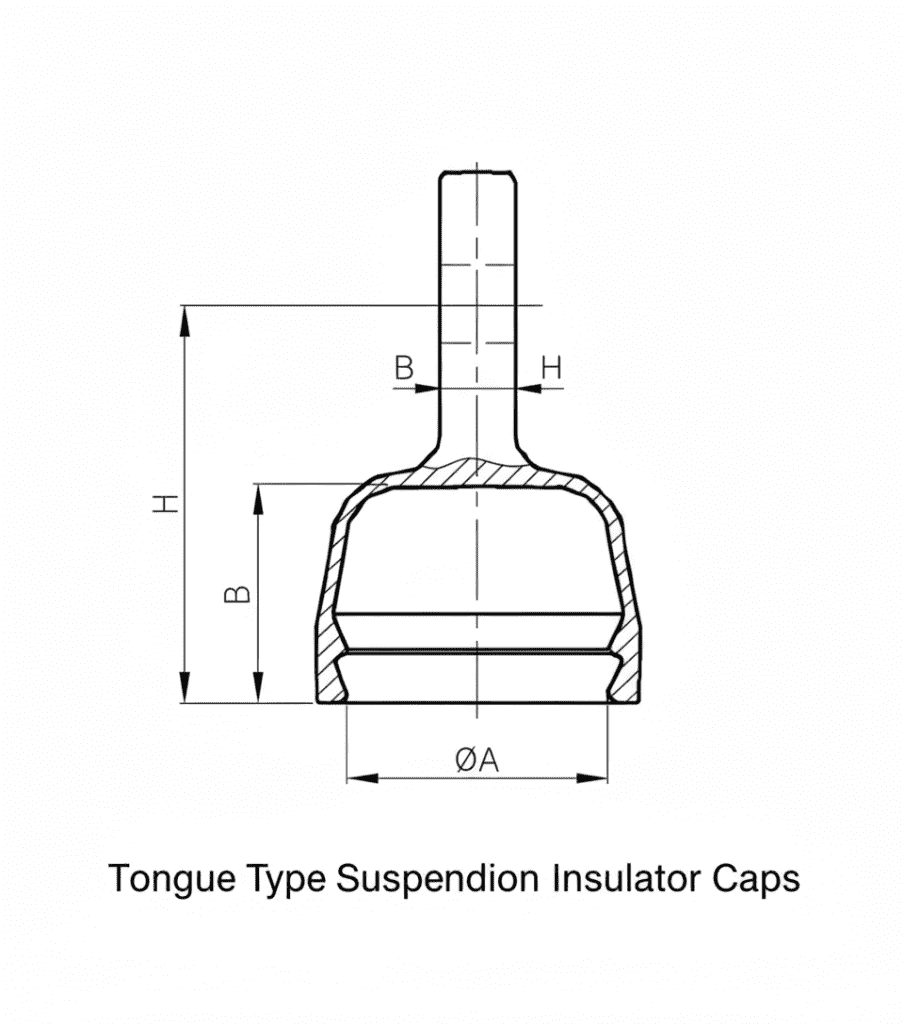
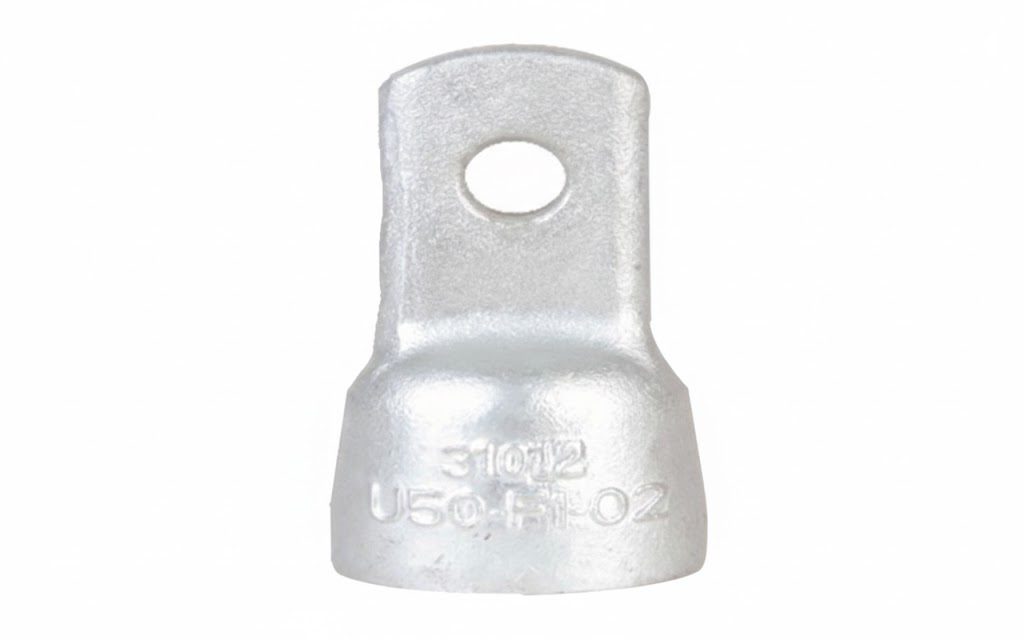
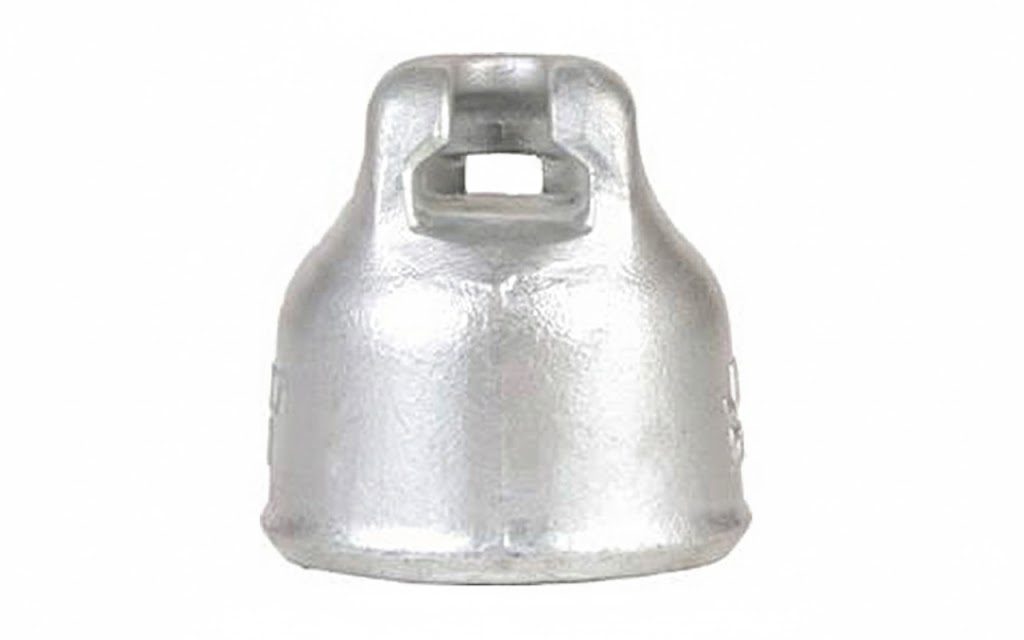
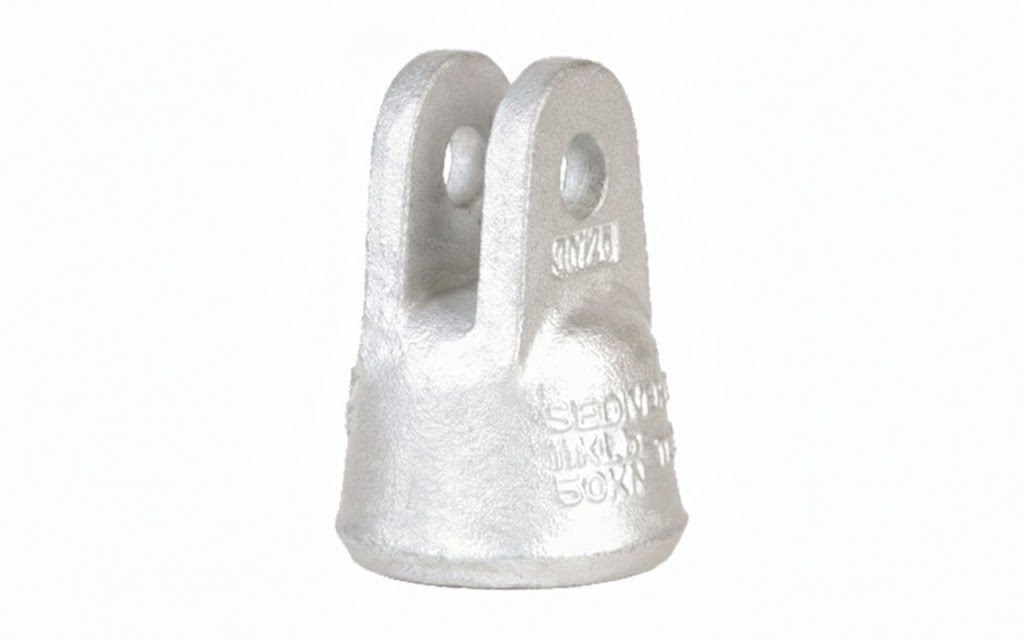
A suspension insulator string is a chain of disc units, each hanging from the one above and carrying the one below, down to the conductor. What links each disc to its neighbor is the ball-and-socket coupling at the ends of every unit, and the suspension insulator cap is the metal fitting at the top of each disc that carries the socket of that coupling.
Picture a single disc unit: a dielectric shell (porcelain, glass, or composite) with a metal cap cemented on top and a metal pin in the bottom. The pin of one disc drops into the cap’s socket of the disc below, retained by a clip, and that repeats down the string. The cap is the component that makes the coupling work: it’s where one unit’s load transfers into the next.
This page explains the cap, its coupling role, and how it fits the suspension insulator and string system.
What the Cap Does and Where It Sits
The cap is one of the two metal end-fittings of a disc insulator, and it does three things:
- Carries the socket of the ball-and-socket coupling the recess that receives the pin (ball) of the disc above it.
- Transfers the load from the dielectric shell into the coupling, so the string’s tension passes cleanly from unit to unit through the metal fittings, not the ceramic.
- Sets the coupling designation the cap’s socket is made to a standard coupling size (16mm, 20mm, etc., per IEC 60120), which must match the pin it receives and the rest of the string.
The cap works with the disc’s pin at the other end: cap (socket) at the top, pin (ball) at the bottom, so units stack into a string. The metal is typically forged or malleable iron, hot-dip galvanized, cemented to the shell.
Why This Matters: The Coupling Must Match Through the Whole String
The cap’s socket designation isn’t a detail it’s what lets the string assemble. Every coupling in a suspension string must share the same designation: the disc caps and pins, and the end fittings that connect the string to the structure and the conductor the ball eyes, socket clevises, and socket eyes we make. A 16mm cap socket takes a 16mm pin and mates with 16mm end fittings; mix designations and the string won’t couple.
This is exactly why buying the insulators and the string hardware from one source helps: the suspension insulators, their caps and pins, and the coupling fittings come matched in designation and load class, so the whole string assembles without a coupling mismatch discovered at height.
Why Buyers Choose DAPENG
- Coupling-matched to your string: Caps (and the discs they top) in the coupling designation and load class of your string matched to the ball eyes and socket fittings we also make.
- Galvanized metal fittings: Hot-dip galvanized caps to a class matched to the string hardware, for the service life a suspension string demands.
- The complete suspension unit and string: Whether you need complete suspension insulators, strings, or the caps as components/spares, from one source matched in coupling and class.
- Specified to your standard: Coupling designation, mechanical/electrical class, and material to your utility’s specification and the applicable IEC/ANSI standard.
Use-Case Deep Dive
What is a suspension insulator cap, exactly?
The metal fitting cemented to the top of a disc suspension insulator, carrying the socket of the ball-and-socket coupling. It receives the pin (ball) of the disc above and transfers load through the coupling. Together with the disc’s bottom pin, it lets disc units stack into a string. If you’re specifying or assembling disc insulators, the cap is the top coupling fitting; if you’re building the string, the cap designation is what must match across every unit and end fitting.
How do I make sure the caps match my string?
By the coupling designation the cap socket size (16mm, 20mm, per IEC 60120) must match the pins and the end fittings throughout the string. Specify the designation of your suspension insulators and end fittings, and everything is supplied to match. If you buy the discs and string hardware from us, the match is built in; if you’re fitting to existing units, send the designation (or a sample) and we confirm.
Do you supply complete suspension insulators or just the caps?
We supply complete suspension insulators and strings, coupling-matched to our string hardware and can supply caps as components/spares where you need them. Tell us whether you need complete units, strings, or components, and we’ll quote to suit.
Specifications and What They Mean for You
| Specification | What we supply | What it means for the buyer |
|---|---|---|
| Function | Socket end-fitting of a disc insulator | Couples one disc to the next in the string |
| Coupling | To IEC 60120 designation (16/20mm) | Matches pins and end fittings through the string |
| Material | Forged/malleable iron, HDG | Service life matched to the string hardware |
| Load class | To your string’s rating | Nothing in the string caps the assembly |
| Supply | Complete discs / strings / components | What you actually need, matched |
| Standards | IEC/ANSI to your spec | Passes your specification review |
Straight Answers to Common Buyer Concerns
“Do I need caps, or complete suspension insulators?” If you’re buying insulators for a line, you almost certainly want complete suspension insulators or strings the cap is a component of those. If you’re an assembler or need spares, we can supply caps as components. Tell us which and we’ll point you to the right product no buying components when you needed complete units, or vice versa.
“How do I know the coupling will match my existing string?” By the coupling designation send it (or a sample of your existing unit or end fitting) and we confirm the cap socket, pin, and end fittings match. The designation is what makes a string assemble; getting it confirmed at RFQ avoids a mismatch discovered on the tower.
“Can you match our standard and voltage class?” Send the specification coupling designation, mechanical and electrical class, and material. We supply to your IEC/ANSI standard, with documentation. (Hold specific voltage/mechanical ratings to datasheet-confirmed figures don’t publish invented classes.)
Complete the String
- Suspension insulators and insulator strings the complete disc units and strings
- Ball eyes, ball clevises, socket eyes, socket clevises the string end fittings that share the coupling designation
- Suspension clamps the clamp at the bottom of the string
- Insulators the full insulator range
- Browse all overhead line fittings and pole line hardware
Get a Coupling-Matched Quote Within 24 Hours
Send the coupling designation and load class of your string (or a sample unit/end fitting), tell us whether you need complete insulators, strings, or components, and your quantities. Our team confirms the match and returns a factory-direct quotation, typically within one working day.
After You Order
Coupling and class confirmation before production, documentation with shipment, components or complete units matched to your string, and an engineering contact who answers precisely because the coupling designation is what makes a suspension string assemble, and getting it matched is the whole specification.