Description
Why High-Voltage Strings Need Corona Rings at the End
At sufficiently high voltage, the air around a conductor or fitting can begin to break down, ionizing in the intense electric field around sharp edges and small-radius metal parts. That’s corona: a faint discharge that wastes energy, generates radio and audible noise, produces ozone and nitric acid that attack materials, and on a composite insulator degrades the polymer housing and seals over time.
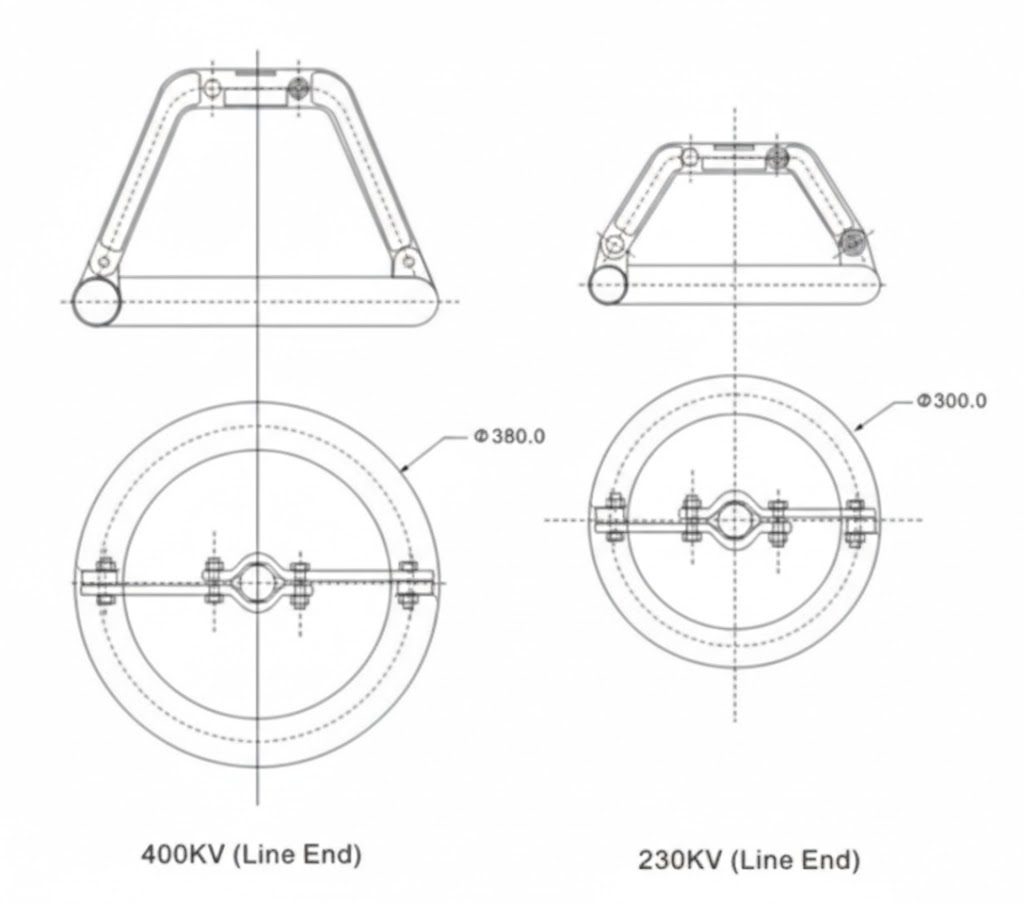
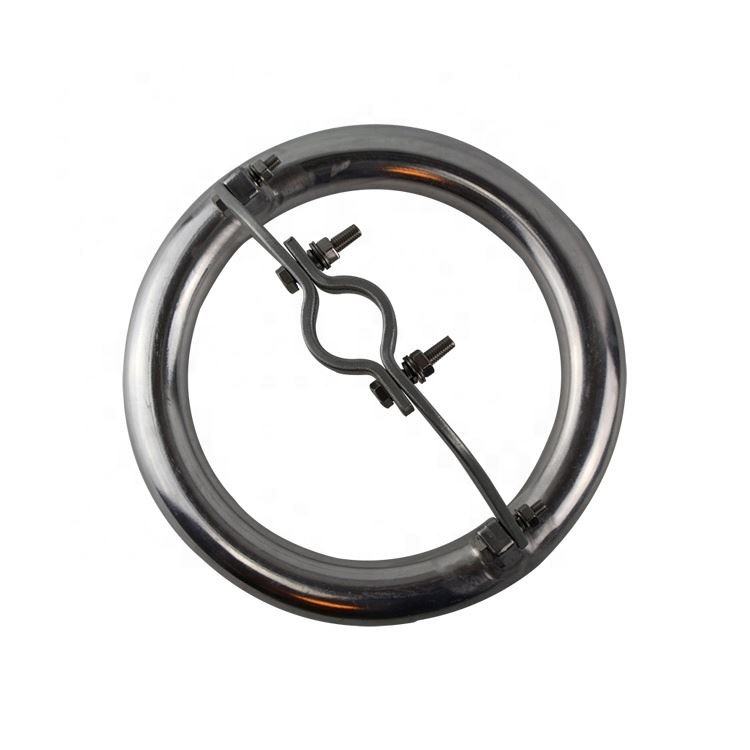
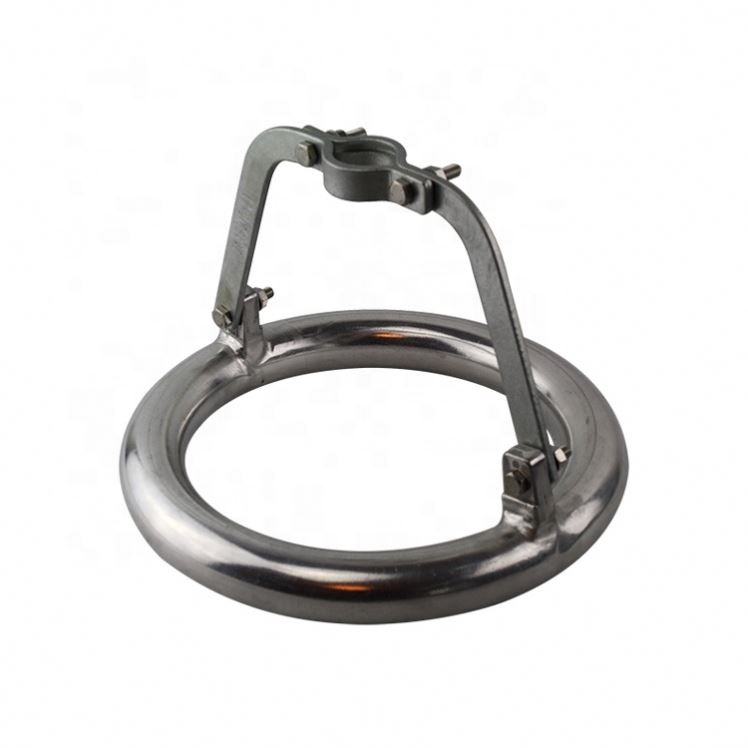
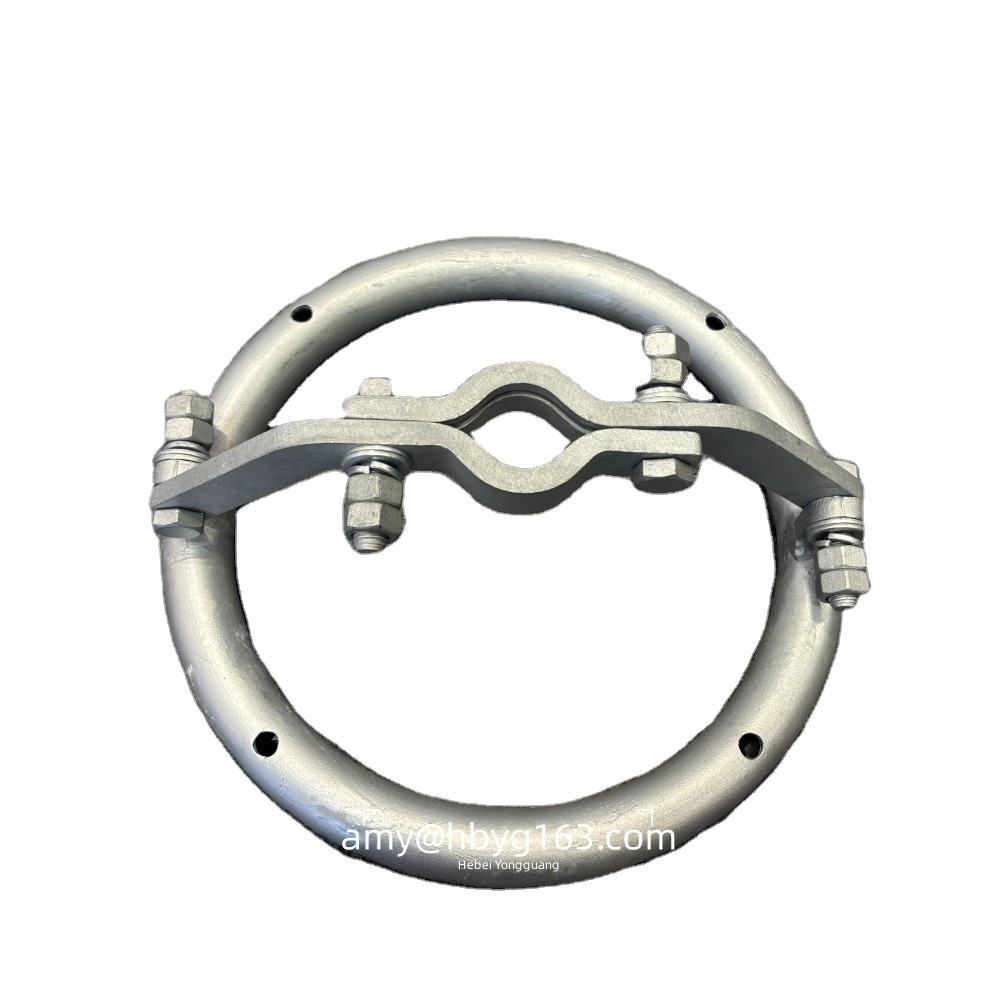
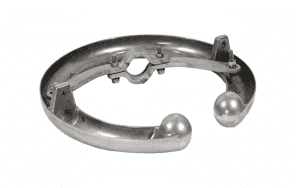
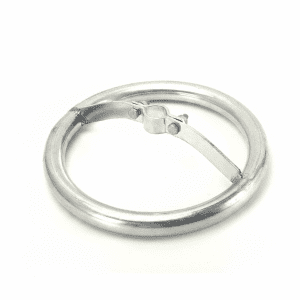
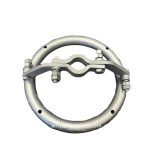
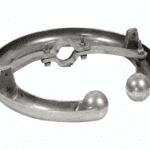
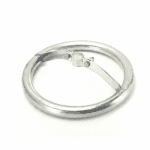
The electric field is most intense at the ends of an insulator string, right at the metal end fittings where the string meets the energized conductor. A corona ring (also called a grading ring) is fitted there to fix it: a smooth, large-radius metal torus that sits around the string end and reshapes the electric field, pulling the field lines away from the sharp fittings and spreading them over the ring’s large, smooth surface, so the local field intensity drops below the level where corona forms.
On transmission and especially EHV lines, and on composite insulators, the corona ring isn’t decorative it’s what keeps the string quiet, efficient, and long-lived. This page explains what it does, when it’s needed, and how it fits your string.
Corona Ring or Grading Ring? Two Names, Two Emphases
The terms overlap, and it’s worth clarifying:
- Corona control suppressing the visible/measurable corona discharge (and the RIV, noise, and chemical by-products it causes) by lowering the peak field at the fittings. This is the “corona ring” emphasis.
- Field grading distributing the voltage more evenly along the insulator’s length (across the discs or along the composite housing), so no single section is over-stressed. This is the “grading ring” emphasis.
The same physical ring often does both a well-designed ring at the string end reduces peak field (corona control) and improves the voltage distribution (grading). Which term a spec uses depends on the emphasis, but the hardware is closely related.
When Is a Corona Ring Needed?
The need rises with voltage the higher the system voltage, the more intense the field at the string ends, and the more likely corona forms without grading. As a principle:
- Lower distribution voltages generally don’t require corona rings the field intensity stays below the corona threshold.
- Higher transmission voltages increasingly require them, and at EHV levels they’re standard, often at both ends of the string.
- Composite (polymer) insulators are particularly sensitive corona can degrade the housing and seals so corona rings are commonly specified on composite strings at voltages where a porcelain/glass string might not strictly need one.
The exact voltage threshold above which you should fit a ring depends on the insulator, the fittings, the conductor, and your standard and it must come from your design or the insulator manufacturer’s guidance.
Why Buyers Choose DAPENG Corona Rings
- Sized to grade your field: The ring diameter, tube diameter, and position sized to your voltage class and string geometry because a corona ring only works if its dimensions suit the field it’s shaping.
- Smooth, large-radius form: Made without the sharp edges, seams, or burrs that would themselves start corona the surface finish is part of the function, not cosmetic.
- Fitted to your string end: Made to mount at the string’s end fitting around the ball/socket coupling or the insulator end in the configuration your string uses.
- Matched to the string hardware: Corona rings with the suspension insulators, strings, and coupling fittings of the same assembly from one source, matched in class.
- To your standard: Designed and tested to the applicable HV standard.
Use-Case Deep Dive
What does a corona ring actually do to the electric field?
It smooths it. Sharp, small-radius metal parts concentrate the electric field the smaller the radius, the higher the local field intensity, and above a threshold the air ionizes and corona forms. A corona ring places a large-radius, smooth conducting surface around the high-field region at the string end. Because the field intensity at a conductor surface falls as the radius rises, the ring’s big smooth surface carries the field at a much lower intensity than the sharp fittings would and it shields those fittings, pulling the field away from them. The result: the peak field drops below the corona threshold, and the discharge stops. It’s electrostatics put to work with a shape.
What problems does corona actually cause is it worth the ring?
On an HV line, yes. Uncontrolled corona causes: energy loss (corona is wasted power, continuously); radio interference (RIV) and audible noise (a real nuisance and often a regulatory limit near lines); ozone and nitric acid production that chemically attacks nearby materials; and, most seriously on composite insulators, degradation of the polymer housing and end seals, which shortens insulator life and can lead to failure. The corona ring prevents all of these at the string ends where corona would otherwise start which is why it’s standard practice at the voltages that need it, not an optional extra.
Do I need a ring at one end or both?
It depends on the voltage and the string. At higher voltages, rings are often fitted at the line (energized) end, where the field is most intense; at EHV, both ends may be graded. Composite strings and specific configurations have their own requirements.
Specifications and What They Mean for You
| Specification | What we supply | What it means for the buyer |
|---|---|---|
| Function | Field grading / corona suppression at string ends | Quiet, efficient, long-lived HV string |
| Voltage class | Sized to your system voltage | The ring suits your field intensity |
| Ring / tube dimensions | Sized to voltage and string | Grades the field correctly |
| Material & finish | Aluminum alloy, smooth, no sharp edges | The ring doesn’t itself start corona |
| Mounting | To your string end fitting | Fits the string you’re building |
| Standard | IEC 61466 / applicable | Passes your HV specification review |
Straight Answers to Common Buyer Concerns
“How do we know we need a corona ring, and what size?” By your voltage class, insulator type, and string configuration the need rises with voltage and is standard at EHV and on composite strings. The size (ring and tube diameter, position) is set by the field it must grade. Send those details and we’ll confirm whether your string needs a ring, at which end(s), and the size from the design guidance, not a guess.
“Why does the ring’s finish matter?” Because a corona ring works by not concentrating the field so it must be smooth, large-radius, and free of the sharp edges, seams, or burrs that would themselves start corona. A poorly finished ring can be worse than none. The surface is functional, and ours are made and inspected with that in mind.
“Can you supply the rings with the insulator string?” Yes the corona ring is one part of the HV string, and it ships matched with the suspension insulators, the string, and the coupling fittings, so the whole assembly is consistent in class and configuration.
Complete the HV String
- Suspension insulators and insulator strings the string the ring grades
- Ball eyes, socket clevises, yoke plates the string couplings and load distribution
- Suspension clamps and strain clamps the clamps at the string ends
- Insulators the full insulator range
- Browse all overhead line fittings and pole line hardware
Get a Voltage-Matched Quote Within 24 Hours
Send your system voltage, the insulator type (porcelain, glass, or composite), and the string configuration or the string design with your quantities. Our engineers confirm the ring requirement and size, and return a factory-direct quotation with the string hardware alongside, typically within one working day.
After You Order
Ring requirement, size, and standard confirmation before production, test documentation with shipment, rings matched to the string hardware, and an engineering contact who answers precisely because corona control is a high-voltage detail where the field, the finish, and the size all have to be right, and it’s worth confirming before the string goes up.