
Description
The Discs That Hang a Transmission Line
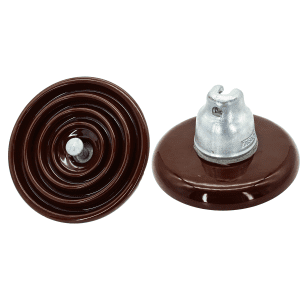
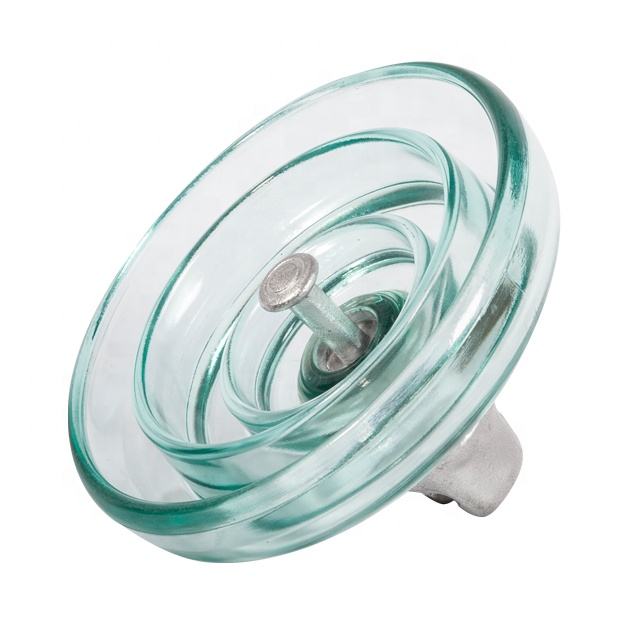
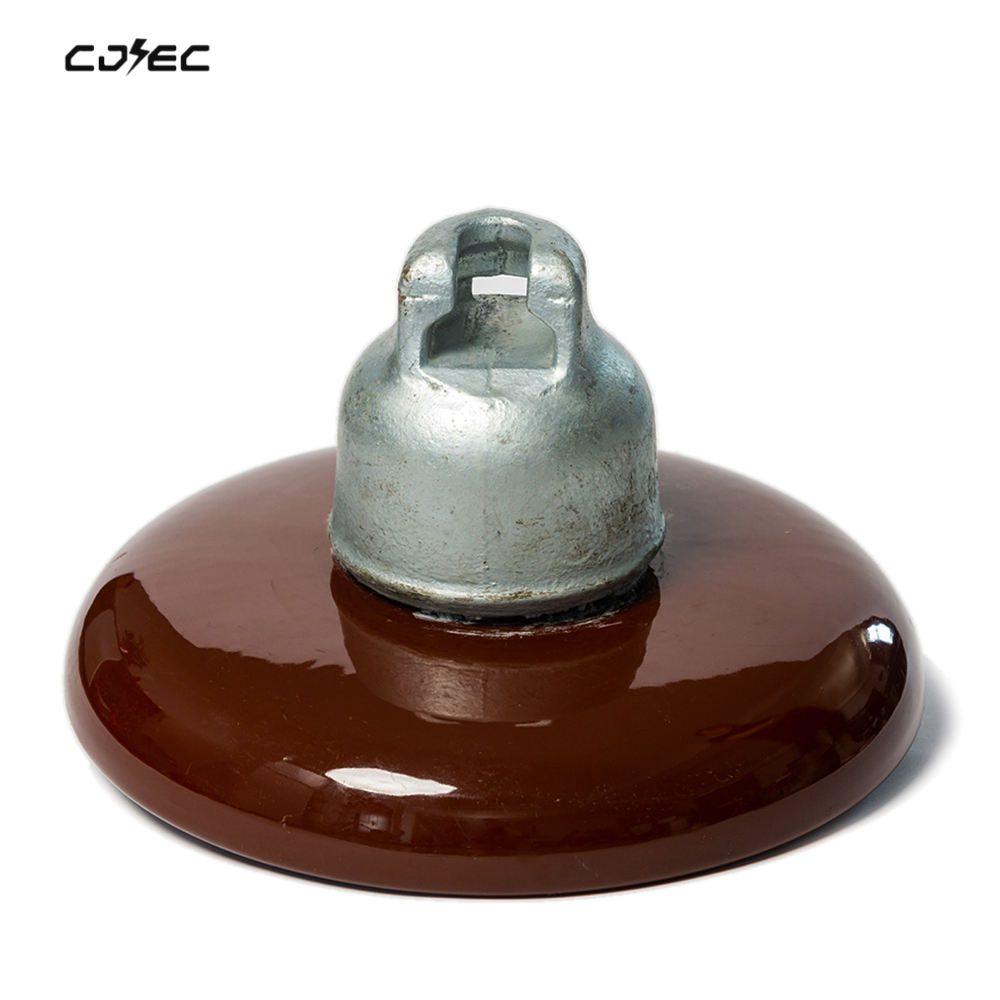
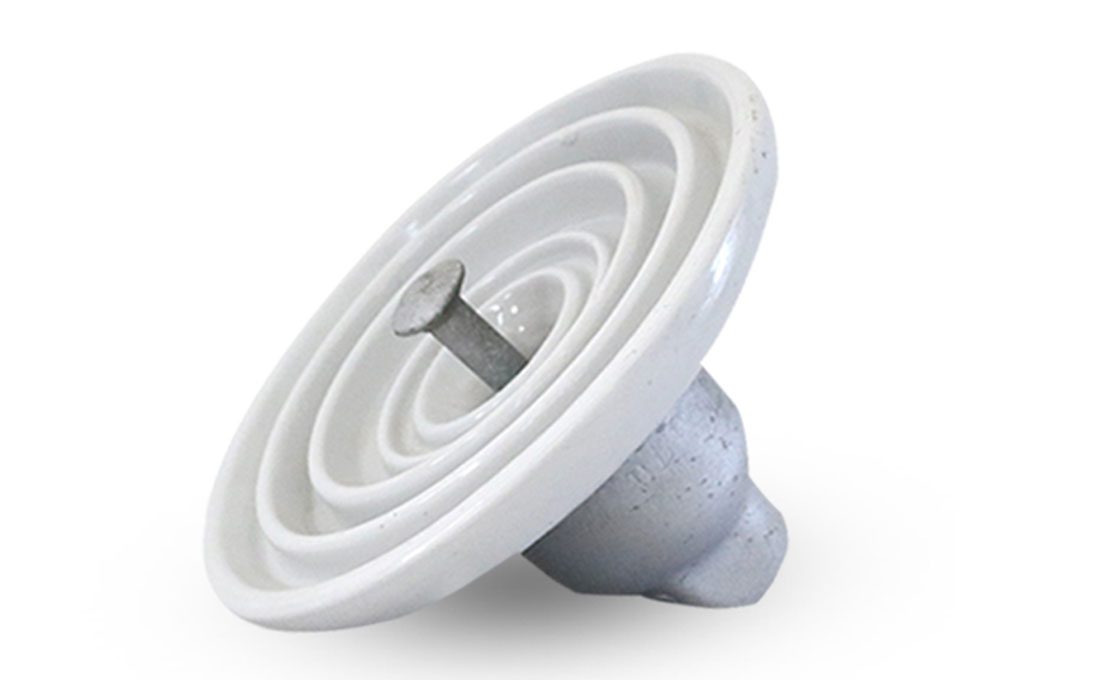
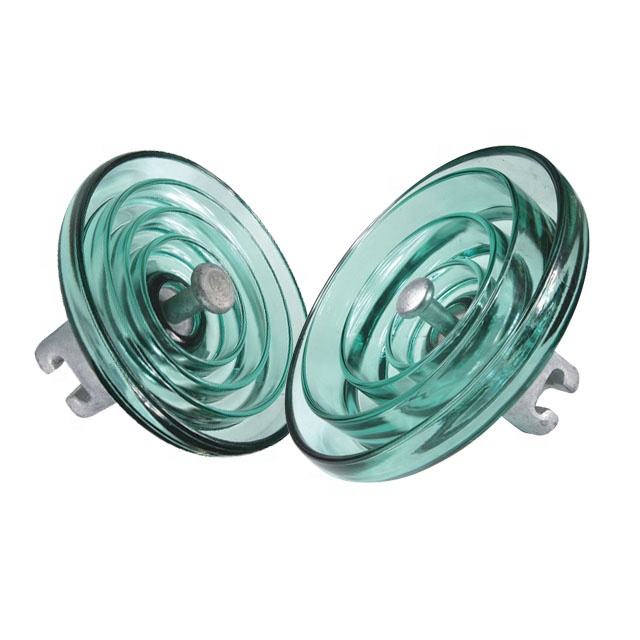
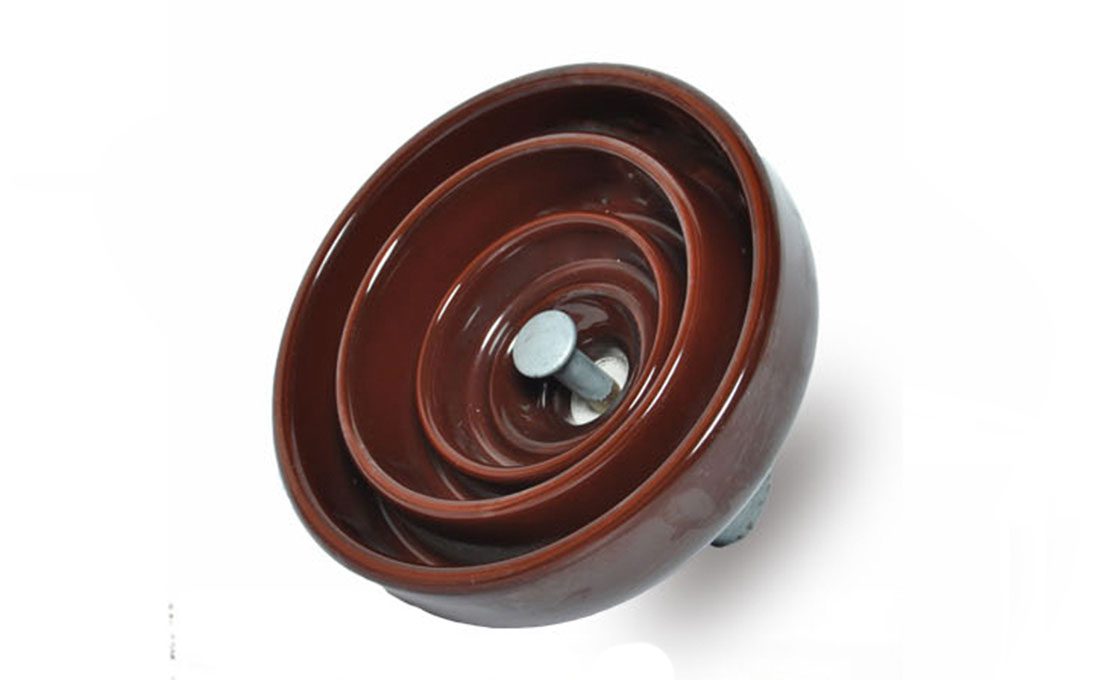
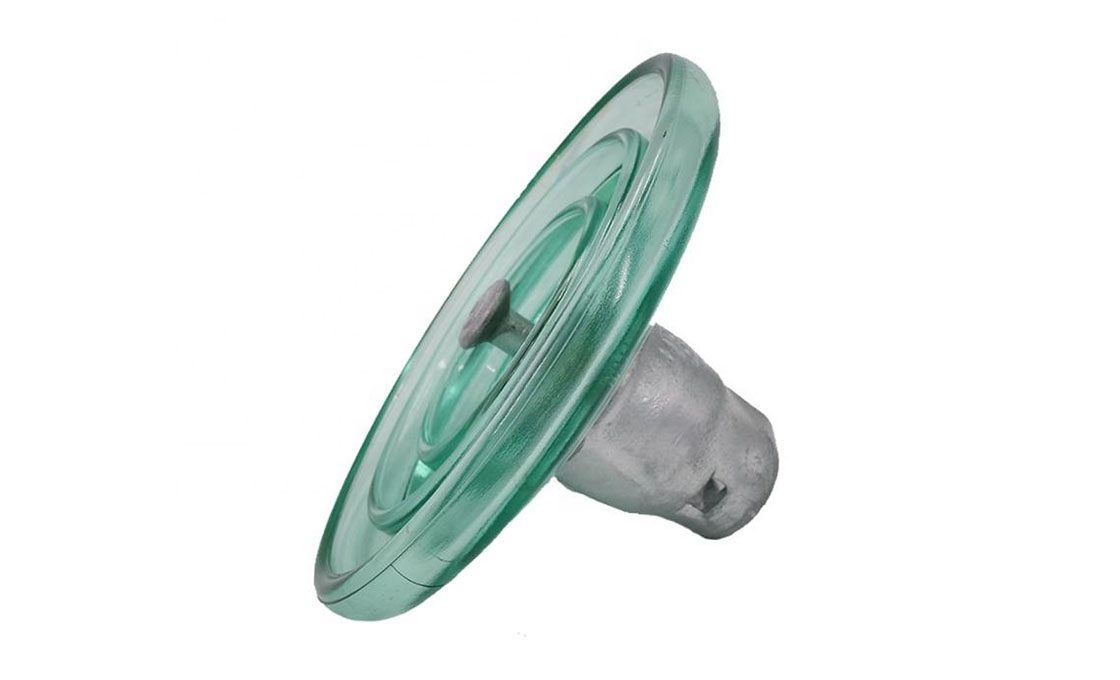
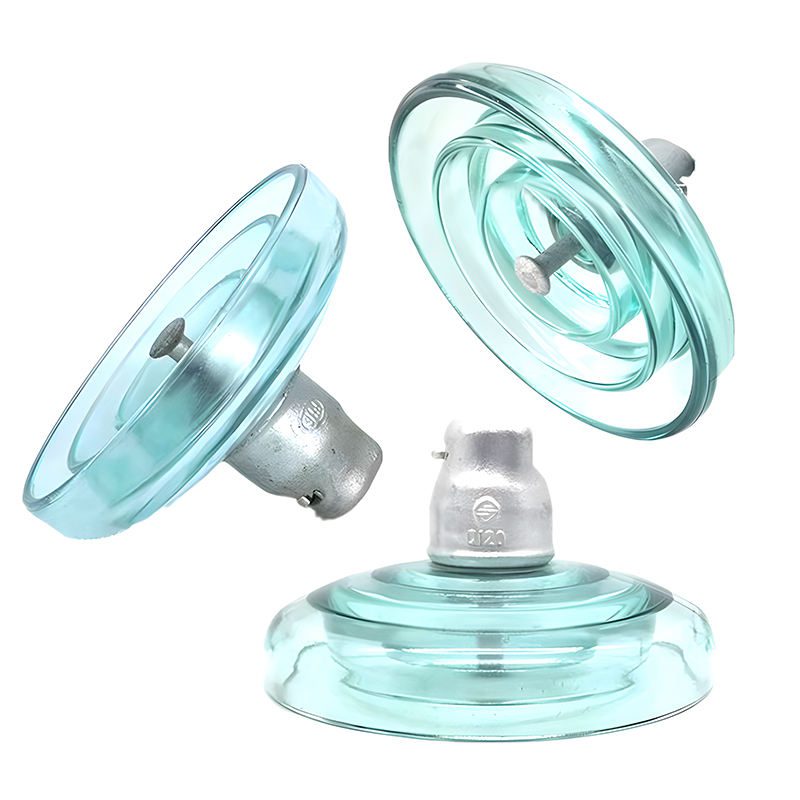
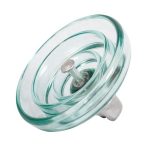
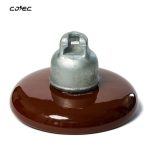
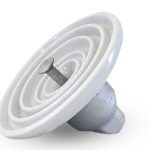
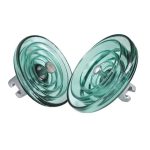
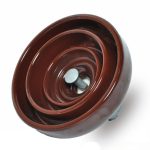
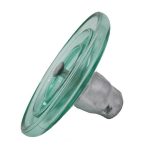
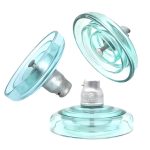
Where a distribution line supports its conductor on a pin or post, a transmission line hangs it below the crossarm, on a string of suspension insulator discs that isolate the conductor from the structure while carrying its full weight and tension. Each disc in that string is a suspension insulator: a dielectric shell with a metal cap on top and a metal pin below, coupled to the disc above and below it, so units stack into a chain as long as the voltage demands.
That’s the elegance of the system: one disc unit, repeated. A lower transmission voltage needs a short string; an EHV line needs a long one same discs, more of them. And because every disc couples to the next through a standard ball-and-socket fitting, the string connects seamlessly to the hardware at each end. This page covers suspension insulators: how the string works, material selection, and how it all connects to the string hardware we make.
How the String Works: Cap, Pin, and Coupling
A suspension string is built from the coupling system, and understanding it is the key to specifying it:
- Each disc has a metal cap (with a socket) cemented on top and a metal pin (a ball) below. The pin of one disc drops into the socket of the disc below, retained by a clip repeated down the string.
- The coupling designation (16mm, 20mm, etc., to IEC 60120) is the size of that ball-and-socket connection. Every coupling in the string must share the same designation the discs, and the end fittings that connect the string to the structure and conductor.
- String length scales with voltage more discs for higher voltage (and for higher pollution, where longer creepage is needed). The string grows by adding units, not by changing them.
Because the coupling is a standard system, the string connects at the top to the structure through a ball eye or socket and yoke plate, and at the bottom to the conductor through a suspension clamp (tangent) or strain clamp (tension) all in the matching designation. Specify the designation once and the whole string mates.
Choosing the Material: Porcelain, Glass, or Composite
Suspension discs come in three materials, and the choice matters for a transmission string.
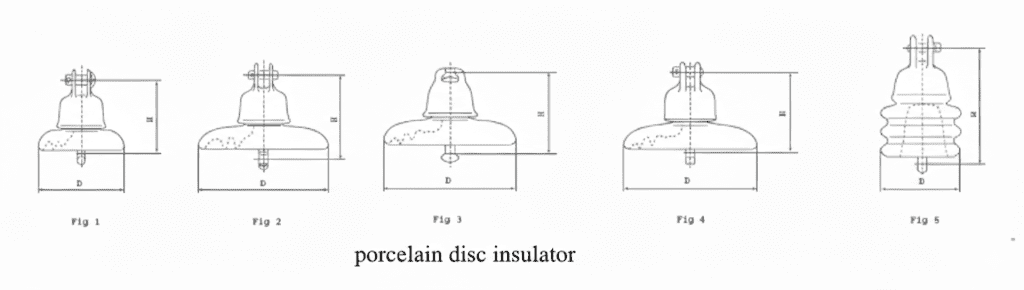
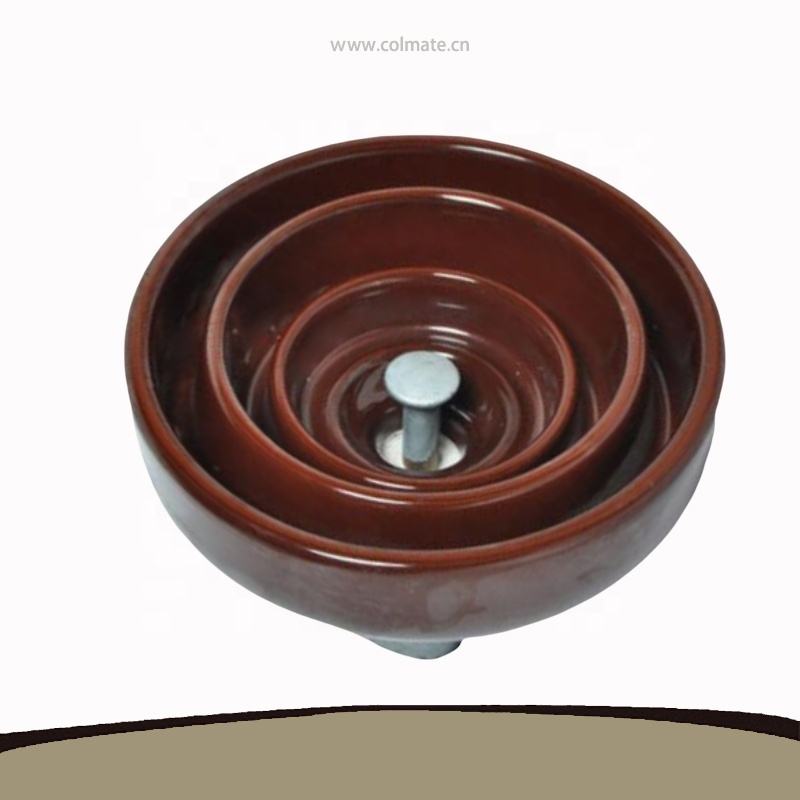
- Porcelain the traditional disc: proven, high strength, long record. Heavy; a failed disc can be hard to spot.
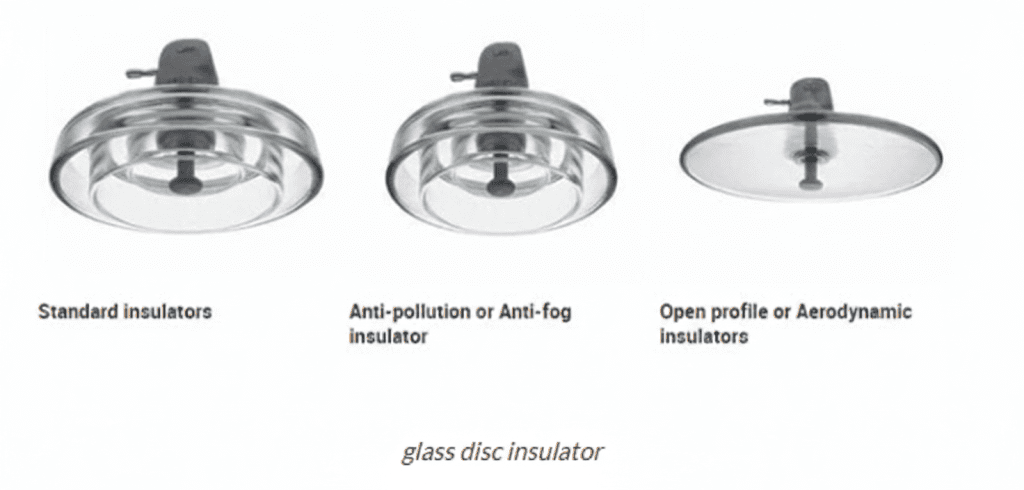
- Toughened glass self-evident fault detection: a failed disc shatters its glass shell but the cap-and-pin cores hold the string mechanically, and the fault is visible from the ground for easy patrol. Popular on transmission for exactly this.
- Composite (long-rod / polymer) strictly a different form (a one-piece long rod rather than a disc string), lightweight, vandal- and pollution-resistant; increasingly specified in polluted, coastal, or vandal-prone areas.
The right choice depends on voltage, pollution, mechanical load, patrol strategy, and standard. Toughened glass is favored where ground patrol wants visible faults; composite where weight and pollution dominate; porcelain where the network standardizes on it. We’ll advise honestly on the trade-off.
Why Buyers Choose DAPENG Suspension Insulators
- Coupling-matched to the whole string: Discs in the IEC coupling designation and M&E class of your string, matched to the caps, ball eyes, sockets, yoke plates, and clamps we also make.
- The material for your line: Porcelain, toughened glass, or composite to your voltage, pollution, and patrol needs advised honestly, not pushed.
- Rated for the conductor: M&E failing load matched above your conductor’s tension/weight with your margin the string carries the whole span at the structure.
- Creepage for your pollution level: Standard and fog/anti-pollution profiles for coastal and polluted environments.
- The complete string from one source: Discs with every fitting in the string the one-source advantage that guarantees the couplings match.
Use-Case Deep Dive
How many discs do I need in a string?
The string length (number of discs) scales with the system voltage and the pollution level higher voltage needs more discs for the electrical stress, and higher pollution needs more creepage (more or longer-profile discs). Your standard and the insulator datasheet give the disc count per voltage and pollution class. Tell us the voltage, the pollution level (light, medium, heavy, coastal), and whether it’s a tangent or tension string, and we’ll specify the string disc type, count, and the end hardware.
Tangent or tension string what’s the difference?
A tangent (suspension) string hangs vertically at a straight-line structure, carrying the conductor’s weight, with a suspension clamp at the bottom. A tension (strain) string lies roughly horizontal at an angle or dead-end structure, taking the conductor’s full tension, with a strain clamp at the end. Same discs, different orientation and end clamp and on heavy or bundled arrangements, a yoke plate distributes the load across multiple strings. At EHV, a corona ring grades the field at the string end. Tell us the structure type and we specify the whole string for it.
Porcelain, glass, or composite how do I choose?
By voltage, pollution, patrol strategy, and standard. Toughened glass where you want faults visible from the ground on patrol; composite (long-rod) where weight, vandalism, or heavy pollution dominate; porcelain where the network standardizes on it or for its proven record. Each has a real case send your line’s conditions and we’ll lay out the trade-off honestly rather than push one material.
Specifications and What They Mean for You
| Specification | What we supply | What it means for the buyer |
|---|---|---|
| Coupling | IEC 60120 designation (16/20mm) | The whole string and hardware mate |
| M&E failing load | To your conductor’s load | Carries the span; never the string’s weak point |
| Voltage / string length | Discs scaled to voltage | Correct electrical strength for your line |
| Creepage | Standard / fog profiles | Resists pollution flashover in your environment |
| Material | Porcelain / glass / composite | Suited to voltage, pollution, patrol |
| Standard | IEC / ANSI to your spec | Passes your specification review |
Straight Answers to Common Buyer Concerns
“How do we make sure the string mates with our hardware?” By the coupling designation every disc, cap, pin, and end fitting must share the same IEC 60120 size (16mm, 20mm, etc.). Specify it once and the discs, caps, ball eyes, sockets, and clamps all mate. Buying the discs and the string hardware from us guarantees the match; fitting to existing hardware, send the designation and we supply to it. This is the one thing that stops a string assembling, and it’s confirmed at RFQ.
“How is the mechanical rating chosen?” The M&E (mechanical and electrical) failing load must exceed the conductor’s tension and weight through the string, with your standard’s margin because the string carries the whole span at the structure. It’s a datasheet-verified, tested figure with documentation; send the conductor and span and we confirm the class.
“Can you supply the complete string?” Yes that’s the one-source advantage. Discs, caps, the ball eye/socket end fittings, the yoke plate on multi-string, the suspension/strain clamp, and the corona ring at EHV matched in designation and class, kitted per structure. Send the string design and it comes back complete.
Complete the String
- Insulator strings assembled strings and string sets
- Suspension insulator caps the disc coupling fitting
- Ball eyes, ball clevises, socket eyes, socket clevises the string end fittings
- Yoke plates load distribution for multi-string and bundled
- Suspension clamps, strain clamps the clamps at the string ends
- Corona rings field grading at EHV
- Insulators the full range and type-selection hub
- Browse all overhead line fittings and pole line hardware
Get a String-Matched Quote Within 24 Hours
Send your system voltage, the pollution level, the conductor and span (for the M&E rating), the structure type (tangent/tension), the coupling designation if you have existing hardware, and quantities or the string design. Our engineers confirm the disc type, count, material, coupling, and end hardware, and return a factory-direct quotation for the complete string, typically within one working day.
After You Order
Coupling, class, and material confirmation before production, type-test and routine-test documentation with shipment, discs kitted with their string hardware per structure, and an engineering contact who answers precisely because a suspension string carries the line at every structure, and getting the coupling, the rating, and the material right is what keeps it up.