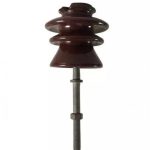
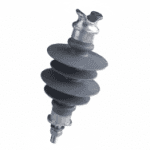
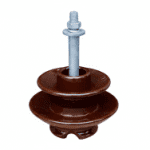
Description
The Economical Workhorse of Distribution Conductor Support
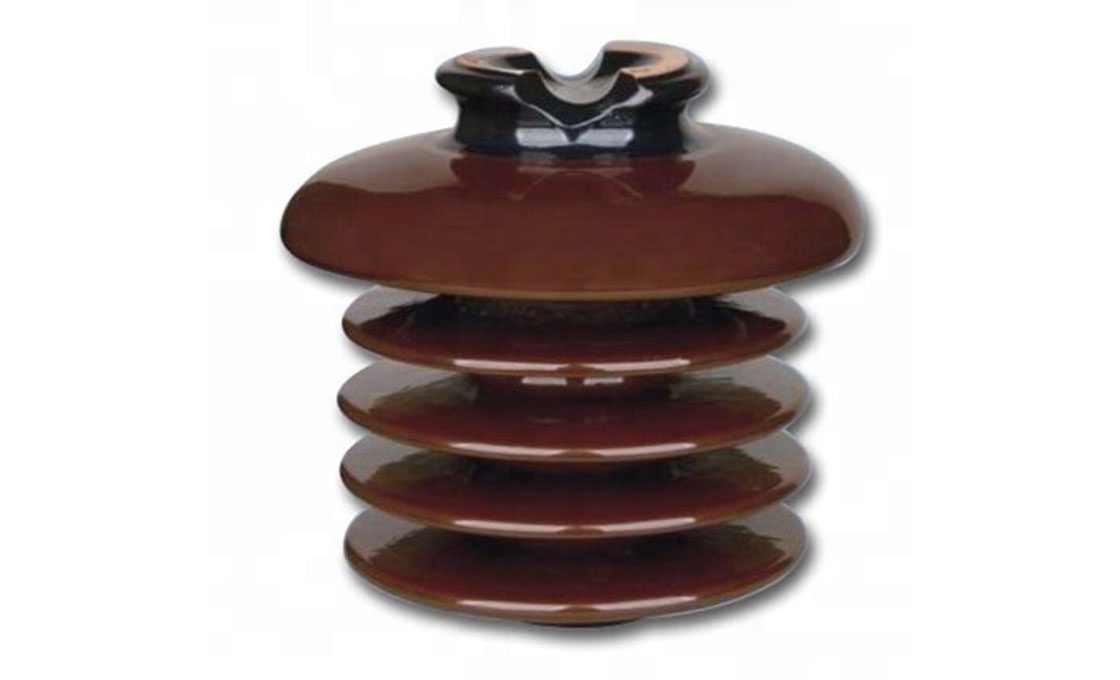
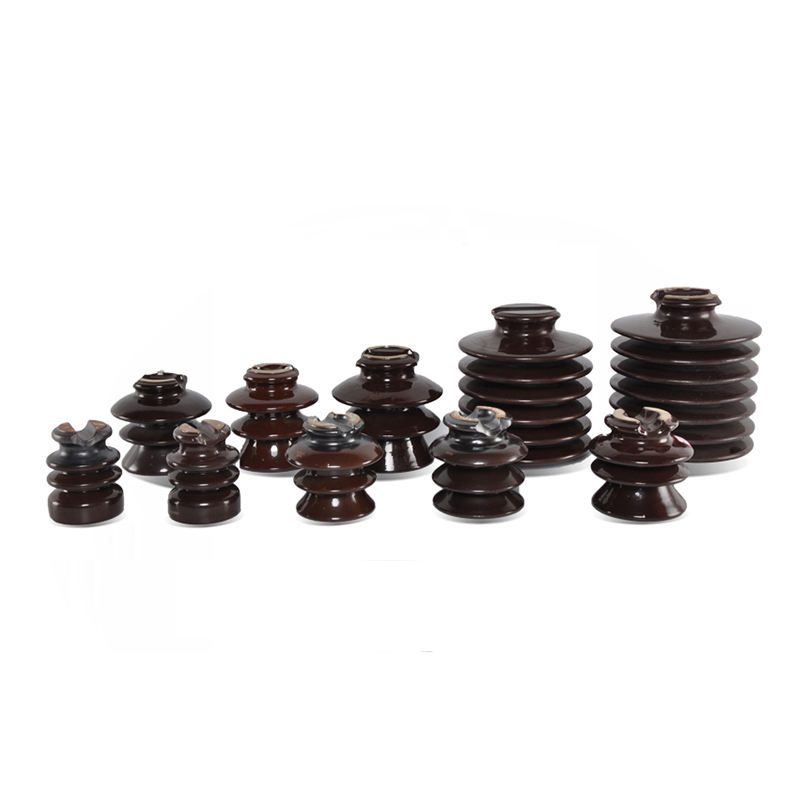
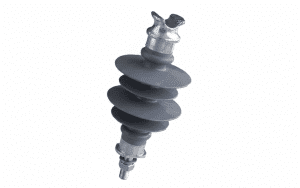
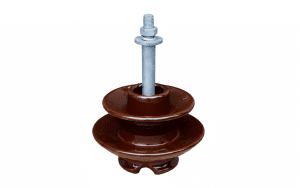
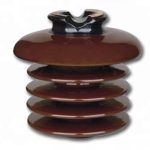
On distribution lines the world over, the conductor is held up by the simplest, most economical insulator there is: the pin insulators. It screws onto a spindle, an insulator pin on the crossarm or a pole top pin at the pole tip, and the conductor is tied into a groove at its top. Simple, cheap, robust, and made by the million.
For straight runs and lighter angles at distribution voltages, the pin insulator is the default, and the right choice: it does the job at the lowest cost, and there are more of them on a distribution network than almost any other insulator. This page covers pin insulators when to choose them (and when to step up to a post type), how they mount on their spindle, and how the conductor ties in.
Pin or Post? The Distribution Decision, From the Pin Side
The common choice on a distribution line is between a pin and a post insulator, and it comes down to voltage, mechanical demand, and cost:
- Pin insulators (this page) spindle-mounted, conductor tied on top; the economical default for lower distribution voltages, straight runs, and lighter mechanical duty. Simple and low-cost.
- Post insulators rigid, bolt-mounted; cleaner electrically at higher distribution voltages and stronger mechanically (a defined cantilever rating), at higher cost.
The pin insulator holds its place wherever cost and simplicity matter and the voltage and mechanical demands are moderate which is most of a distribution network. As voltages climb toward the upper distribution range, or where mechanical duty or a cleaner profile is needed, the post type earns the step up. We make both and will advise honestly the pin insulator is often exactly the right, economical answer, and we’ll say so rather than push the pricier option.
The Pin Insulator Needs Its Spindle and the Thread Must Match
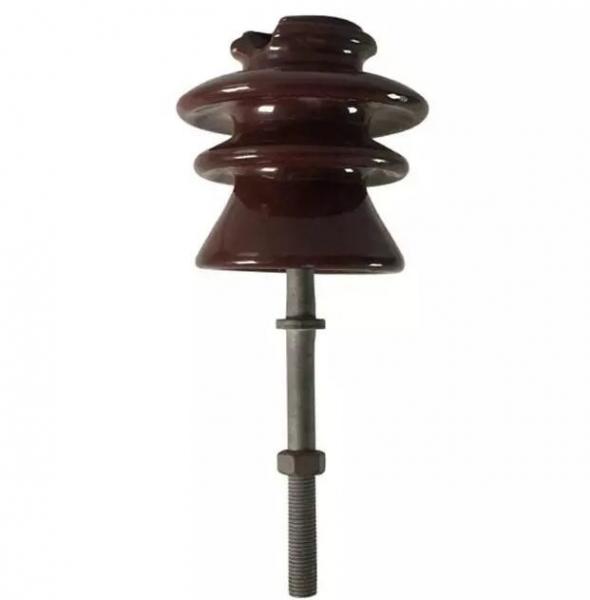
A pin insulator doesn’t stand on its own; it screws onto a spindle, and the two are a matched pair:
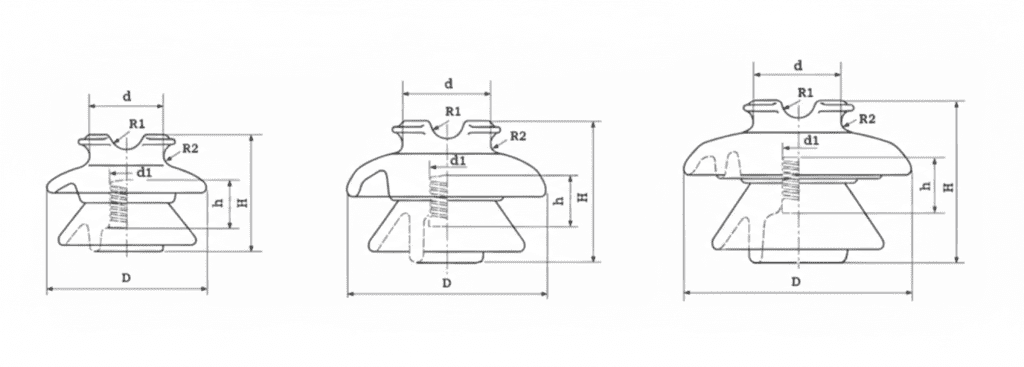
- The insulator has a threaded socket in its base.
- The spindle an insulator pin (through the crossarm) or a pole top pin (at the pole tip) has a lead thread that must match that socket.
Get the thread match right and the insulator seats firm; get it wrong and you have an insulator and a pin that don’t fit. This is where buying the insulator and the pin from one source pays off we match the socket to the lead thread as a matter of course, so they arrive as a working pair. Specify the insulator and we supply the matching pin; specify both and the fit is guaranteed.
Why Buyers Choose DAPENG Pin Insulators
- Economical and robust: The cost-effective distribution insulator, made in porcelain (or your specified material) to shrug off weather for its service life.
- Matched to your pin’s thread: The socket to the insulator pin or pole top pin lead thread, so the insulator seats firm confirmed at RFQ.
- Rated for your line: Voltage class and creepage to your distribution voltage and pollution level on datasheet figures.
- Grooved for the tie: Top and/or side groove profiled to seat the conductor and hold the tie.
- The support complete from one source: Pin insulators with the pins, pole top pins, and ties that complete the support matched and kitted.
Use-Case Deep Dive
When should I use a pin insulator?
On distribution lines at straight runs and lighter angles, at the lower-to-moderate distribution voltages, where cost and simplicity matter which covers most distribution conductor support. The conductor sits on top of the insulator, tied into the groove, on a spindle through the crossarm or at the pole top. For the top conductor at the pole tip, the pin insulator mounts on a pole top pin; for the conductors along the crossarm, on insulator pins. Where the voltage or mechanical duty rises, step up to a post insulator. Tell us the voltage and position and we’ll confirm.
How does the conductor attach to a pin insulator?
By a tie, into a groove. A pin insulator has a top groove (for straight-line positions, conductor tied on top) and often a side groove (for angle positions, conductor tied to the side to take the angle pull). The conductor is secured with an insulator tie a preformed or hand tie into the appropriate groove. Tell us whether the position is a straight run or an angle and we’ll confirm the groove and the tie.
How do I match the insulator, the pin, and the tie?
As a set. The insulator’s socket thread matches the pin’s lead thread; the groove matches the conductor and the tie; the voltage/creepage matches the line. Send the voltage, the conductor, and the mounting (crossarm or pole top), and we supply the insulator, the matching pin, and the tie as a set so the support seats firm, ties in cleanly, and is rated for the line. Buying them together guarantees all three match.
Specifications and What They Mean for You
| Specification | What we supply | What it means for the buyer |
|---|---|---|
| Voltage class | To your distribution voltage | Electrically rated for your line |
| Socket thread | To your pin’s lead thread | Seats firm on the spindle |
| Creepage | To your pollution level | Resists flashover in your environment |
| Groove | Top / side for straight/angle | Seats the conductor and tie for the position |
| Material | Porcelain / composite | Robust for its service life |
| Class | ANSI 55-x / IEC to your spec | Passes your specification review |
Straight Answers to Common Buyer Concerns
“Pin or post insulator which do we need?” For most distribution conductor support at lower-to-moderate voltages and lighter duty, the pin insulator is the economical, correct choice. Step up to a post insulator at the higher distribution voltages, where the mechanical duty needs a defined cantilever strength, or where a cleaner profile is wanted. We make both and will tell you honestly which suits often it’s the pin, and we won’t push the pricier post if you don’t need it. Send the voltage and duty and we’ll confirm.
“How do we make sure the insulator fits our pin?” Match the insulator’s socket thread to the pin’s lead thread send us the pin (or its thread), or buy both from us and the fit is guaranteed. The thread match is what seats the insulator firm; it’s confirmed at RFQ, not discovered at the pole.
“Can you match our standard or a legacy pin insulator?” Send the class (ANSI 55-x or your standard), voltage, thread, and dimensions, or a sample. Manufacturing pin insulators to a utility’s specification is routine export work, with test documentation.
Complete the Support
- Insulator pins and pole top pins the spindles the insulator mounts on
- Insulator ties securing the conductor in the groove
- Post insulators the higher-voltage/stronger alternative
- Spool insulators the secondary/service type
- Steel cross arms the structure the pins mount to
- Insulators the full range and type-selection hub
- Browse all pole line hardware and overhead line fittings
Get a Line-Matched Quote Within 24 Hours
Send your distribution voltage, the pollution level, the conductor, the mounting (crossarm or pole top) and your pin’s thread if you have it, and quantities or the insulator specification. Our team confirms the voltage class, the thread match, and the groove, and returns a factory-direct quotation with the pins and ties alongside, typically within one working day.
After You Order
Rating, thread, and groove confirmation before production, test documentation with shipment, insulators kitted with their pins and ties, and an engineering contact who answers quickly because the pin insulator supports the conductor at more positions than almost any other, and getting the thread, groove, and rating matched is what seats it firm and keeps the line up.