


Description
The Whole String, Assembled and Matched, Not Just the Discs
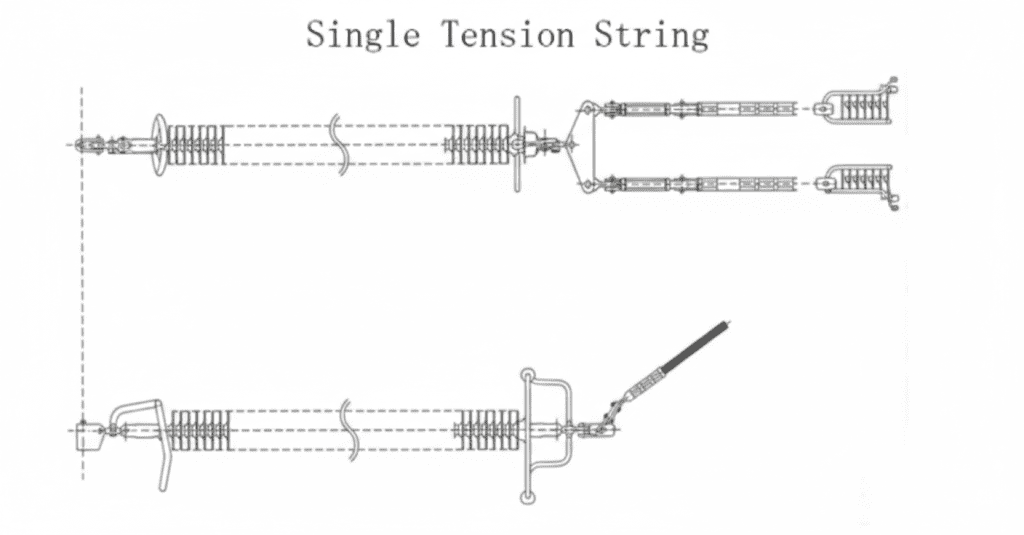
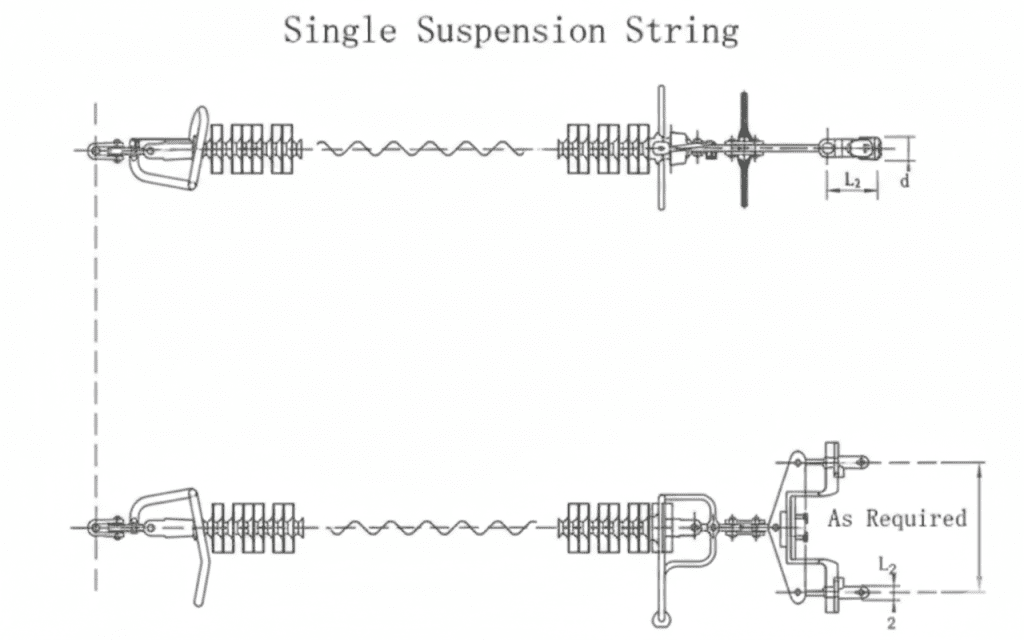
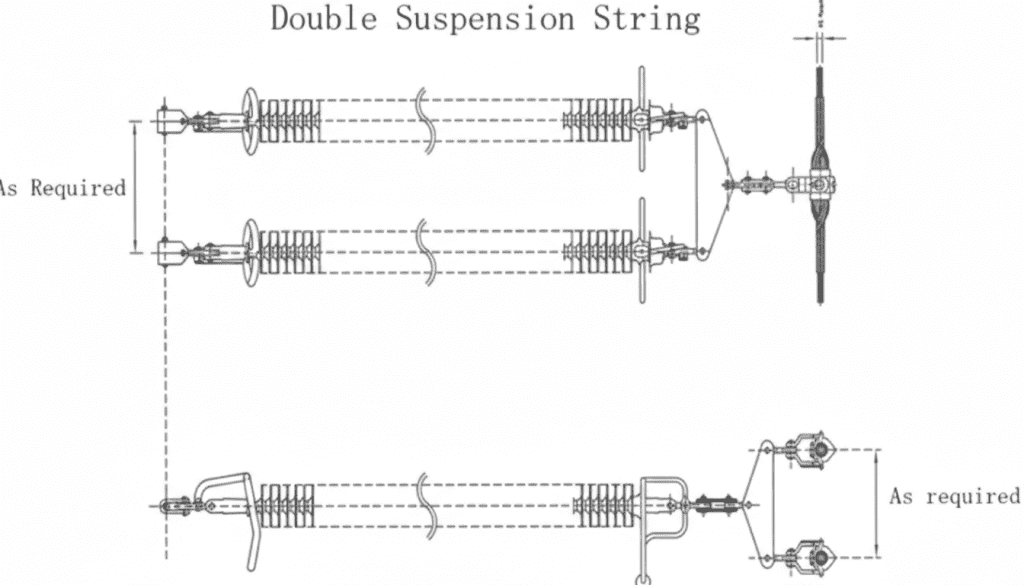
A suspension or tension insulator strings is more than its insulators. It’s the discs and the fittings that connect them to the structure and the conductor: the end couplings, the yoke plate on a multi-string, the clamp at the bottom, the corona ring at EHV a dozen matched parts that have to share the same coupling designation and load class to assemble into one working string.
Source the discs from one supplier and the hardware from another, and you inherit a coordination problem: couplings that don’t quite match, a yoke plate for the wrong designation, a clamp that doesn’t fit, mismatches that surface at the tower. DAPENG supplies the complete string, every part, matched in designation and class, configured for your structure and kitted as a set so it assembles the way it was designed to. This page covers insulator strings as complete sets: the configurations, what each contains, and how the whole set is matched.
What a Complete String Contains
A string set is built from these, all in one coupling designation and matched load class:
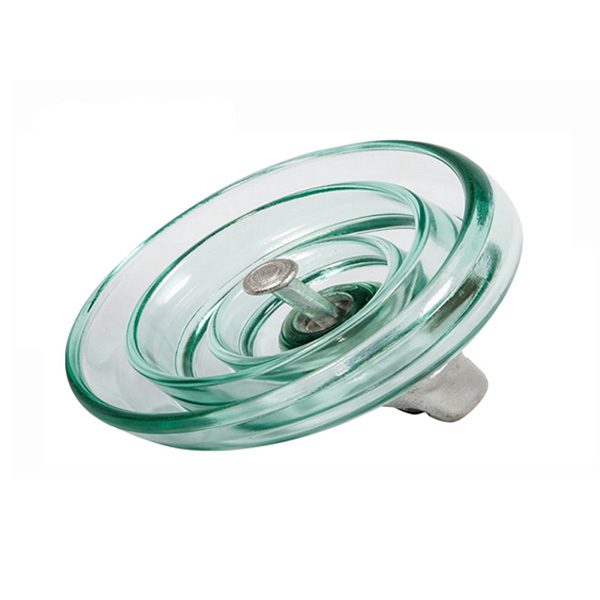
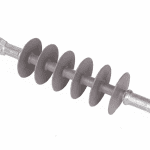
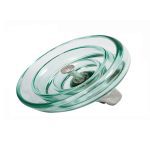
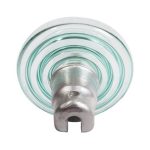
- Suspension insulators the disc units, in the count your voltage and pollution need, with their caps and pins.
- End fittings the couplings that connect the string to the structure at the top and the conductor hardware at the bottom: ball eyes, ball clevises, socket eyes, socket clevises, and a U shackle at the structure.
- Yoke plates on double, V, and bundled arrangements, distributing the load across multiple strings.
- The clamp a suspension clamp (tangent) or strain clamp (tension) at the conductor end.
- Corona rings at EHV, grading the field at the string ends.
Every one of these we make, so the whole set is matched at source the point of buying the string complete.
String Configurations: Which Set Do You Need?
The configuration follows the structure and the load:
| Configuration | What it is | Where |
|---|---|---|
| Single tangent (suspension) | One vertical string, suspension clamp at the bottom | Straight-line structures |
| Single tension (strain) | One horizontal string, strain clamp at the end | Angle and dead-end structures |
| Double (twin) suspension/tension | Two parallel strings on a yoke plate | Higher mechanical load, redundancy |
| V-string | Two strings meeting at an angle, fixing the conductor’s position | Where conductor swing must be controlled |
| Bundled | Multiple strings/yokes for bundled sub-conductors | EHV bundled lines |
Each configuration is a defined set the discs, the right end fittings, the yoke plate where needed, the correct clamp. Tell us the structure type, the voltage, and the conductor, and we configure and quote the string set for it.
Why the Whole Set Must Share One Coupling Designation
The thing that makes a string a string rather than a box of parts is that every coupling matches. The disc caps and pins, the end fittings, the clamp interface: all to the same IEC 60120 coupling designation (16mm, 20mm, etc.) and a matched load class. A single mismatched designation anywhere and the string won’t couple.
When the whole set comes from one supplier, that match is guaranteed by construction we build the set to one designation. When it’s sourced piecemeal, the match is the buyer’s risk, checked (or not) across purchase orders. The complete-string advantage is really a matched-coupling guarantee and it’s why buyers who’ve been burned by a mismatch at the tower come back for the assembled set.
Why Buyers Choose DAPENG Insulator Strings
- Complete and matched: Every part of the string in one coupling designation and load class no sourcing and matching the hardware yourself.
- Configured for your structure: Tangent, tension, double, V, or bundled the set built for your structure type and quoted as one.
- Kitted per structure: The string arrives sorted and marked by structure, so a crew has the whole string in one kit, not a pallet to assemble.
- Rated for your line: Disc count, M&E class, and creepage to your voltage and pollution on datasheet figures.
- One accountable supplier: For the whole string, not a finger-pointing chain between an insulator maker and a hardware maker.
Use-Case Deep Dive
Why buy the complete string instead of the discs?
Because the string is only as good as its matches, and matching is the work. Buy the discs alone and you still have to source the end couplings, the yoke plate, and the clamp in the right designation and load class and get them to match each other and the discs. Buy the complete string and that’s done: one designation, one load class, one kit, one supplier accountable. The saving isn’t just procurement time; it’s the avoided mismatch at the tower, which is expensive exactly when it’s discovered. Send the structure and we quote the set complete.
How do I specify a string set?
Give us the structure and the line: voltage (sets the disc count and rating), pollution level (sets creepage/disc count), conductor and span (sets the M&E class and the clamp), structure type (tangent/tension/double/V sets the configuration and whether a yoke plate is needed), and the coupling designation if you have existing hardware to match. We return the configured string set discs, fittings, yoke, clamp, and corona ring at EHV quoted and kitted.
Can you match a string to our existing hardware or standard?
Yes send the coupling designation and load class (or a sample end fitting), and we build the string to mate with what you already use, to your standard, with test documentation. Matching a string to a utility’s existing designation and standard is routine and it’s exactly where the complete-set supply earns its keep, because we control every coupling in the set.
Specifications and What They Mean for You
| Specification | What we supply | What it means for the buyer |
|---|---|---|
| Supply | Complete, matched, kitted string set | Assembles as designed; no mismatch |
| Configuration | Tangent/tension/double/V/bundled | Built for your structure |
| Coupling | One IEC 60120 designation across the set | Every part couples |
| Rating | Disc count, M&E, creepage to your line | Correct strength and insulation |
| Corona (EHV) | Ring included where needed | Field graded at the string ends |
| Standard | IEC/ANSI to your spec | Passes your specification review |
Straight Answers to Common Buyer Concerns
“Do you supply the whole string, or just the insulators?” The whole string discs, end couplings, yoke plates, clamps, and corona rings at EHV matched in coupling designation and load class, configured for your structure, and kitted as a set. That’s the point of buying the string here rather than sourcing discs and hardware separately.
“How do we know every part of the string will couple?” Because we build the set to one coupling designation. Specify it once (or send a sample end fitting to match existing hardware) and every part caps, pins, end fittings, clamp is made to mate. Piecemeal sourcing puts that match at risk across suppliers; the complete set guarantees it. It’s confirmed at RFQ and built in.
“Can you configure double or V-strings for our angle and dead-end structures?” Yes send the structure type and load, and we configure the set: the discs, the yoke plate that distributes the load, the right strain or suspension clamp, and the end fittings matched and kitted per structure.
Explore the String Components
- Suspension insulators and caps the disc units
- Ball eyes, ball clevises, socket eyes, socket clevises, U shackles the end fittings
- Yoke plates load distribution
- Suspension clamps, strain clamps the conductor-end clamps
- Corona rings EHV field grading
- Insulators the full range and type-selection hub
- Browse all overhead line fittings and pole line hardware
Get a String Set Quote Within 24 Hours
Send your voltage, pollution level, conductor and span, structure type (tangent/tension/double/V), the coupling designation if matching existing hardware, and quantities or the string schedule. Our engineers configure the complete set and return a factory-direct quotation, kitted per structure, typically within one working day.
After You Order
Configuration, coupling, and rating confirmation before production, type- and routine-test documentation with shipment, strings kitted and marked per structure, and an engineering contact who answers precisely because an insulator string carries the line at every structure, and delivering it complete and matched is what keeps the assembly right from the box to the tower.