
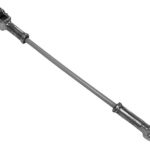
Description
The Strain-Rated Link That Insulates a Guy Under Full Tension
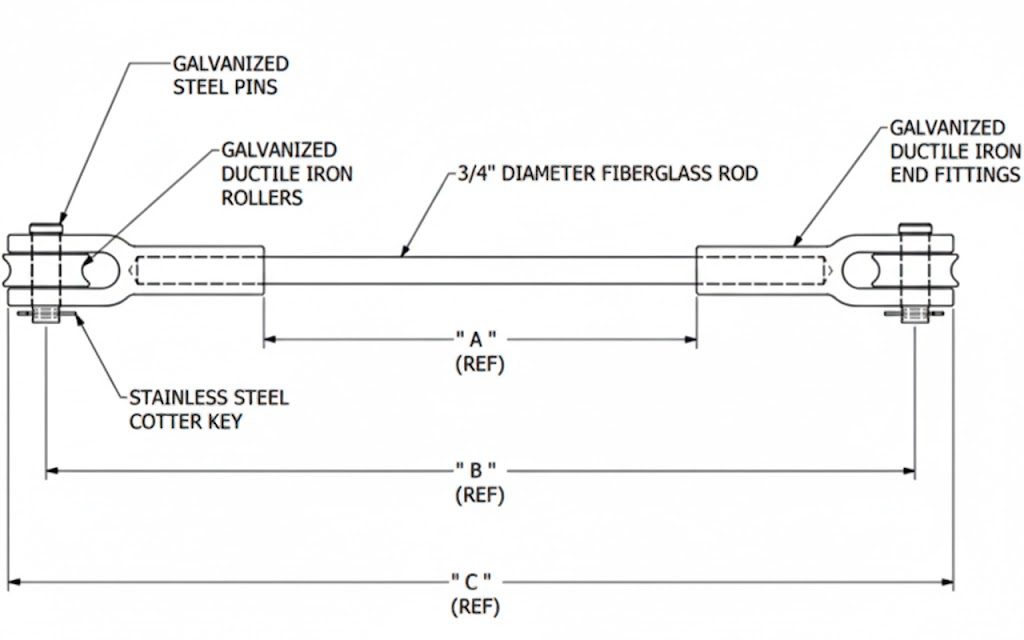
A guy wire is under tension that’s its job, holding the pole against the pull of the line. So any insulator placed in that guy isn’t a bystander: it sits in the tension path and carries the guy’s full load. It has to be a strain-rated component, strong enough to be a structural link in the stay, at the same time as it does its electrical job of isolating the wire.
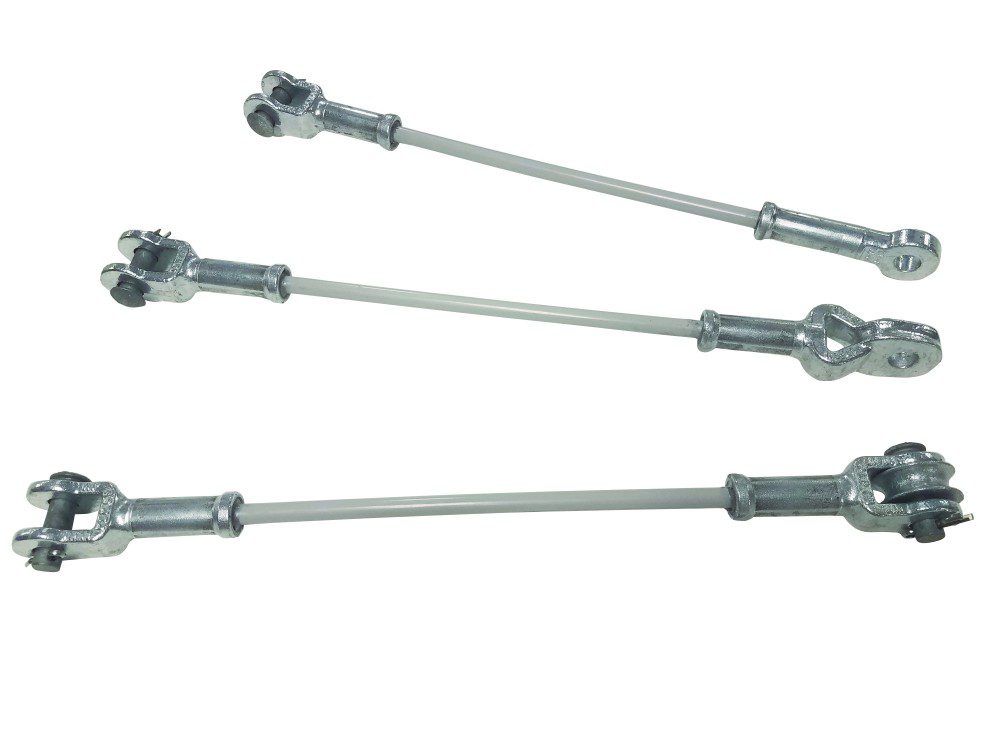
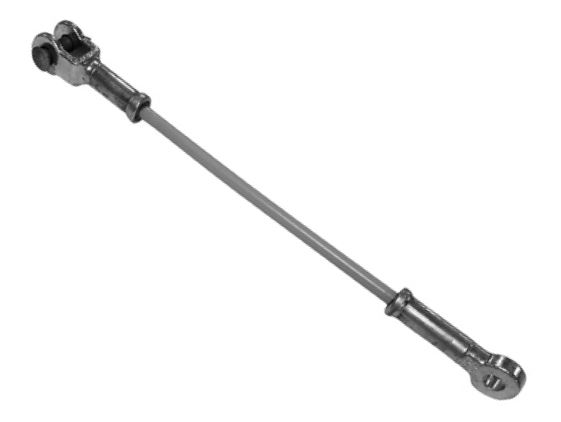
That’s the guy strain insulators: an insulating link, built to take the guy’s tension as a load-bearing element while breaking the wire electrically so the guy holds the pole and the lower, reachable section of the stay stays isolated from any fault on the upper part. It’s a component that has to pass a mechanical test and an electrical one at once.
This page covers guy strain insulators with the emphasis on that strain-rated, load-path role. For the electrical-isolation safety story in depth why an isolated guy matters and how the reachable section is kept safe see our closely related stay insulators page.
The Strain Rating: This Insulator Is a Structural Link
The defining requirement of a guy strain insulator is that it’s in the load path, so its mechanical rating is not secondary:
- The guy’s full working tension passes through the insulator it’s a link in the stay, not an attachment to it. If it fails mechanically, the guy fails, and the pole loses its stay.
- So the insulator’s failing load must exceed the guy’s working tension with your standard’s margin exactly as you’d size any strain fitting in the stay, like a guy grip or the anchor rod.
- And it must do this while isolating carrying the tension through a body that also breaks the electrical path.
Selecting one therefore means matching the failing load to your guy tension first (it’s a structural link), then confirming the isolation class for the voltage the guy runs near. Send the guy size and working tension and we confirm the strain rating and the isolation class together.
Where It Sits in the Guy and What It Works With
The guy strain insulator is fitted in the guy wire as a link, between the pole-end and anchor-end terminations, positioned so the isolated lower section covers the reachable zone (the placement-and-height point covered on the stay insulators page). On each side of it, the guy is terminated and tensioned with guy grips or guy clamps; the stay runs down to the anchor rod and anchor, and up to the pole attachment (often via a guy hook).
Because the insulator is a link in that chain, its end fittings and rating have to match the guy hardware on either side which is exactly why buying the insulator with the guy assembly helps: everything in the tension path is matched in load class.
Why Buyers Choose DAPENG Guy Strain Insulators
- Strain-rated to your guy: Failing load matched above your guy’s working tension with your margin a genuine structural link in the stay, not a weak point.
- Isolating while it holds: The body breaks the electrical path while carrying the tension, keeping the lower stay safe under a fault. (Isolation depth: stay insulators.)
- Matched to your guy hardware: End fittings and class to mate with the grips, clamps, and terminations on either side.
- Robust porcelain, to your standard: Porcelain (or specified material) for the dual mechanical-electrical duty, to your utility’s spec, with documentation.
- The whole guy from one source: The strain insulator with the guy wire, grips, clamps, anchor rod, and anchor matched in load class and kitted.
Use-Case Deep Dive
Guy strain insulator or stay insulator which do I order?
They’re the same class of product a strain-rated insulator fitted in a guy under two names: “guy strain insulator” (common in North American usage, emphasizing the strain/tension role) and “stay insulator“ (common in Commonwealth/African/South-Asian usage, emphasizing the stay it sits in). Order by whichever term your standard uses; we supply the same correctly-rated product. If your specification distinguishes a particular form under one name, tell us and we’ll match it.
How do I size it by the insulation or the strength?
Both, and the strength comes first because it’s a structural link. Match the failing load above your guy’s working tension with your margin if it can’t carry the tension, nothing else matters, because the guy fails. Then confirm the isolation class for the voltage environment the guy runs near. Send the guy size, working tension, and the voltage nearby, and we confirm both on datasheet figures, not estimates.
Does every guy need one?
Where the guy runs near energized conductors, most standards require an insulator in the stay (see the safety rationale on stay insulators) and where required, it must be strain-rated to carry the guy. Where the guy is well clear of conductors, your standard may not require one. The requirement is the standard’s; tell us the configuration and we’ll confirm whether and which rating you need. It’s a safety item, so we’d rather confirm the requirement than have you guess.
Specifications and What They Mean for You
| Specification | What we supply | What it means for the buyer |
|---|---|---|
| Role | Strain-rated insulating link in the guy | Carries the guy’s full tension while isolating |
| Failing load | Above your guy tension | A structural link, never the stay’s weak point |
| Isolation class | To your voltage environment | Keeps the lower stay safe under fault |
| End fittings | To your guy hardware | Mates with the grips/clamps either side |
| Material | Porcelain / specified | Dual mechanical-electrical duty in weather |
| Standard | To your spec | Passes your safety specification review |
Straight Answers to Common Buyer Concerns
“How do we know it will carry the guy’s tension?” Match the failing load above your guy’s working tension with your standard’s margin the insulator is a link in the tension path, so it’s strain-rated for exactly this, batch-tested with documentation. It’s designed never to be the weak point in the stay. Send the guy tension and we confirm the rating.
“Is this the same as a stay insulator?” Effectively yes the same strain-rated guy insulator under a different regional name (guy strain / stay). See stay insulators for the isolation-safety detail. Order by your standard’s terminology and we supply the right product; if your spec means a specific form, tell us and we’ll match it.
“Can you supply the whole guy assembly?” Yes the strain insulator with the guy wire, grips, clamps, anchor rod, and anchor, matched in load class and kitted, so the whole tension path is consistent and the insulator sits at the right height.
Complete the Guy
- Stay insulators the closely-related product, with the isolation-safety detail
- Guy wire, guy grips, guy clamps, guy hooks the guy wire and terminations
- Anchor rods, ground anchors, eye nuts the anchor end
- Insulators the full insulator range and type-selection hub
- Browse all pole line hardware and overhead line fittings
Get a Guy-Matched Quote Within 24 Hours
Send your guy size and working tension, the voltage environment the stay runs near, your standard, and quantities. Our engineers confirm the strain rating, the isolation class, and the end fittings, and return a factory-direct quotation with the guy hardware alongside, typically within one working day.
After You Order
Rating and interface confirmation before production, test documentation with shipment, insulators kitted with the guy hardware, and an engineering contact who answers precisely because a guy strain insulator is a structural link that also isolates a hazard, and getting both the strength and the isolation right is what keeps the guy holding and safe.