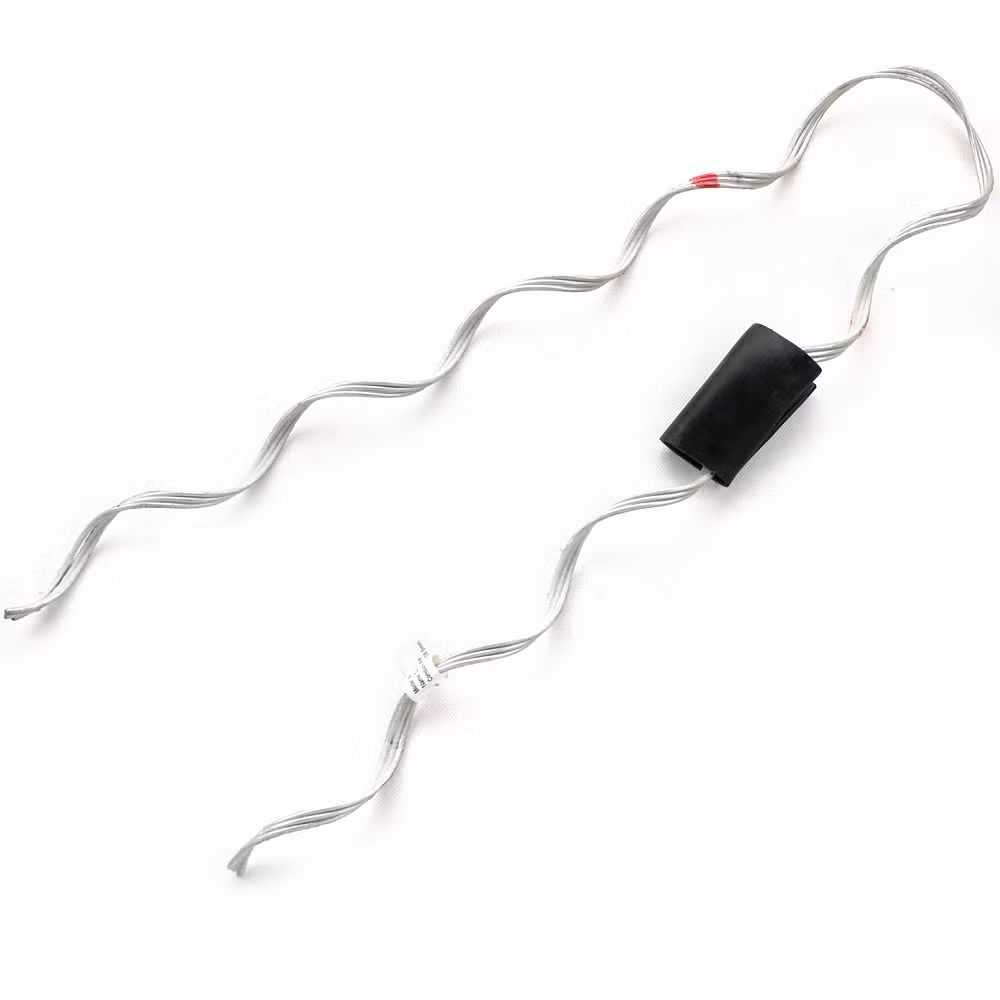
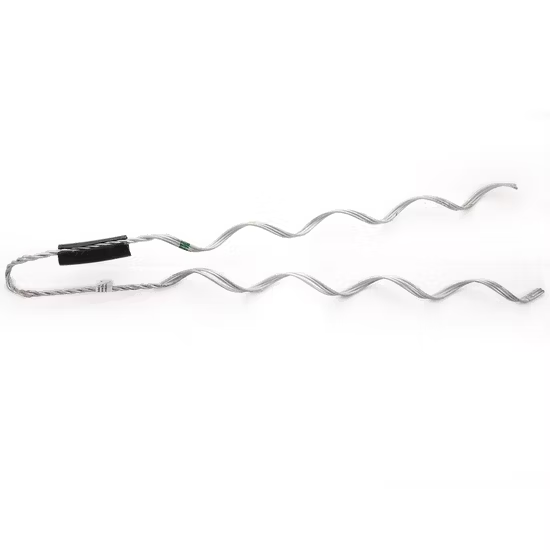
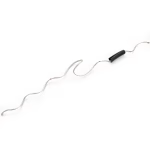
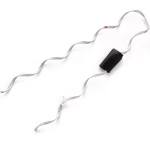
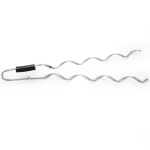
Description
The Fitting That Finishes the Support
A pin or post insulator holds the conductor in its groove, but something has to secure the conductor there, so it can’t lift or slip out under wind, load, or a fault. That something is the insulator ties: the fitting that binds the conductor into the insulator’s groove and holds it fast.
It’s the smallest part of the support and the one that finishes it. A good tie holds the conductor securely without damaging it, for the life of the line; a poor or badly-made tie loosens, chafes the conductor, or lets it move a small failure at a point repeated thousands of times across a network. This page covers insulator ties: preformed versus hand ties, the two matches that make a preformed tie work, and top versus side ties.
Preformed Tie or Hand Tie? The Real Choice
For securing a conductor to an insulator, the decision is between a preformed tie and a hand tie, and it comes down to consistency versus tradition:
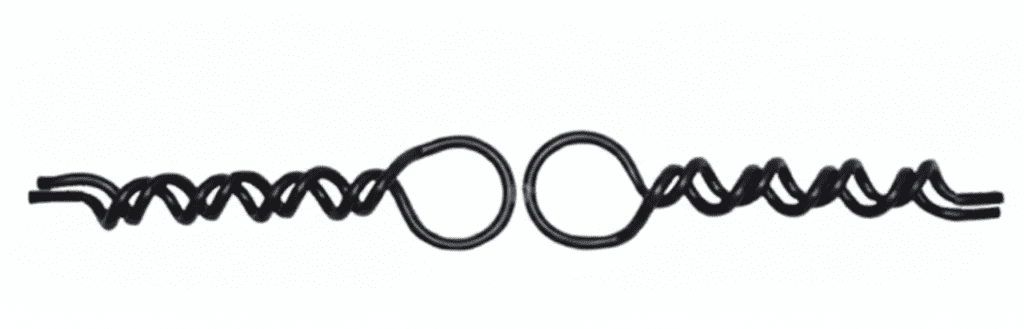
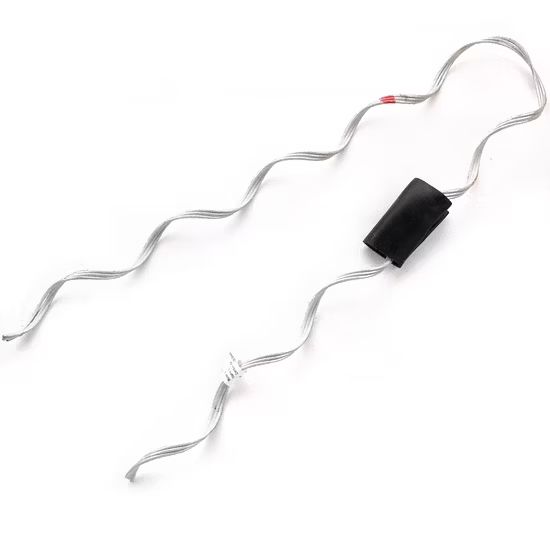
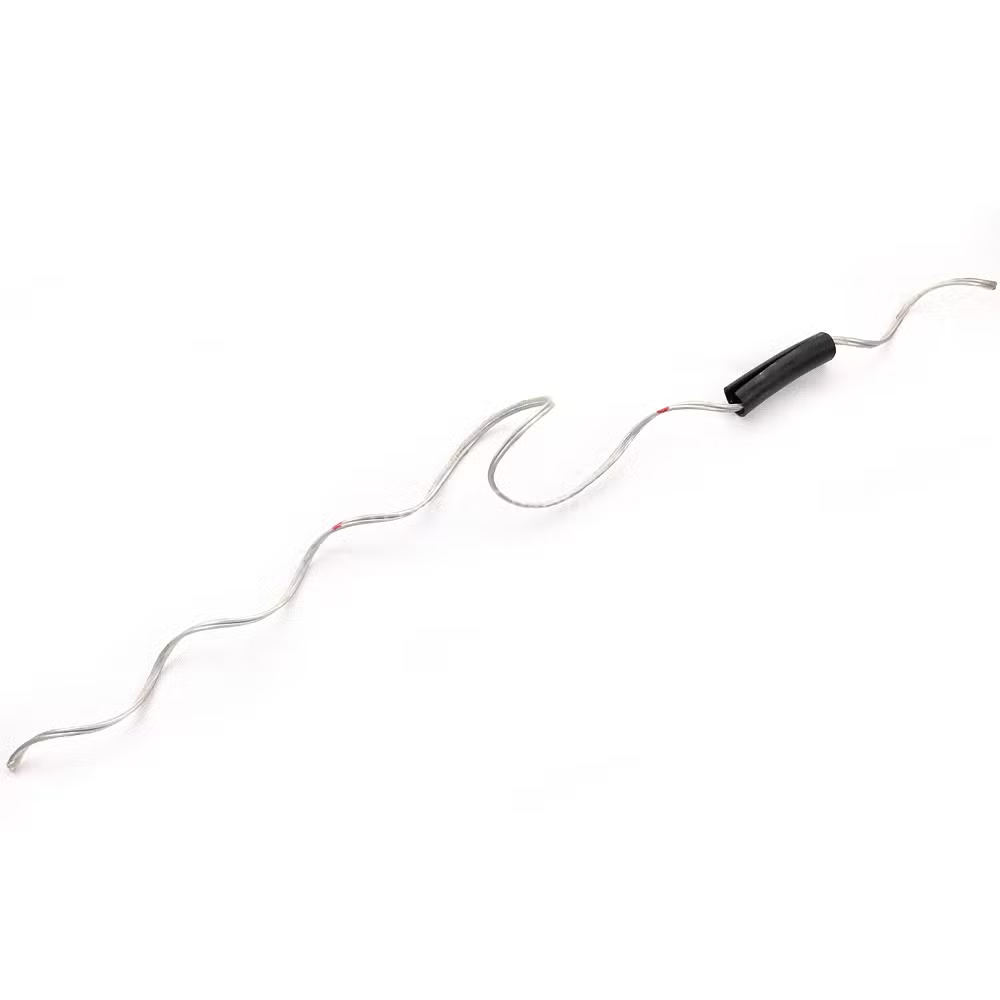
- Preformed (helical) ties pre-formed rods, made to your conductor and insulator, that wrap on by hand in a fixed pattern. Every tie is identical, applied the same way, developing a known, consistent hold and they’re fast and tool-free. The modern standard, and the choice where consistency and speed across a big build matter.
- Hand ties (tie wire) soft aluminum tie wire the lineman winds on by hand. Traditional, low material cost, and still specified by some utilities but the result depends on the lineman’s technique, so consistency varies, and a poorly wound tie can chafe or loosen.
Preformed ties trade a slightly higher part cost for consistency, speed, and conductor-friendliness; hand ties trade those for tradition and low material cost. Many networks have moved to preformed for exactly the consistency reason. We supply preformed ties (and can advise on hand ties where your standard calls for them).
Why a Preformed Tie Matches Two Things, Not One
Here’s what buyers most often miss: a preformed tie is formed to fit both the conductor and the insulator and both matches must be right:
- The conductor the tie’s rods are formed to the conductor’s diameter and lay, so they grip it cleanly without a point load.
- The insulator neck/groove the tie is also made to wrap the specific insulator’s top (or side) groove and neck, so it seats correctly on that insulator.
A tie formed for the right conductor but the wrong insulator neck or vice versa won’t seat and hold properly. So specifying a preformed tie means giving us both the conductor (type, diameter) and the insulator (the pin/post insulator it ties to). Send both and each tie is matched to the pair. This double match is why buying the ties with the insulators helps the pair is matched at source.
Top Tie or Side Tie? The Position Decides
Pin and post insulators have grooves for different positions, and the tie follows:
- Top tie for straight-line (tangent) positions, where the conductor sits in the top groove and the tie binds it there.
- Side tie for angle positions, where the conductor is placed in the side groove to take the angle pull, and the side tie secures it against that sideways force.
Using a top tie at an angle position (or vice versa) doesn’t hold the conductor correctly for the load direction. Tell us whether the position is a straight run or an angle, and the conductor and insulator, and we supply the right tie for it.
Why Buyers Choose DAPENG Insulator Ties
- Matched to your conductor and insulator: Formed to both the conductor and the insulator neck, so the tie seats and holds confirmed at RFQ.
- Consistent, tool-free hold: Preformed ties apply the same way every time for a known hold, wrapped on by hand fast and error-resistant across a big build.
- Gentle on the conductor: Formed to grip without a point load or the chafing a badly-wound hand tie can cause protecting the conductor at the tie point.
- Corrosion-matched: Formed wire to the conductor’s metallurgy (aluminum-based for aluminum conductors), so the tie and conductor age together.
- Supplied with the support assembly: Ties with the pin/post insulators, pins, and pole top pins they finish matched and kitted.
Use-Case Deep Dive
Preformed or hand tie which should we standardize on?
If you value consistency across the network every tie the same, applied the same, with a known hold and faster, tool-free install, preformed ties are the modern choice, and many utilities have moved to them for exactly that. If your standard specifies hand ties and crews are practiced at them, they remain a low-material-cost option, with the caveat that the result depends on technique. We supply preformed ties and will advise honestly on the trade-off.
How do I specify a preformed tie?
Give us both halves of the match: the conductor (type, diameter, stranding) and the insulator (the pin or post insulator, so the tie fits its neck/groove), plus whether the position is straight (top tie) or angle (side tie). With those, each tie is formed to the pair and the position. Buying the ties with the insulators guarantees the insulator-neck match; fitting to existing insulators, tell us the insulator and we’ll match it.
Do ties come matched with the insulators and pins?
Yes the tie finishes the support, so it’s supplied with the insulator, the pin or pole top pin it mounts on, matched to the conductor and kitted per position. That way the whole support pin, insulator, tie arrives as a set that fits together, and the conductor is secured correctly the first time.
Specifications and What They Mean for You
| Specification | What we supply | What it means for the buyer |
|---|---|---|
| Type | Preformed top/side ties (hand ties noted) | Consistent, tool-free secure hold |
| Conductor match | Formed to your conductor | Grips cleanly, no point load |
| Insulator match | Formed to your insulator neck | Seats correctly on your insulator |
| Position | Top (straight) / side (angle) | Holds for the load direction |
| Material | Formed wire to conductor metallurgy | Ages with the conductor; no chafing |
| Pairing | With insulators and pins | The support assembles complete |
Straight Answers to Common Buyer Concerns
“Why not just use tie wire it’s cheaper?” Hand tie wire has a lower material cost, and where your standard specifies it and crews are practiced, it works. But the hold depends on the lineman’s technique, so it varies, and a poorly wound tie can chafe or loosen the conductor over time. Preformed ties apply the same way every time for a consistent, known hold, install faster, and are gentler on the conductor which is why many networks have standardized on them despite the slightly higher part cost. It’s consistency and conductor life versus material cost; we’ll help you weigh it.
“How do I make sure the tie fits both my conductor and my insulator?” Send us both the conductor (type, diameter) and the insulator it ties to. A preformed tie is formed to the pair, so both matches are built in; we confirm them at RFQ. If you buy the insulators from us too, the insulator match is guaranteed. This double match is the thing to get right, and it’s easy when both are specified together.
“Top tie or side tie?” By the position: top tie for straight-line runs (conductor in the top groove), side tie for angles (conductor in the side groove, taking the angle pull). Tell us the position and we supply the right one using the wrong one for the load direction is the mistake to avoid.
Complete the Support
- Pin insulators and post insulators what the tie secures the conductor to
- Spool insulators the secondary insulator (with its ties)
- Insulator pins and pole top pins the spindles the insulators mount on
- Armor rods conductor protection at the support (the related preformed product)
- Preformed line fittings the full preformed family
- Insulators the full insulator range and type-selection hub
- Browse all pole line hardware and overhead line fittings
Get a Matched Quote Within 24 Hours
Send your conductor (type, diameter), the insulator it ties to, the position (straight or angle), and quantities. Our team confirms the tie to the conductor-and-insulator pair and returns a factory-direct quotation with the insulators and pins alongside, typically within one working day.
After You Order
Conductor-and-insulator match confirmation before production, documentation with shipment, ties kitted with their insulators and pins per position, and an engineering contact who answers quickly because the tie finishes the support, and a tie matched to both the conductor and the insulator holds the line where the design put it.